Amateur volleyball in Naples and the secrets to mixed games
With EuroVolley 2026 starting in Naples, amateur courses are fully booked. Here is some practical advice to get on the court and improve teamwork in mixed games.
The city of Naples is preparing to experience an extraordinary September 2026 under the banner of volleyball. With the approach of EuroVolley 2026, which will debut on 9 September, the enthusiasm in Campania is tangible. The most anticipated event is certainly the opening match on 10 September between Italy and Sweden, which will take place in an exceptional outdoor setting: Piazza del Plebiscito. The ticket hunt was frantic, so much so that on 31 August FIPAV released the final 700 extra tickets to allow as many fans as possible to attend this historic evening of sport. This atmosphere of great anticipation is not limited to the stands, but is directly reflected on the city's courts, where many enthusiasts are returning to put on their kneepads.
The restart of amateur volleyball courses in Naples and across Italy is recording record numbers this early autumn. Historic local associations, such as Napoli Pallavolo ASD and Volley World, are reporting fully booked courses for amateur mixed volleyball, open to men and women aged 18 to 60. If you too are part of this group of enthusiasts ready to take to the court, there are some fundamental technical and tactical aspects to consider to have fun safely and improve teamwork with your teammates.
Le regole dello spazio e della rete nel misto
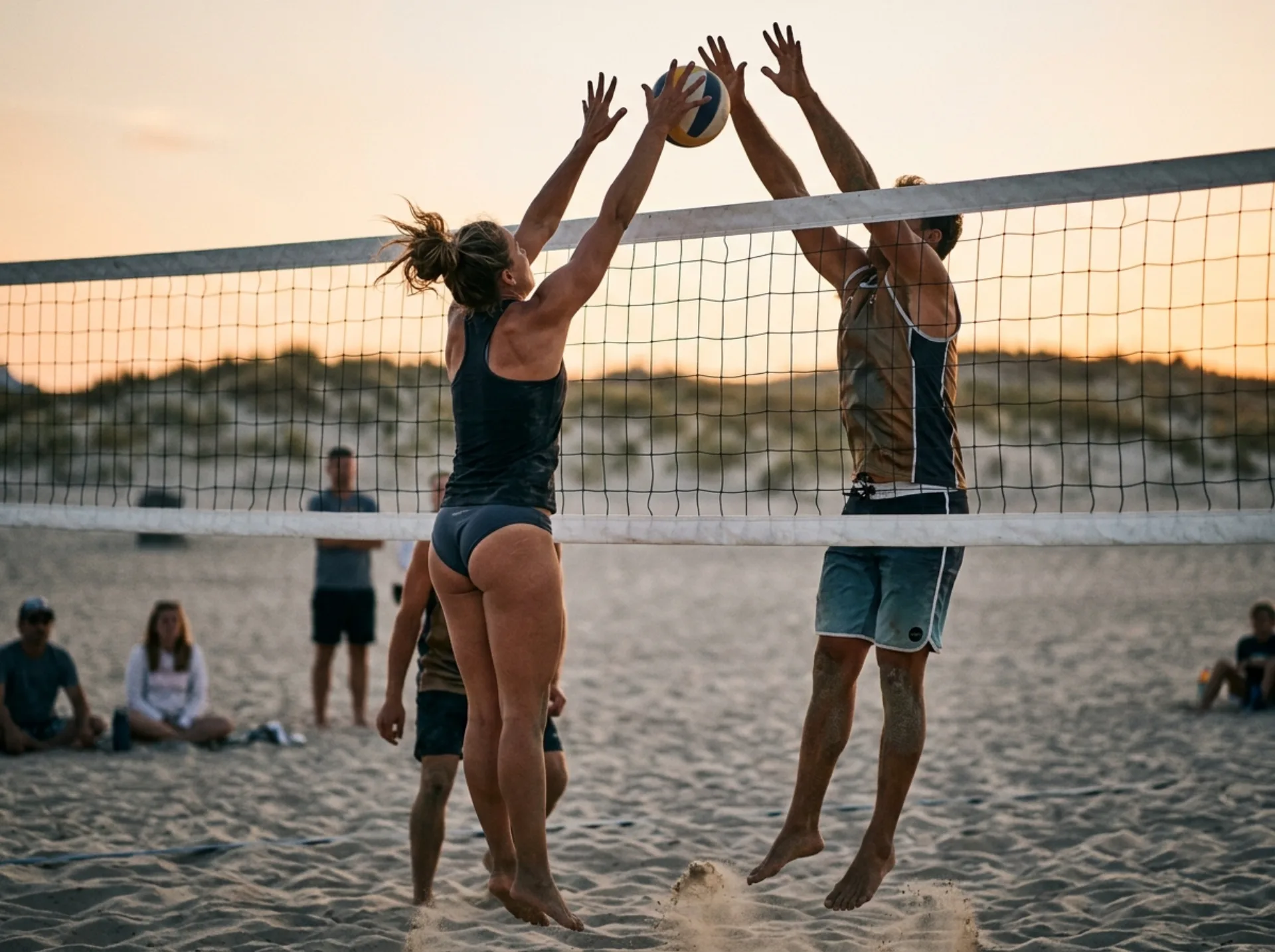
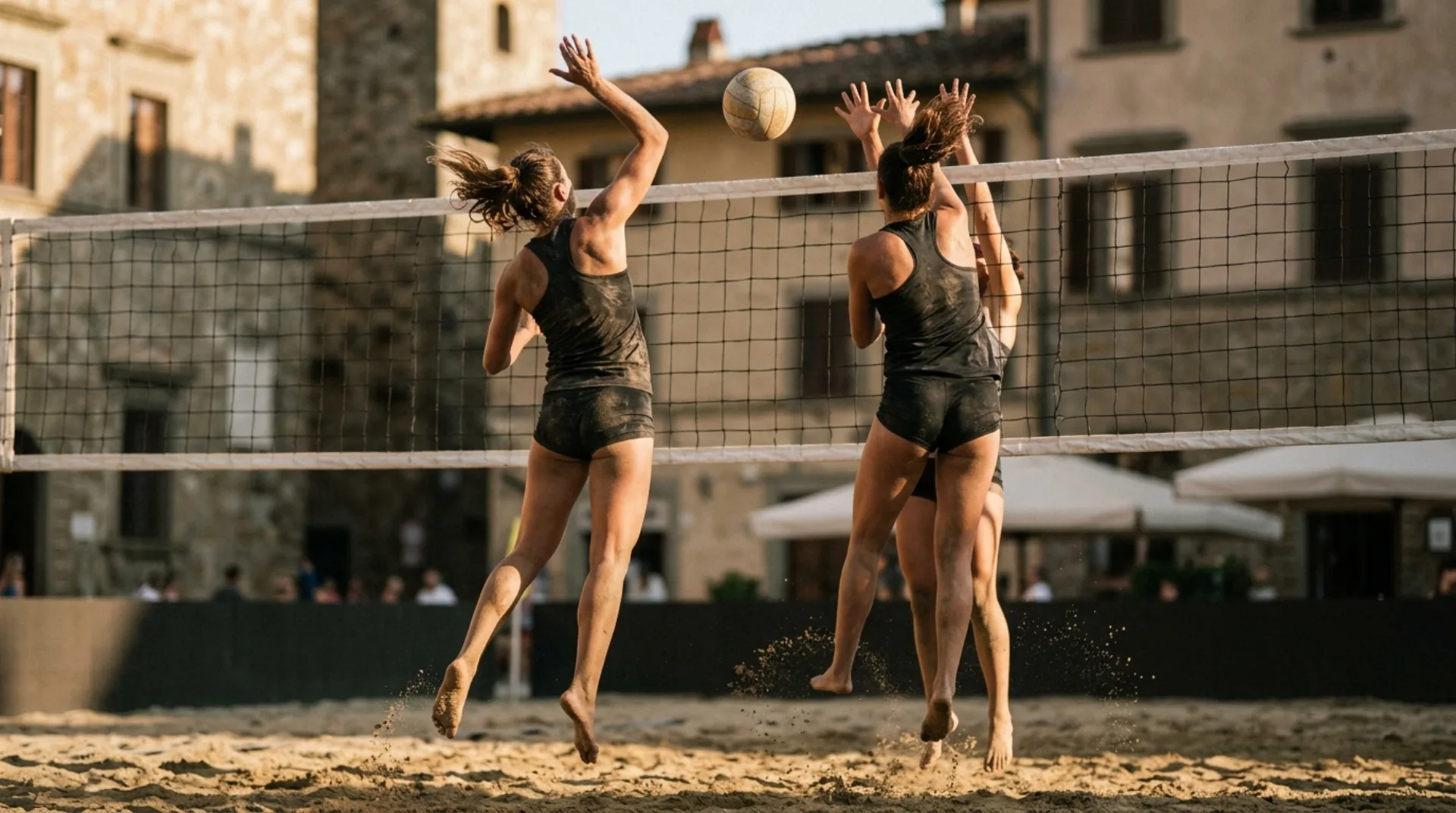
Playing in a mixed team requires a significant adaptation compared to the dynamics of pure men's or women's games. In regulation six-a-side volleyball, you play on an 18x9 m court, with sets ending at 25 points (with at least a two-point lead) and a potential tie-break at 15 points. If, on the other hand, you happen to play a mixed 2v2 beach volleyball tournament at the end of the season, the dimensions are reduced to a 16x8 m court, with sets to 21 points and a potential third set to 15 points.
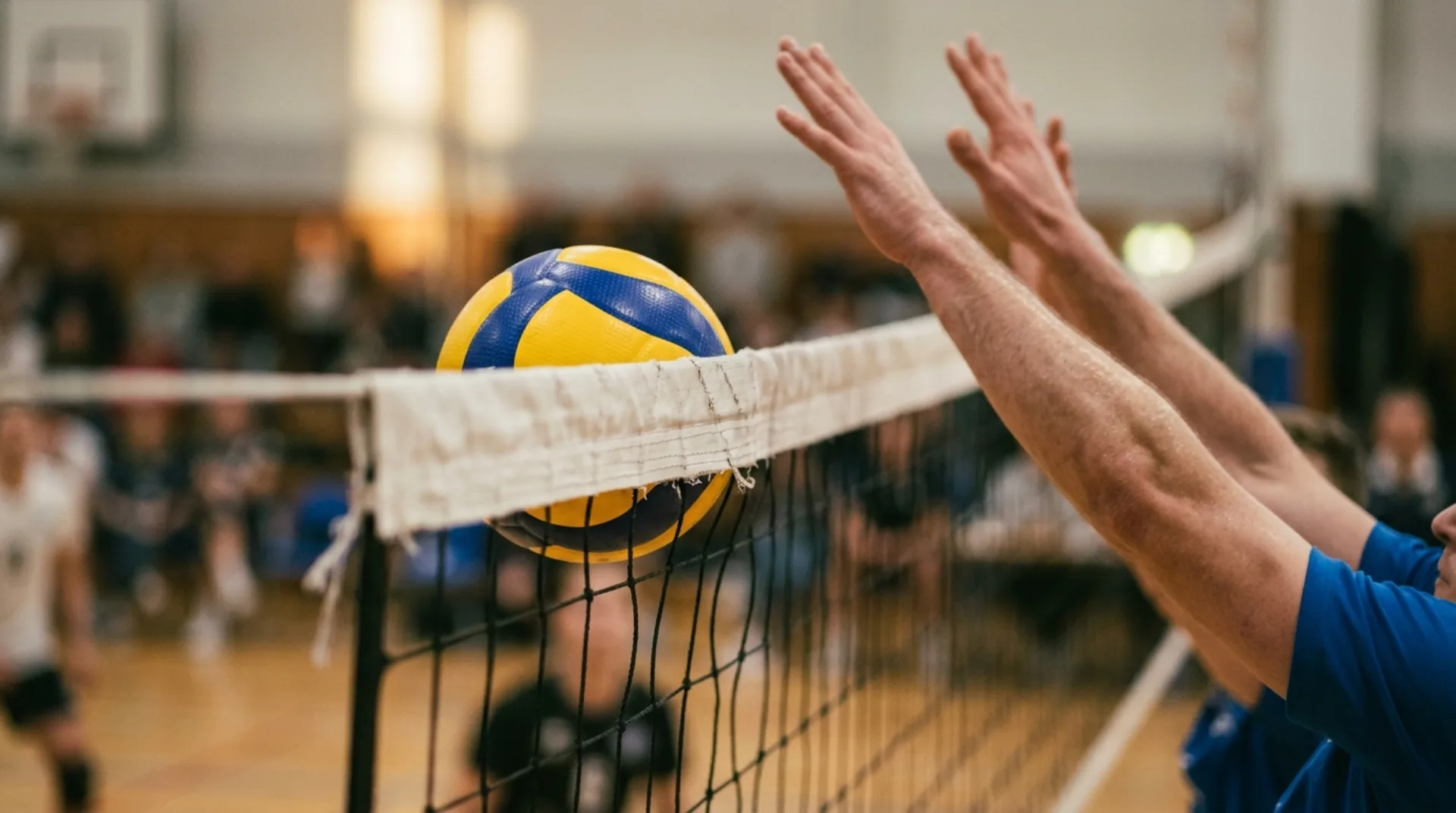
One of the most frequent questions among amateurs concerns the height of the net. At an official level, the net is set at 2.43 m for men's tournaments and 2.24 m for women's. In amateur mixed leagues and tournaments, however, there is no single standard: the net height varies depending on the formula chosen by the organisers and the composition of the teams, and is therefore a value that must always be checked in the specific regulations of the event.
La tecnica del bagher di ricostruzione nel gioco misto
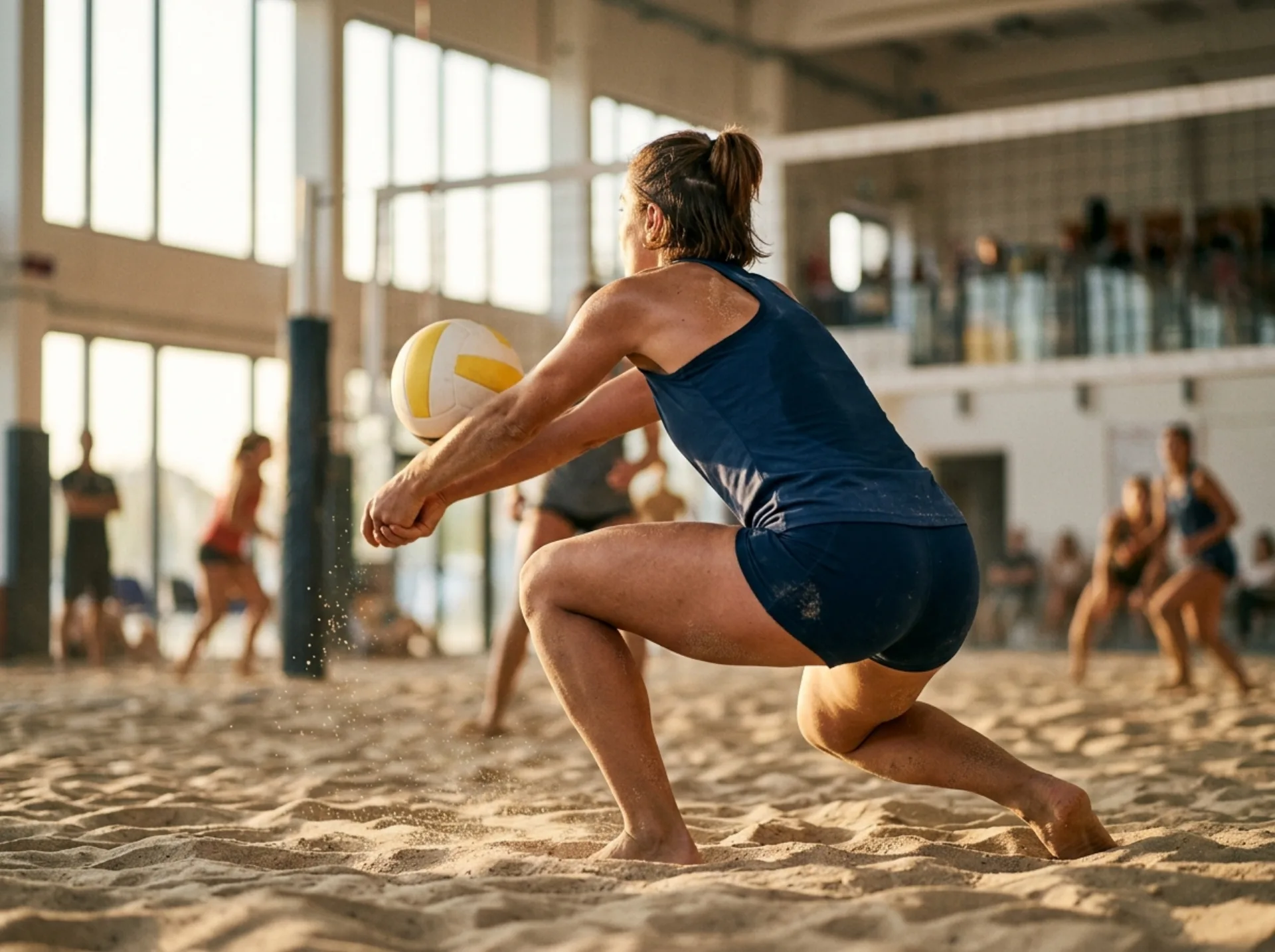
In amateur mixed volleyball, precision in transition touches is far more important than brute force in attack. Knowing how to handle a difficult ball and turn it into a precise set for your teammates is the real secret to winning sets. The fundamental skill par excellence is the transition forearm pass. Here is how to execute it correctly to avoid simple mistakes:
- La postura del corpo: Your legs must be bent, ready to spring, with one foot slightly ahead of the other to ensure stability. Your torso should be tilted forward, projected towards the ball.
- Il piano di rimbalzo: Your arms must be straight and together, with wrists joined and rotated downwards to expose the inner part of the forearm, which forms the ideal impact surface.
- L'errore tipico: Many amateur players tend to hit the ball by swinging their arms from bottom to top as if they were a racket. This movement breaks the platform and makes the ball's trajectory completely unpredictable.
- Come si corregge: Your arms must remain still upon impact. The push to make the ball travel must come exclusively from your legs. Imagine guiding the ball upwards by extending your knees, keeping the platform rigid and angled towards the desired target.
L'errore più comune: l'invasione di campo e di ruolo
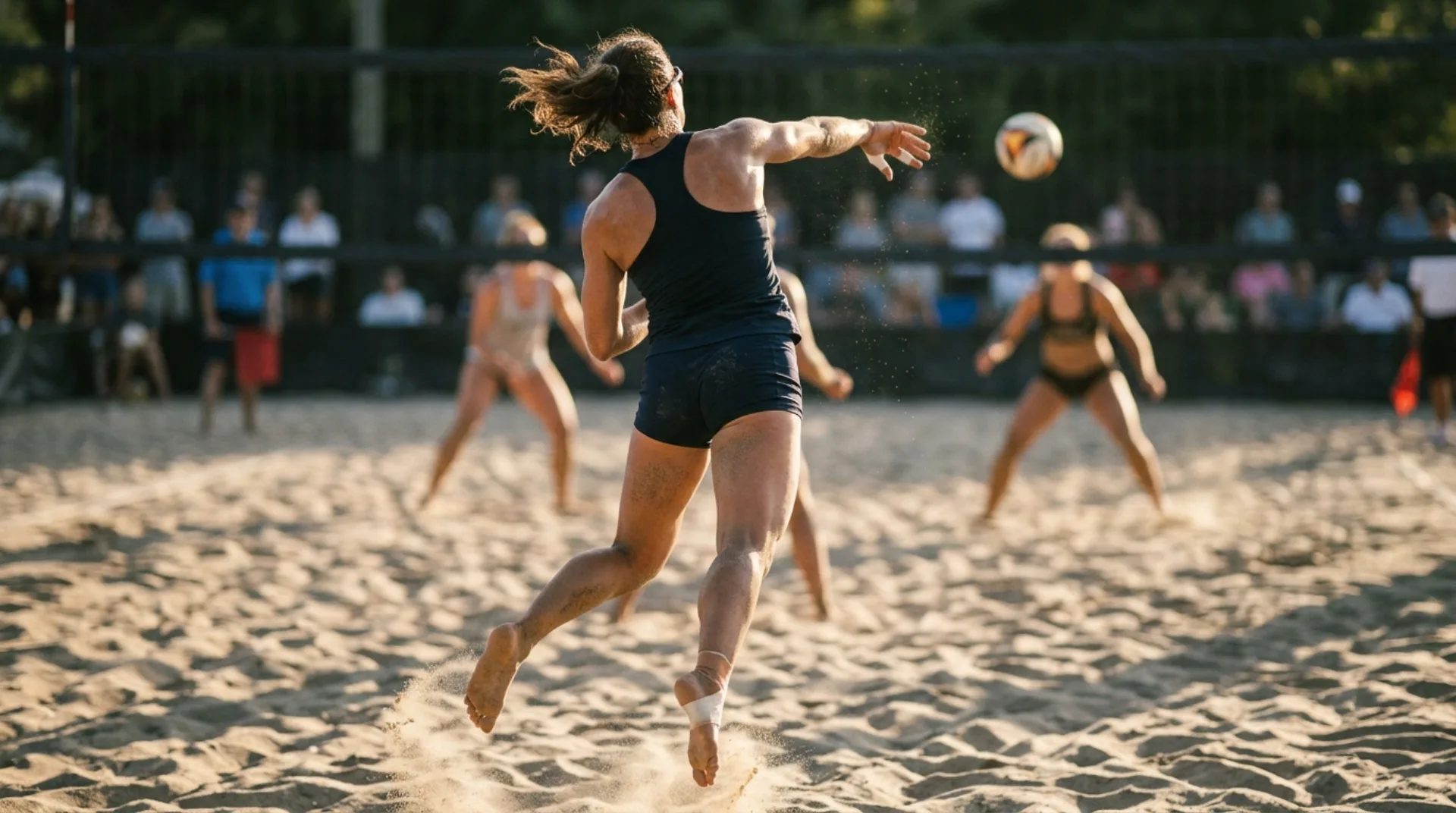
If there is one aspect that challenges amateur teams at the start of the season, it is managing their areas of responsibility. Those who play for fun often tend to make the classic mistake of invading roles. Instead of trusting their teammates' positioning, we frequently see situations where two or more players collide trying to get the same ball, or, conversely, let the ball drop to the ground, convinced it was the other's responsibility.
This problem is heightened in mixed games, where differences in mobility and physical strength can prompt some players to try and cover too much of the court. There is only one solution: constant communication. Calling for the ball loudly with a clear signal before it clears the net is essential to avoid collisions and to allow the person in the best position to make a clean play. Learning to respect your own zone and trust your teammate is the first step to turning a group of individuals into a real team.
Come organizzare le prime sfide autunnali tra amici
The inspiration coming from the major events of this early September, such as the beach volleyball championship finals in Caorle (from 4 to 6 September on Spiaggia di Levante) or the recent Italian successes at the Beach Pro Tour Futures in Modena on 31 August, is the perfect stimulus to get back in the game. Whether you choose the sand of an outdoor court or the indoor floor of a gym in Naples, the important thing is to take to the court with the right spirit.
To avoid the hassle of long message threads and best coordinate attendance, a group of friends can rely on dedicated digital tools. The VolleyFriends app was created precisely for this: to simplify the organisation of amateur matches, allowing you to find missing players, manage confirmations, and focus solely on the fun of playing volleyball together.