How to adapt your game when transitioning from beach volleyball to the classic court
Discover how to readapt your body and technique when transitioning from sand to the 18x9 m court at the end of summer, avoiding injuries and the most common mistakes.
From the sand to the big court: what changes for amateur volleyball players
With the end of August, the outdoor beach volleyball season begins to give way to the resumption of indoor activities and games on concrete or synthetic courts. For thousands of enthusiasts who have spent the summer months jumping on hot sand, this transition represents a significant challenge. The surface, joint response, ball trajectories and, above all, the dimensions of the space to be covered all change. Readapting quickly is essential to avoid annoying injuries and to maintain the effectiveness of your game.
Enthusiasm for volleyball at this time is at an all-time high. This is demonstrated by the extraordinary public response to major local events: on 24 August 2026, FIPAV made 600 new tickets available on TicketOne for the opening match of CEV EuroVolley 2026 between Italy and Sweden, scheduled for 10 September 2026 at 21:05 in the spectacular outdoor setting of Piazza del Plebiscito in Naples. Regional amateur and youth activity is also in full swing. The FIPAV Campania Regional Committee, after deciding the Serie C and D groups on 7 August 2026 (made official on 12 August 2026), collected 18,000 euros from title acquisition fees, resources that will be entirely reinvested in training young athletes and qualifying local coaches. Meanwhile, the last major summer tournaments are taking place on Italian beaches, such as the free night tournament Bari Moonlight Volley, which took place from 21 to 25 August 2026 on Pane e Pomodoro beach, bringing together hundreds of enthusiasts under the floodlights.
Deceptive measurements: how to readapt to court dimensions
The first visual and spatial impact when returning indoors or to a classic court concerns the measurements. In the beach volleyball you got used to during the holidays, the court measures 16x8 metres. In classic 6-a-side volleyball, however, the space expands to an 18x9 metre rectangle. The net height also has clear constants: in official tournaments it is set at 2.43 metres for men and 2.24 metres for women, while in mixed amateur leagues the exact height must always be checked in the specific regulations of the event.
The difference of one metre in length and width for each half of the court seems minimal on paper, but it completely disrupts the perception of trajectories. Many balls that would have landed well out on the sand remain widely in play on the 18x9 metre court. Defenders must therefore readapt to covering a larger surface area, trusting the stability that only a solid floor can offer compared to unstable sand.
The typical late-summer amateur mistake: jump timing and the run-up
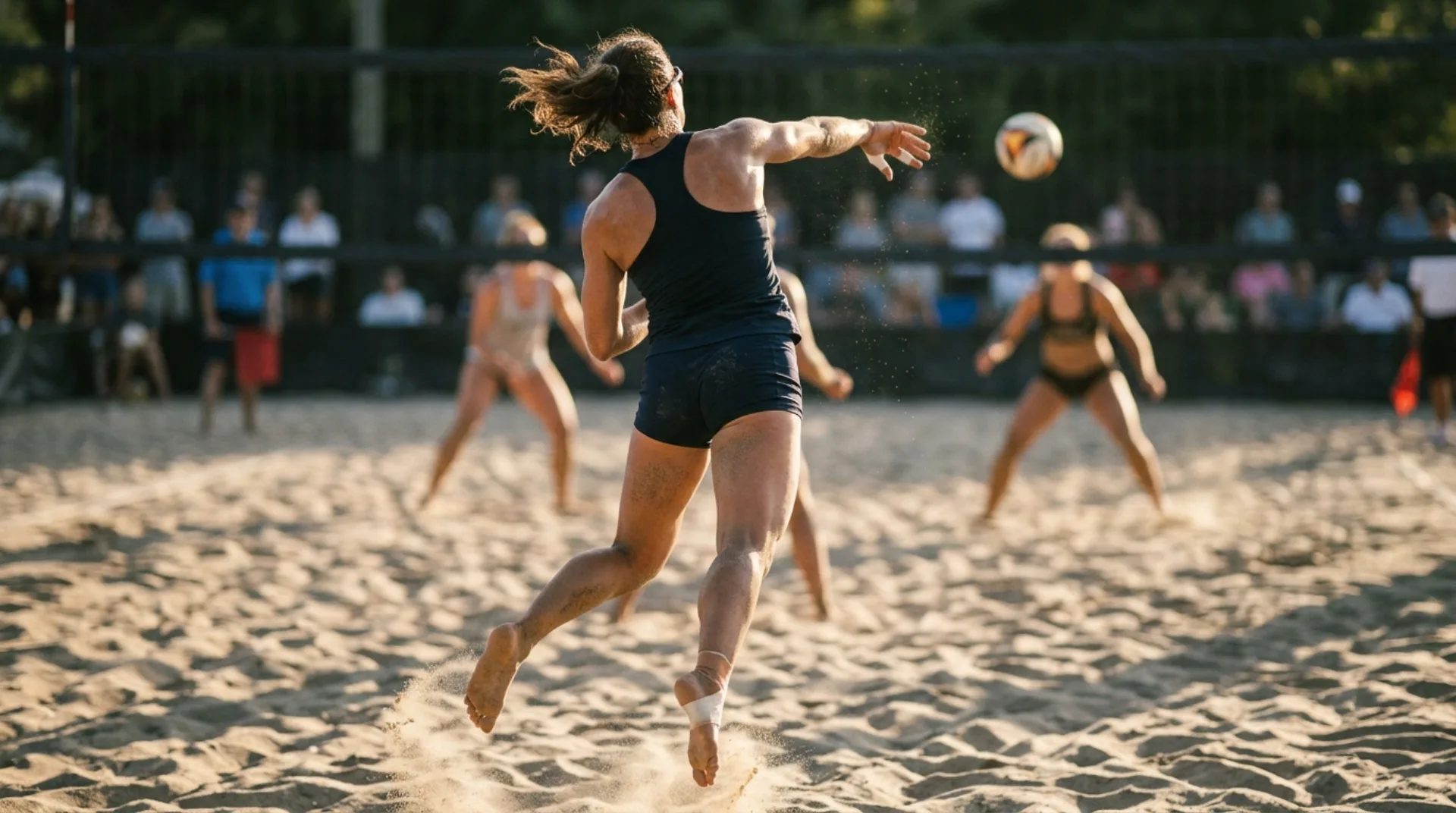
The most common mistake made by amateur players during this transition is the timing of the jump in attack and block. On sand, the push is necessarily vertical and lacks an explosive run-up due to the soft ground. If you try to jump on parquet or concrete using the same contracted beach volleyball technique, you will end up jumping too early under the ball, hitting it with your arm extended behind your head instead of in front of your body.
Furthermore, sand cushions impacts, whereas a hard floor transmits every single vibration to your knees and back. Jumping without a proper foot roll (heel-to-toe) and landing without cushioning with bent knees is the quickest way to end up with tendon inflammation in the first ten days of indoor activity.
Practical tips to find your balance on parquet or concrete
To readapt your body and avoid major mistakes at the net, you can follow this series of practical tips during your first late-summer matches:
- The attacking run-up: lengthen your run-up to three or four steps, using the friction of the hard floor to transform horizontal speed into vertical upward drive.
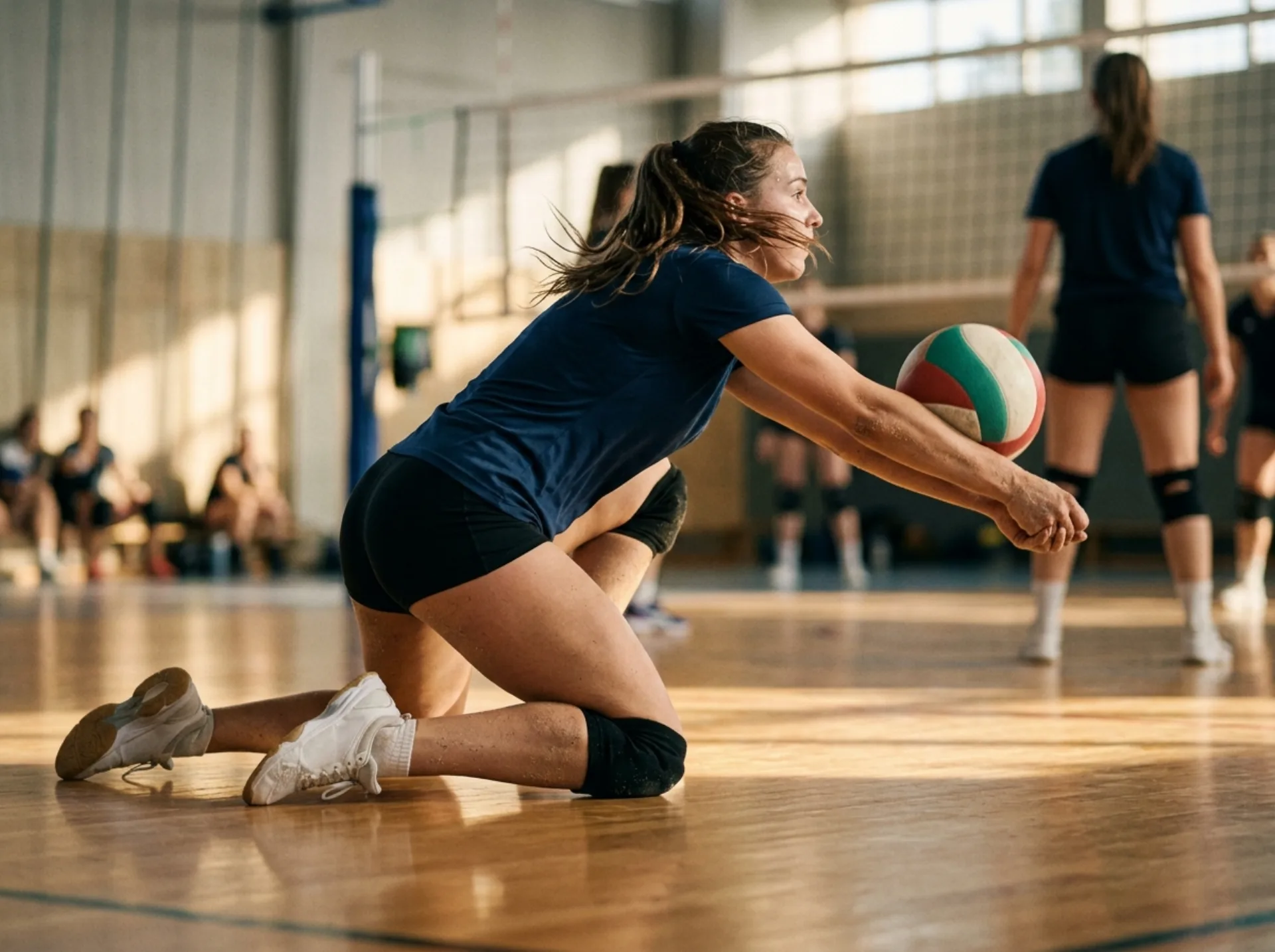
- Defensive positioning: do not rely on the sliding dives typical of sand. On a hard floor, you need to bend your knees more to lower your centre of gravity and take quick lateral adjustment steps.
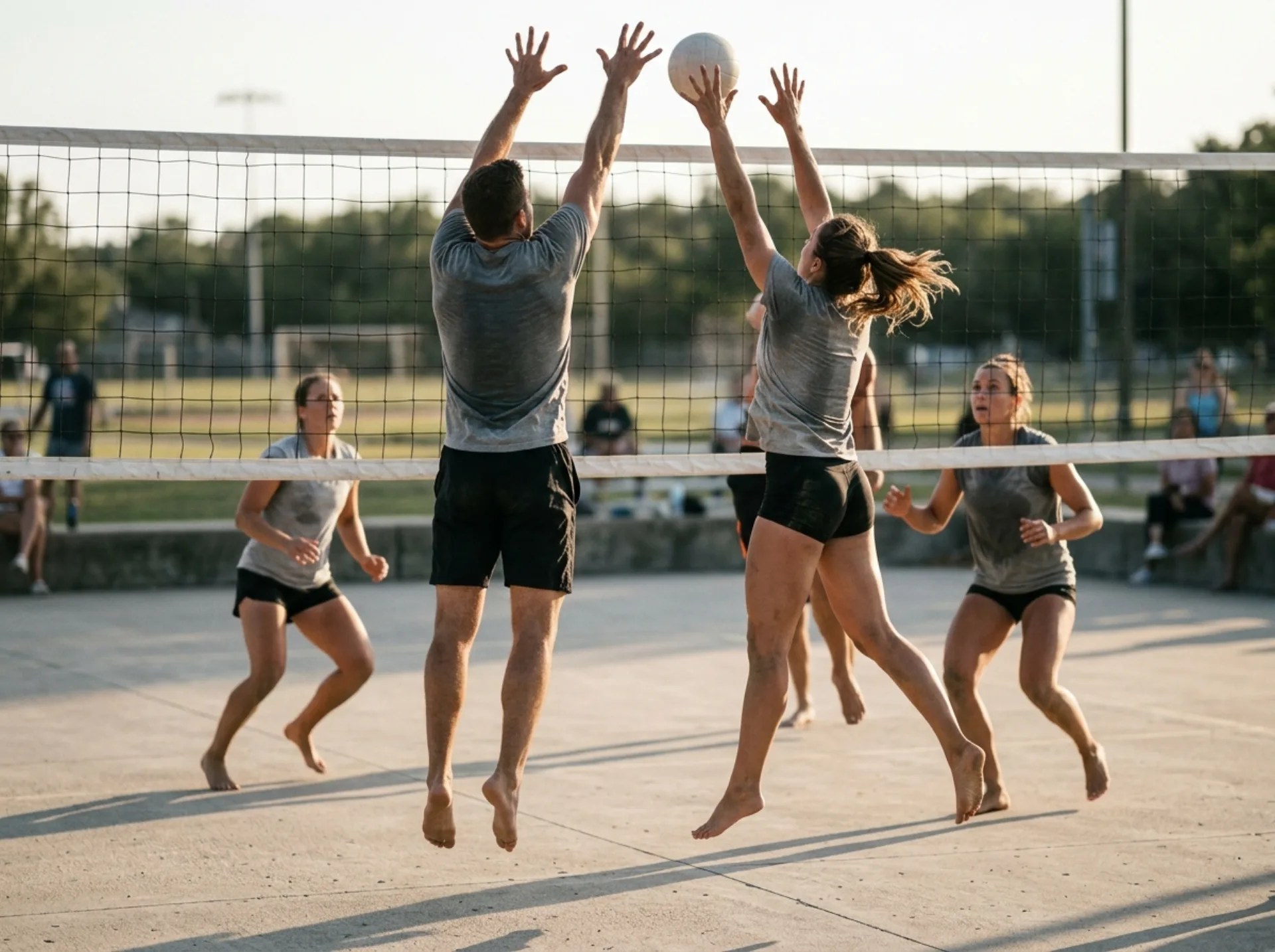
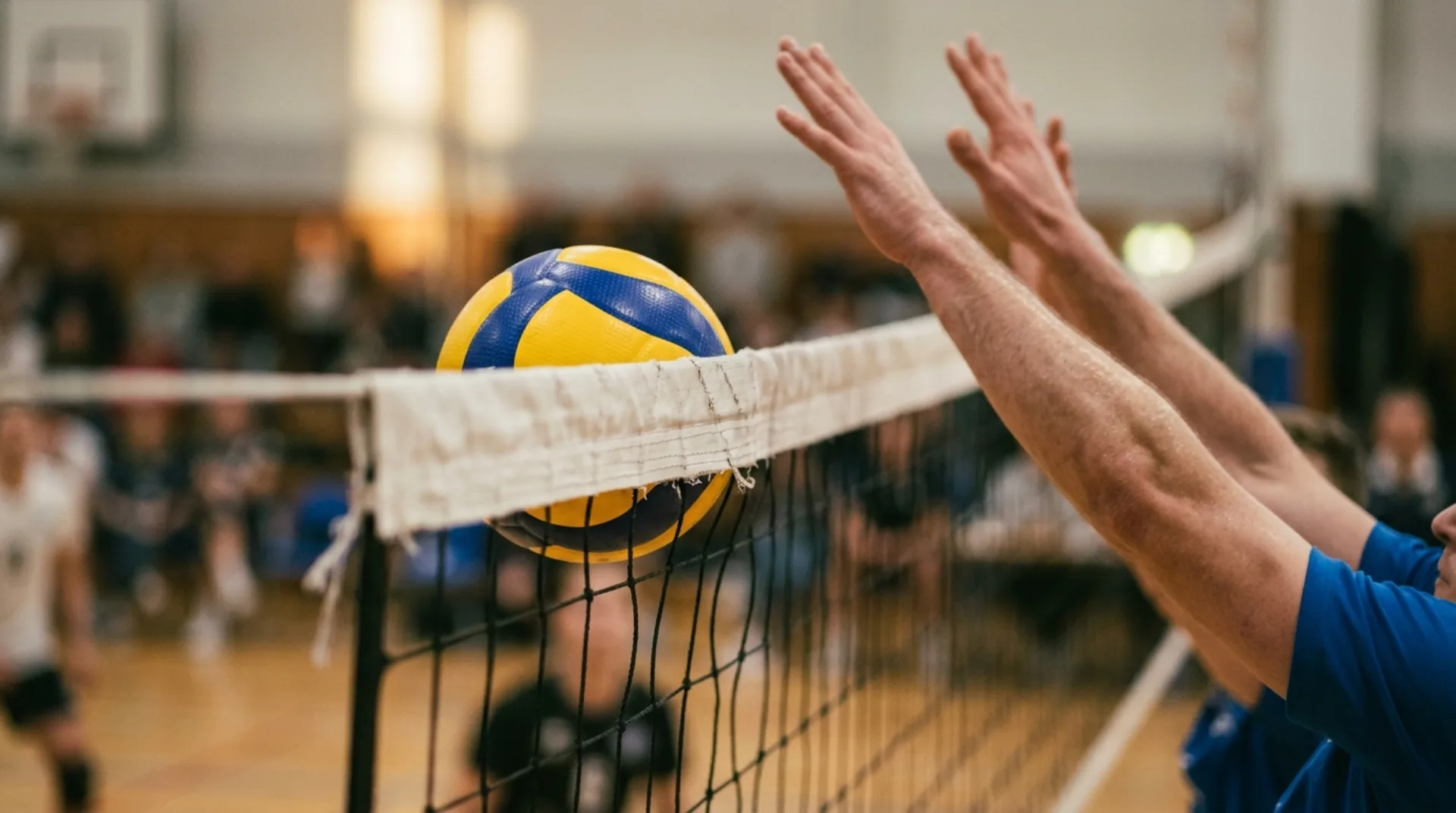
- Block management: remember that in classic volleyball a block touch does not count as the team's first touch, unlike in 2v2 beach volleyball where a block touch reduces the available passes to return the ball to two.
- Set control: regain confidence with clean ten-finger setting. On sand, there is a tendency to tolerate more of a catch, but on an indoor court a double contact is strictly penalised, so focus on the speed of the ball leaving your hands.
Naples prepares for an autumn of great volleyball
The transition between the sand and the gym always coincides with the period when groups of friends decide where and how to play for the following months. In Naples and its province, the choice is vast, thanks to historic associations reopening their doors in these very days for mixed amateur courses dedicated to adults.
Whether your preference goes to indoor play or outdoor tournaments, the important thing is to prepare physically to put your trainers back on. Organising with your teammates to book a court or finding new players for a friendly match is the best way to keep the spirit of team play alive all year round.