The measurements you always need
| Item | Measurement |
|---|---|
| Playing court | 18 × 9 m |
| Lines | 5 cm wide, drawn inside the court |
| Attack line | rear edge 3 m from the axis of the centre line |
| Free zone | at least 3 m on each side |
| Free height | at least 7 m |
| Net height | 2,43 m men · 2,24 m women |
| Net | 1 m high, 9,50-10 m long |
| Antennae | 1,80 m, projecting 80 cm above the net |
| Posts | 2,55 m high, 0,50-1,00 m from the sidelines |
| Ball | circumference 65-67 cm, weight 260-280 g |
These are the reference numbers from the FIVB regulations. In international competitions some values are stricter (wider free zones, greater free heights), while in an amateur gym even the minimums are often not met. Knowing what they are helps to understand what compromises are being accepted.
What matters most
If you have to set up a court on a tight budget, the order of priority is not the one in the catalogue.
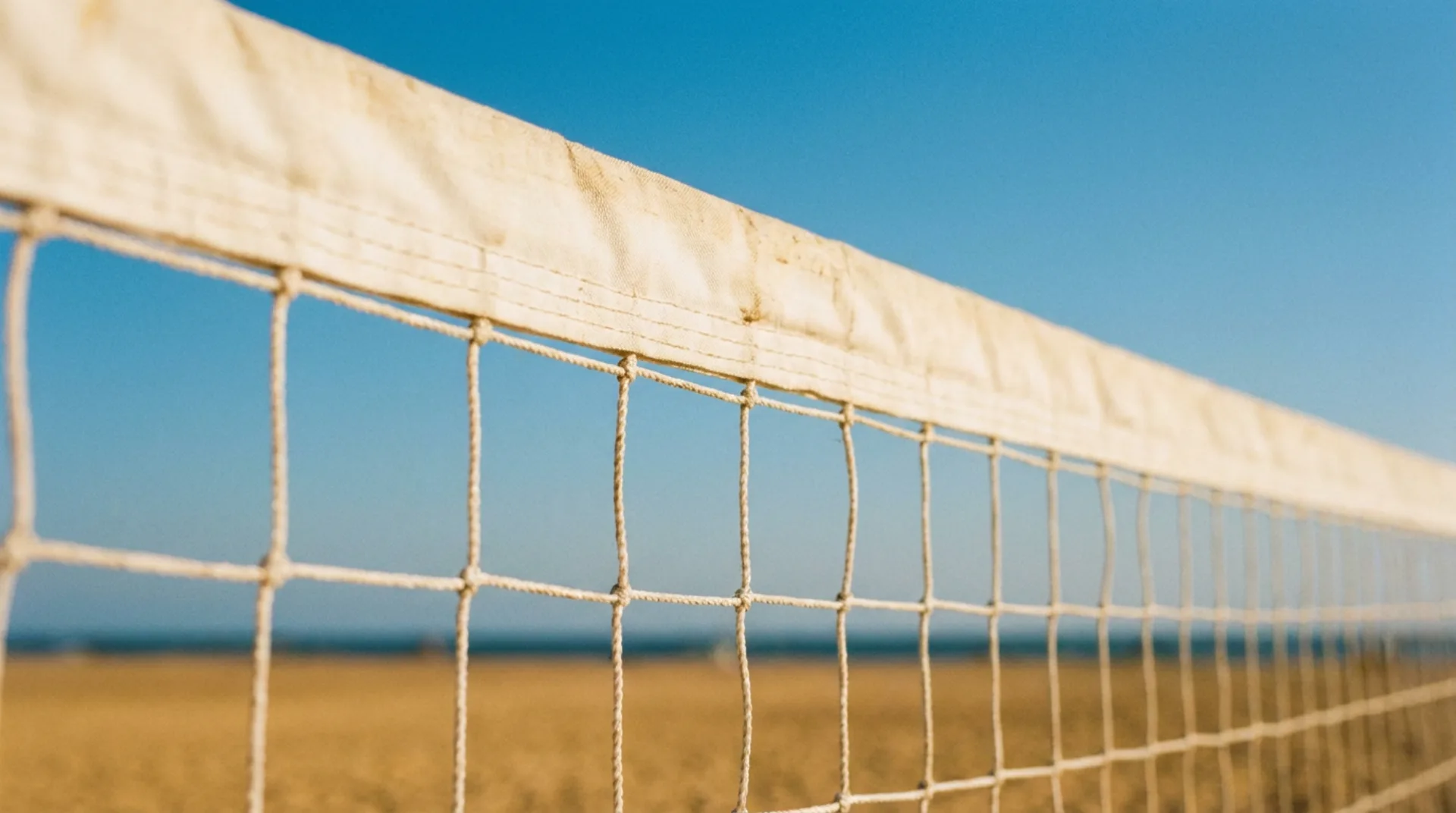
First, the net and its tension. A sagging or crookedly mounted net ruins every match: it changes the height between the centre and the sidelines, and makes net touches and balls brushing the net impossible to judge. This is the one thing not to skimp on.
Then, the balls. One good one for the court plus a spare, inflated to the same pressure. A flat ball is the most common cause of poor reception in a team that is learning.
Then, the court markings. A poorly marked court causes arguments all day long. If there are no lines, floor tape is an acceptable solution.
The antennae are often the last expense and are the only tool that makes an out-of-bounds ball objective. If you are playing a tournament, they are well worth having.
Where acceptable compromises can be found
The regulations define minimums that many gyms do not respect: ceilings under seven metres, a free zone of one and a half metres, basketball hoops over the court, walls close to the endlines. You cannot change the building, but you can write house rules: what happens if the ball touches the ceiling or a hoop, what to do when a player risks running into the wall, how to mark out a smaller court symmetrically.
On one point, however, it is not worth compromising: the net height. It is the only measurement that substantially changes the game, and it should be checked with a tape measure before the first match — at the centre and above the two sidelines.
The rest of the equipment
Besides the court, net and balls, you only need a few things, and they are always the ones someone forgets to bring: a ball cart or bag, a pump with a pressure gauge, a tape measure, two benches, a way to display the score visible to everyone, and a first aid kit with instant ice packs. For outdoor play, add proper anchors for the posts and shade for those waiting.
The pages in this silo
In detail: how to mark out a court and check that it is square; which ball to choose for indoor, beach and beginners; how to set up a net with posts and antennae perfectly; how to choose shoes, kneepads and clothing; and what to know about surfaces and lighting if you need to evaluate or manage a facility.