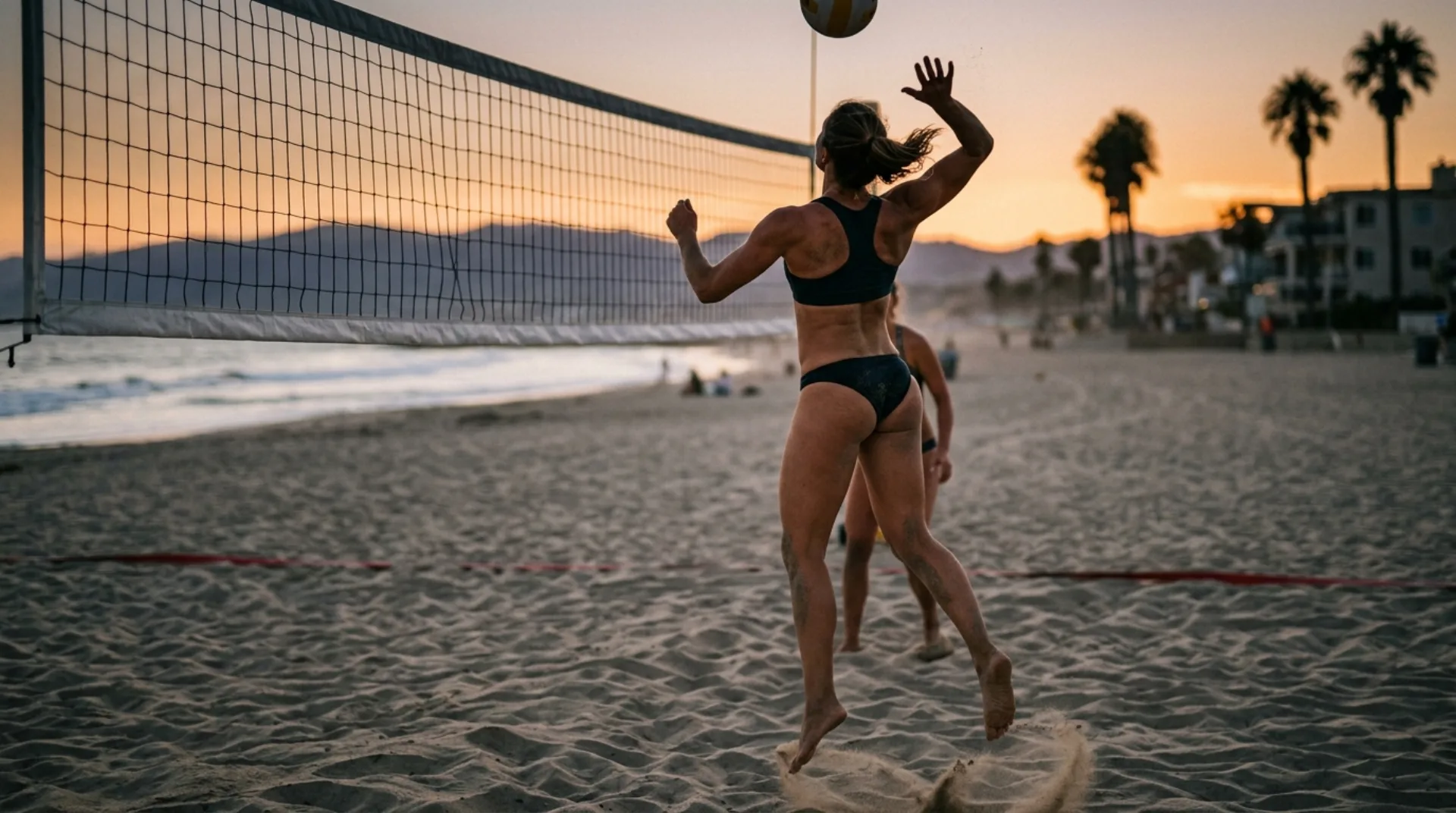
How to set up an amateur outdoor volleyball court
The secrets to setting up the perfect outdoor volleyball or beach volleyball court for your summer matches, from net tension to choosing the right ball.
Summer 2026 is the golden season for Italian volleyball. While Julio Velasco's Azzurre fly to the round of 16 of EuroVolley 2026 after dominating Pool D in Göteborg (thanks also to the 3-1 victory over France) and Fefè De Giorgi's men's national team prepares to face Cuba tonight, Friday 28 August at 20:00 at the PalaRescifina in Messina (after beating Germany 3-2 on 26 August at the PalaCalafiore in Reggio Calabria), the passion for amateur tournaments is exploding across the peninsula. A perfect example is the Bari Moonlight Volley 2026, which started on 25 August on the beach of Pane e Pomodoro thanks to the synergy between CSI Bari and UISP Bari, attracting hundreds of enthusiasts with mixed formats such as 4 against 4. In Modena too, with the Beach Pro Tour Futures in Piazza Roma at the Mutina Beach facility starting today, 28 August, sand is the main attraction. If you too want to take to the court with friends, perhaps organising a self-managed match, setting up the playing space requires attention to prevent the fun from turning into frustration. Here is how to prepare a perfect summer court, without spending a fortune but paying attention to the details that really make a difference for those playing.
From the beaches of Bari to our groups: the desire to play outdoors
The urge to play outdoors, under the sun or under the floodlights of a night tournament, is irresistible at this time of year. Events like the one in Bari prove that you do not need Serie A arenas to experience the spirit of real volleyball. However, when organising independently in a park, a public garden or on a free beach, improvisation risks ruining the playing experience. A crooked court, a sagging net or invisible lines can generate endless arguments over every disputed ball. For this reason, investing a few minutes in preparing the playing space is the first step to ensuring smooth and fun matches.
The net and the lines: where you absolutely cannot compromise
The heart of every volleyball court is the net. Many cheap amateur kits offer lightweight posts and thin nets that tend to sag at the slightest impact. Below are the fundamental points to follow for a correct and safe setup:
- The dimensions of the court: If you want to play 6-a-side volleyball according to classic parameters, the court must measure exactly 18x9 metres. If, on the other hand, you prefer the 2v2 beach volleyball format on sand, the court dimensions drop to 16x8 metres. For all other playing formats, such as mixed 3v3 or 4v4 tournaments, the optimal court dimensions and net height must be checked in the regulations of the event or organising body.
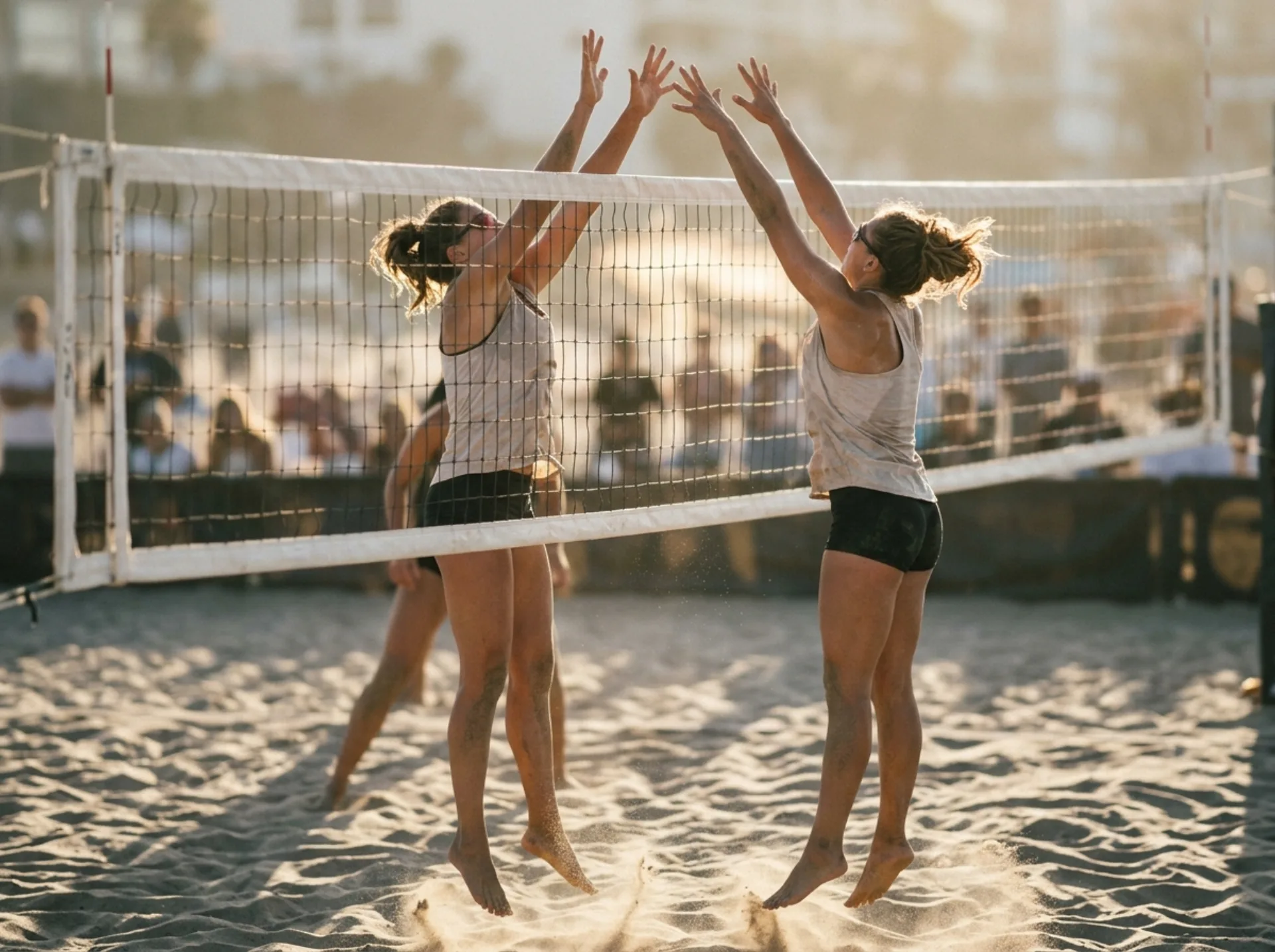
- The height of the net: In classic 6-a-side play, the official net height is 2.43 metres for men's tournaments and 2.24 metres for women's. This measurement must be taken exactly at the centre of the court. In mixed amateur tournaments, where men and women play at the same time, there is no universal height: the exact value must be checked in the event regulations.
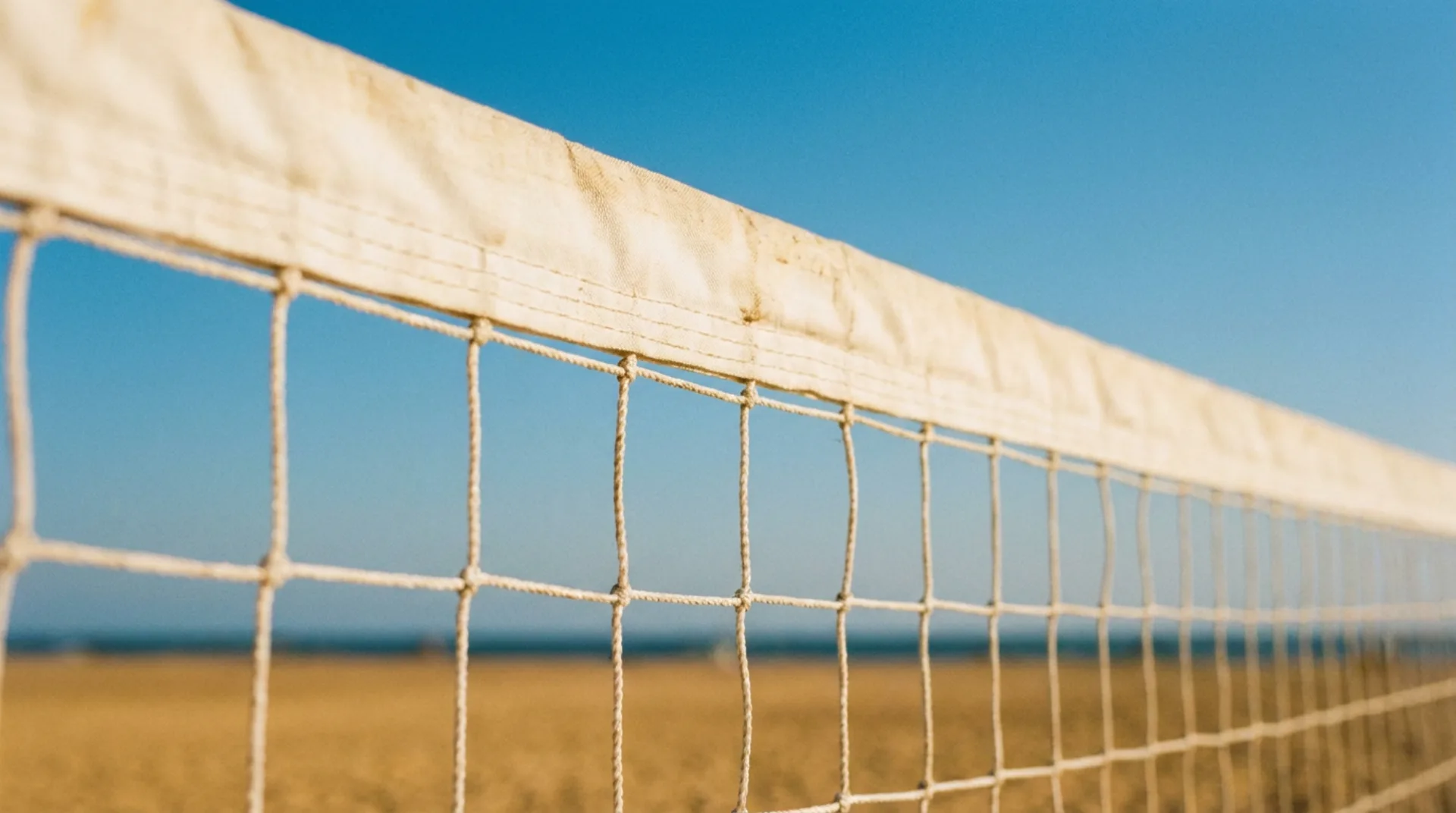
- Tension and anchors: The typical mistake of those setting up an outdoor court is fixing the posts without an adequate system of guy ropes. A loose net does not allow you to play balls that touch it and makes it impossible to determine whether a net touch is real or caused by the structure swaying. Always use sturdy pegs (to be driven at 45 degrees into the ground or sand) and elastic ropes equipped with tensioners to keep the top edge of the net perfectly taut.
- Boundary lines: Avoid marking out the court by eye or using branches and shoes as a reference. Buy coloured tape at least 5 centimetres wide, preferably blue or red to contrast with the sand or grass. Secure them at the corners with special flat pegs to prevent players from tripping during the most hectic phases of the match.
The right ball: pressure and attention to detail
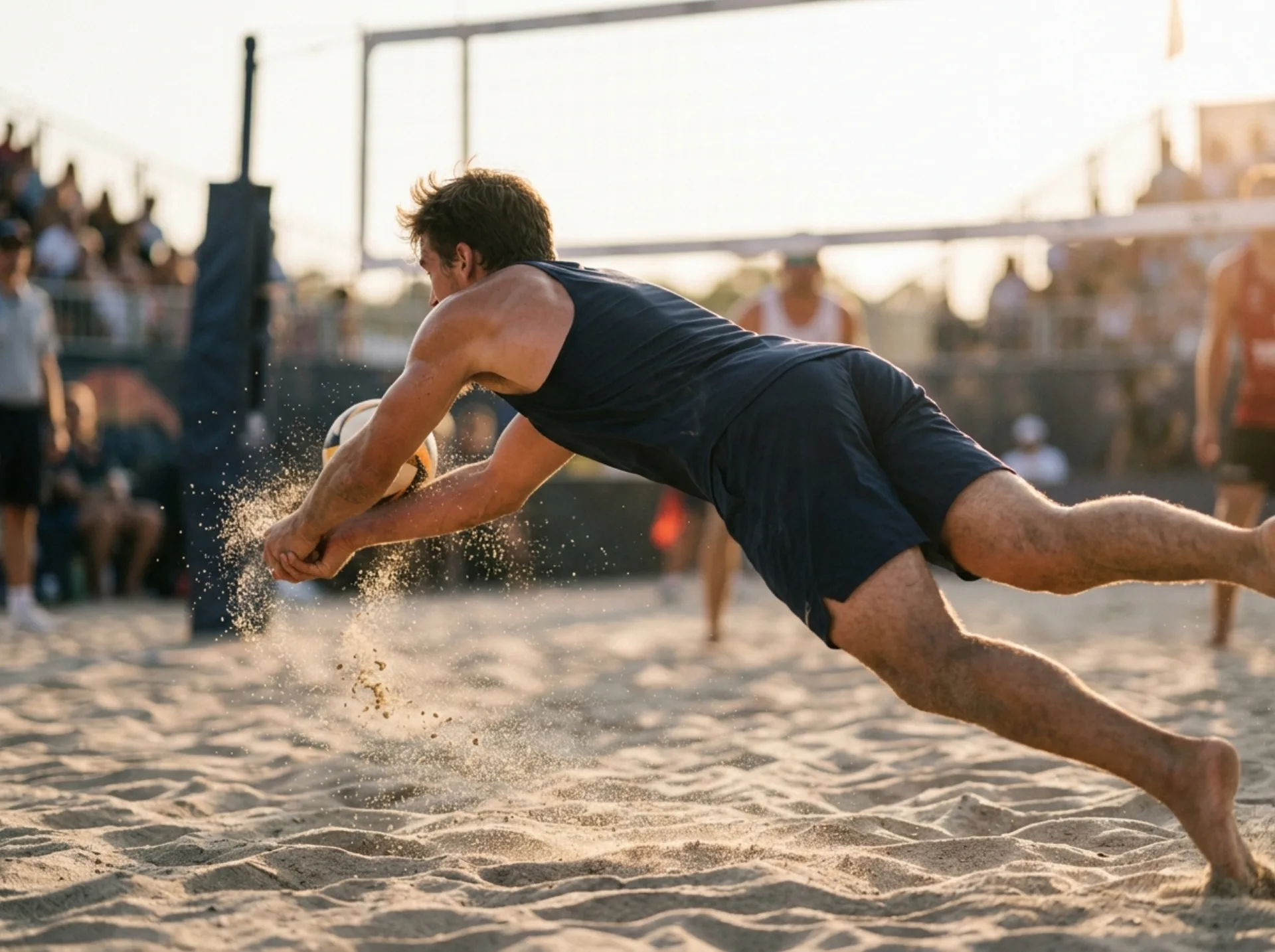
Another element that is often overlooked in matches between friends is the condition of the ball. Playing with a deformed, too heavy or over-inflated ball that feels like a stone is the best way to hurt your arms and ruin set and attack trajectories. For beach volleyball, slightly larger and softer balls are used compared to indoor ones, stitched to withstand moisture and sand. For the correct inflation pressure, avoid guessing or pressing with your thumbs: the precise value varies depending on the model and must always be checked in the event regulations or on the indications printed directly near the ball valve. A well-calibrated ball guarantees a consistent bounce and allows you to perform the forearm pass without trauma to the forearms.
The most common mistakes that ruin matches between friends
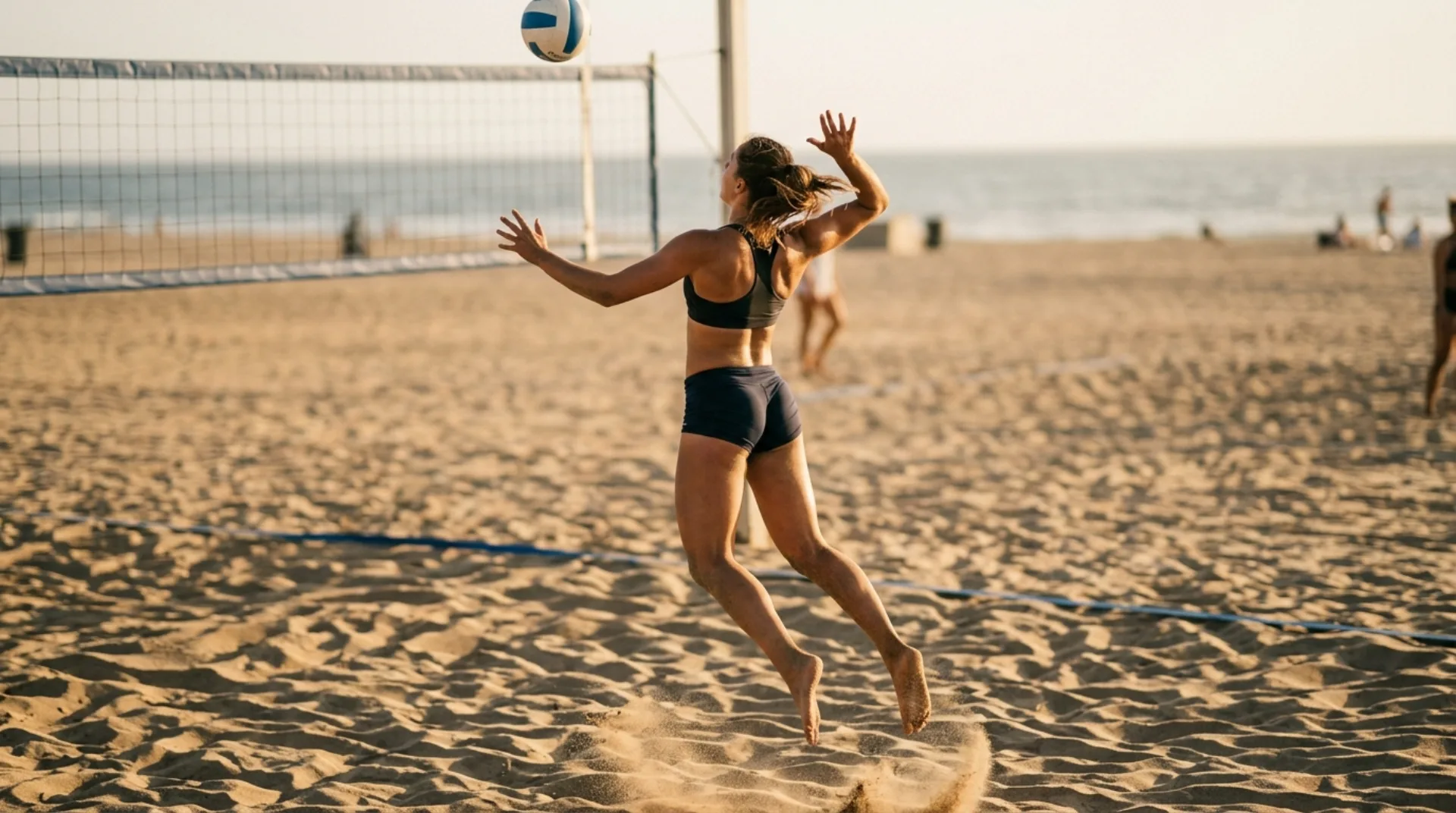
What do amateur players usually get wrong during setup? The first mistake is positioning the court without taking into account the trajectory of the sun or artificial light sources. Playing with the sun directly in your eyes during service or set reconstruction makes play almost impossible. Always orient the court along the north-south axis, so that neither team has to look directly into the setting sun.
The second mistake is managing the safety space outside the court. Often, the net is set up close to walls, trees or benches to take advantage of shaded areas. This is extremely dangerous: during a run to recover a ball in defence, a player must be able to run freely without the risk of colliding with rigid obstacles. Ensure there are at least two metres of free space around the entire perimeter of the court.
How to get organised in a few minutes with portable equipment
Today, complete portable kits are available on the market that allow you to set up a beach volleyball or green volleyball court in less than ten minutes. Many groups of friends who meet regularly on summer weekends choose to buy a shared set. With a modest expense, divided among the participants, you can have telescopic aluminium posts, a good quality net with coloured bands and a complete line system with pegs.
When you meet to play, establish setup roles immediately: two people take care of laying out the lines, measuring the diagonals to ensure the rectangle is perfect, while another two assemble the posts and tension the net. In this way, setting up becomes a moment of sharing and mental preparation for the match, just like professionals do before a big game. Once the court is complete, all that is left is to split into teams, warm up and start having fun in full compliance with rules and safety. To coordinate attendance and decide who brings the ball or who takes care of the lines, an application for managing matches between friends can prove to be the ideal tool to eliminate downtime and focus only on playing.