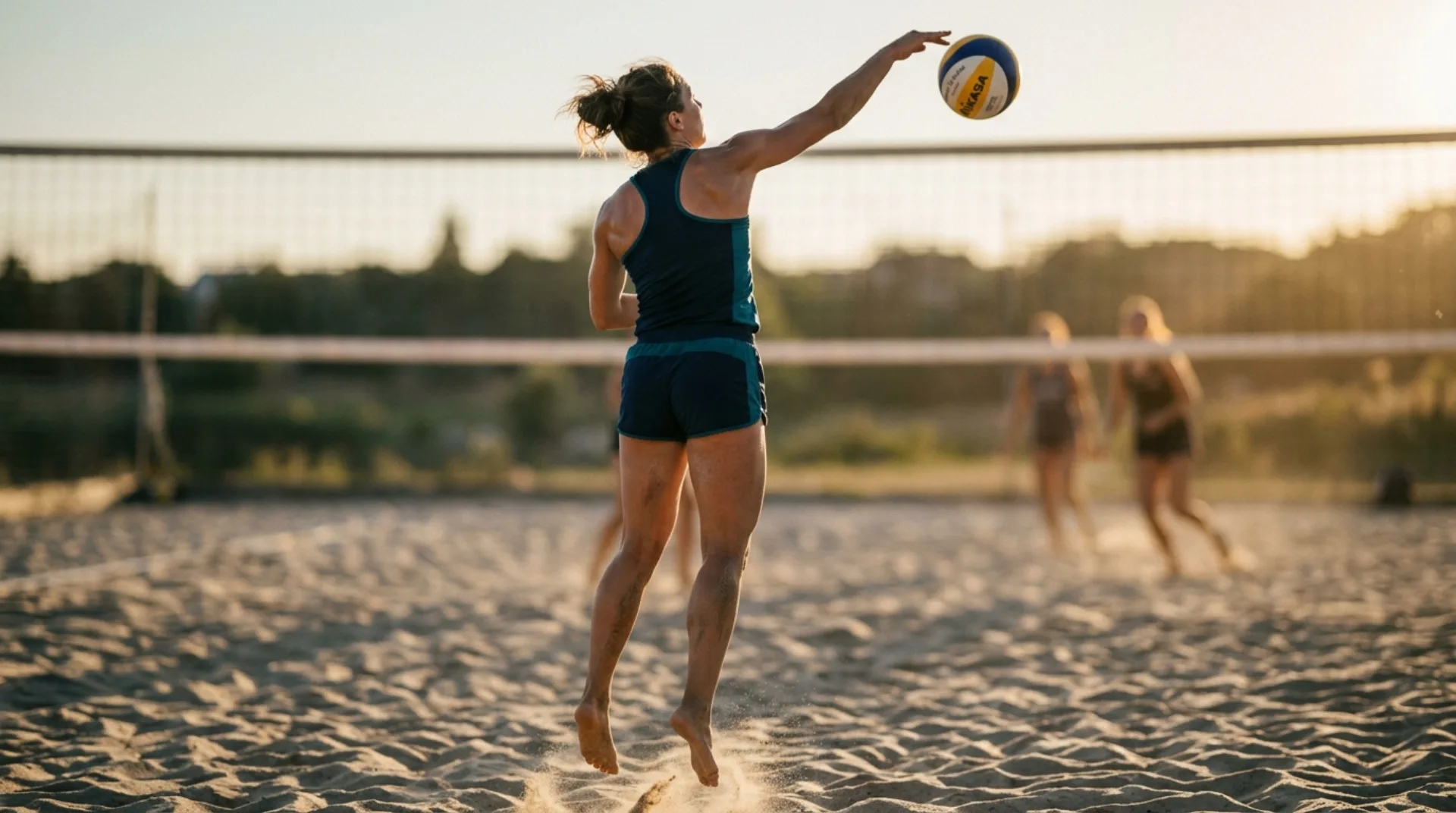
It is not just volleyball with sand underneath
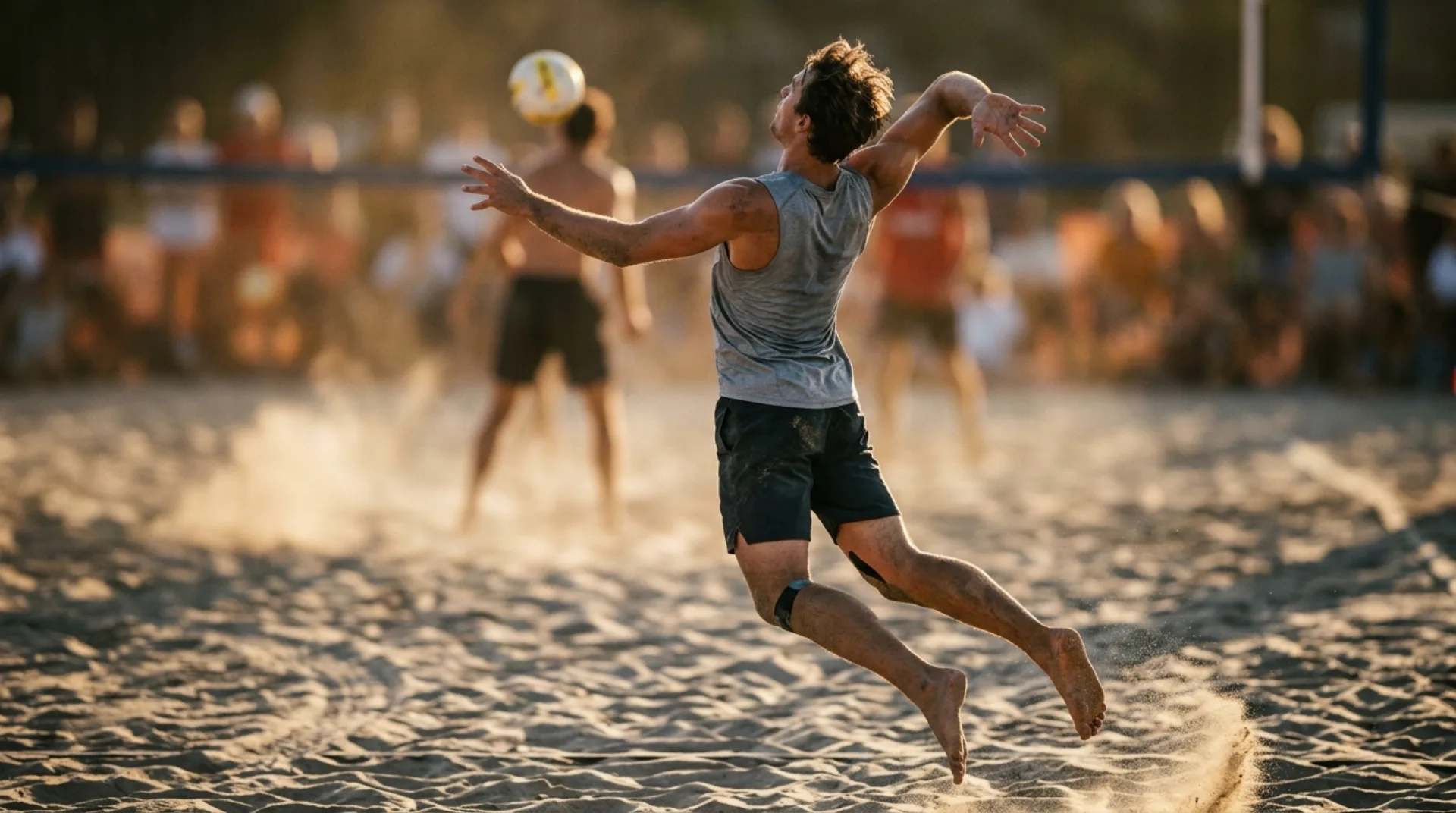
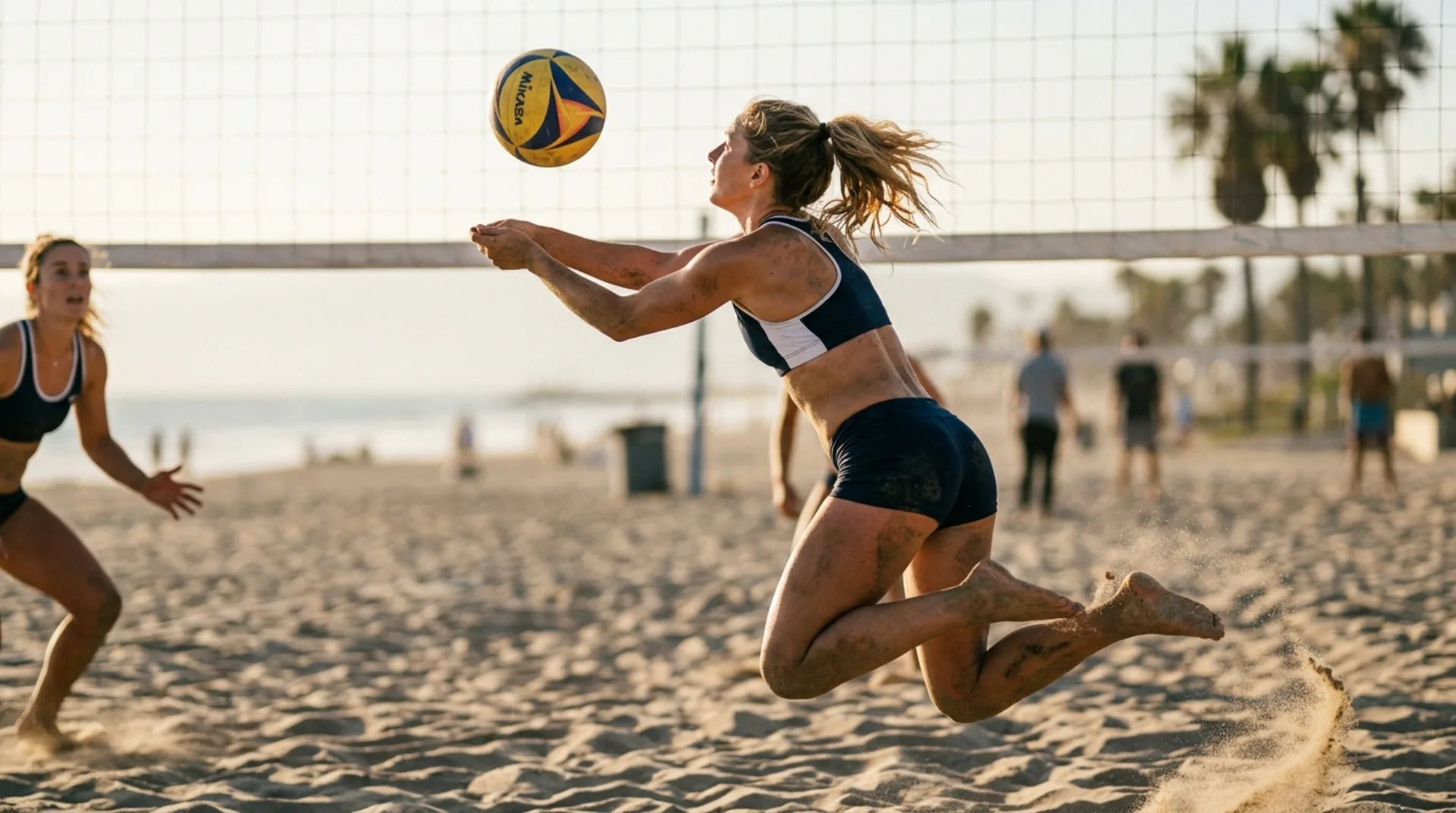
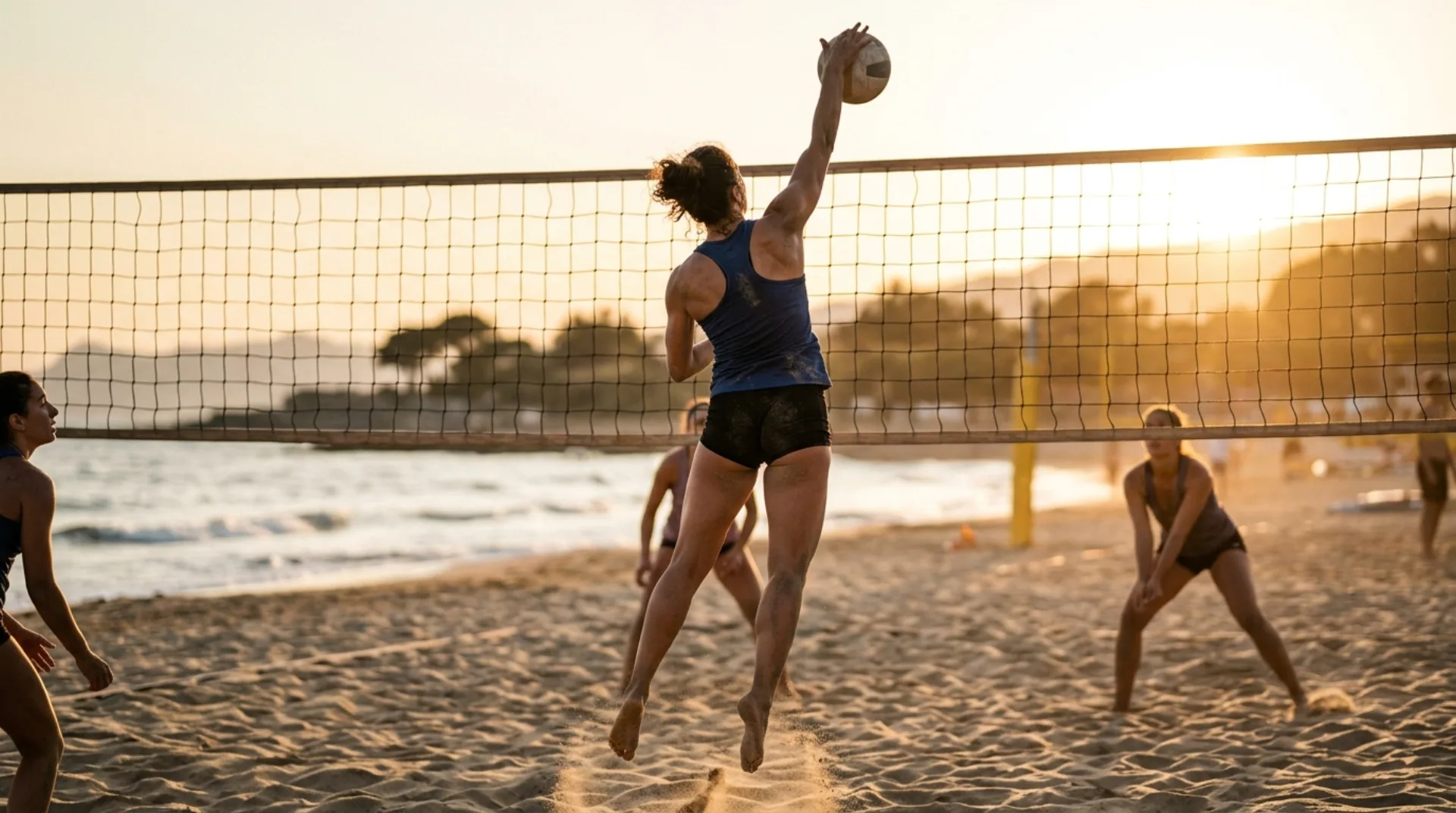
Beach volleyball shares the technical movement and little else with the indoor game. It is played 2v2 on a 16 × 8 m court, with no centre line and no attack line, so every player can attack and defend from any point on their side of the court. There are no substitutions: those who start the match finish it. And there are no roles, because two players do everything.
The net height is the same as indoor: 2,43 m for men, 2,24 m for women. However, the court is shorter and narrower, and the sand deprives your feet of the spring of a wooden floor. The result is a sport where you jump less and read more: rallies are long, powerful attacks are less decisive and control is what matters.
The numbers of beach volleyball
| Feature | Value |
|---|---|
| Court | 16 × 8 m, with no centre line or attack line |
| Players | 2 per team, no substitutions |
| Net height | 2,43 m men · 2,24 m women |
| Sets | Best of three |
| First two sets | To 21 points with at least a 2-point lead |
| Decisive set | To 15 points with at least a 2-point lead |
| Switching sides | Every 7 total points (every 5 in the decisive set) |
| Time-out | 1 of 30 seconds per set per team |
| Sand | At least 40 cm deep, fine and level |
The three differences that change the game
The first is that the block counts as a touch. In indoor, after blocking, the team still has three touches; in beach volleyball, the block touch is the first of the three. The blocker, therefore, must then be ready to play the ball: this is why in beach volleyball teams often block with only one player, while the teammate stays back to defend.
The second is the ban on open-hand dinks. The open-hand tip, which in indoor is used to place the ball over the block, is a fault in beach volleyball. Instead, players use knuckles (the so-called cobra), an open and rigid palm, or a shot hit like a cushioned spike.
The third is the tolerance on the first touch. On a hard-driven ball, the team's first touch can be a double contact or slightly caught: this is how serves are received and spikes are defended with the hands, a movement that would be whistled in the indoor gym.
How to read the sand
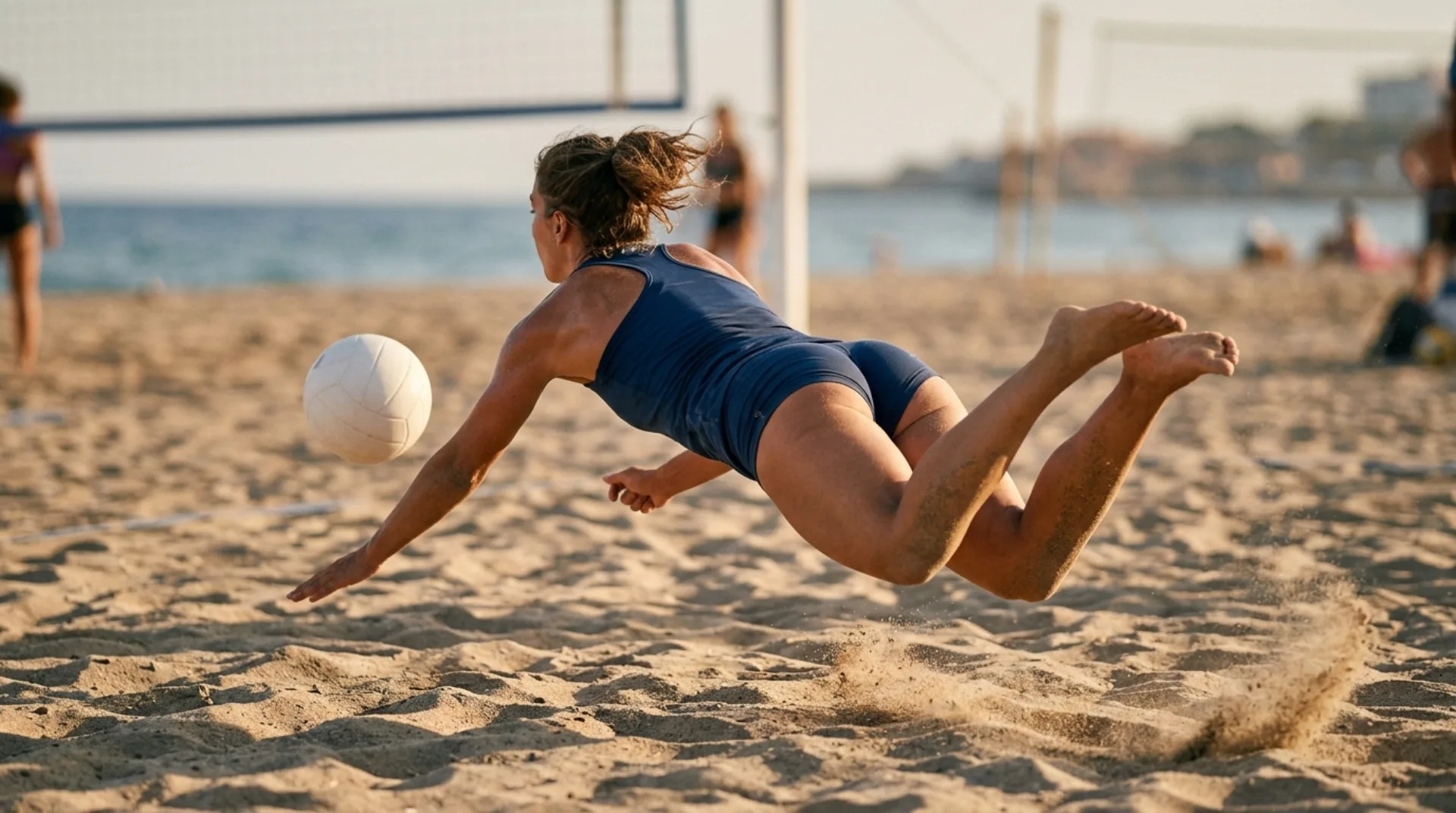
Anyone coming from indoor volleyball quickly discovers three things. You cannot run in the same way: your feet sink, movements are made with shorter steps and starting requires more anticipation. You do not jump like on a wooden floor: the drive is lost in the ground and must be sought with a longer approach. And you do not dive out of habit: on sand you can reach balls that would be unthinkable in a gym, so you play closer to the ground and give up much less.
Then there are the wind and the sun, which in beach volleyball are not just a backdrop but a tactical element: you choose the side of the court, adapt your serve, and force your opponent to play looking up. Switching sides every 7 points was introduced for exactly this reason.
Where to play and with whom
In Italy, beach volleyball courts can be found on serviced beaches, in sports centres with sand courts and in many municipal facilities open in summer. To play, you need two people, not six: this is the real convenience of beach volleyball, and the reason why summer tournaments can be set up in an afternoon.
If you organise a beach tournament, the bracket is filled out on a phone and the score is recorded from the court with VolleyFriends, so the standings stay updated without a sheet of paper hanging from the gazebo getting wet in the first storm.
In the pages of this hub, you will find the complete rules of 2v2, a detailed comparison with the indoor game, how to train movement on sand, how to play with wind and sun, and what is really needed to set up a summer tournament.