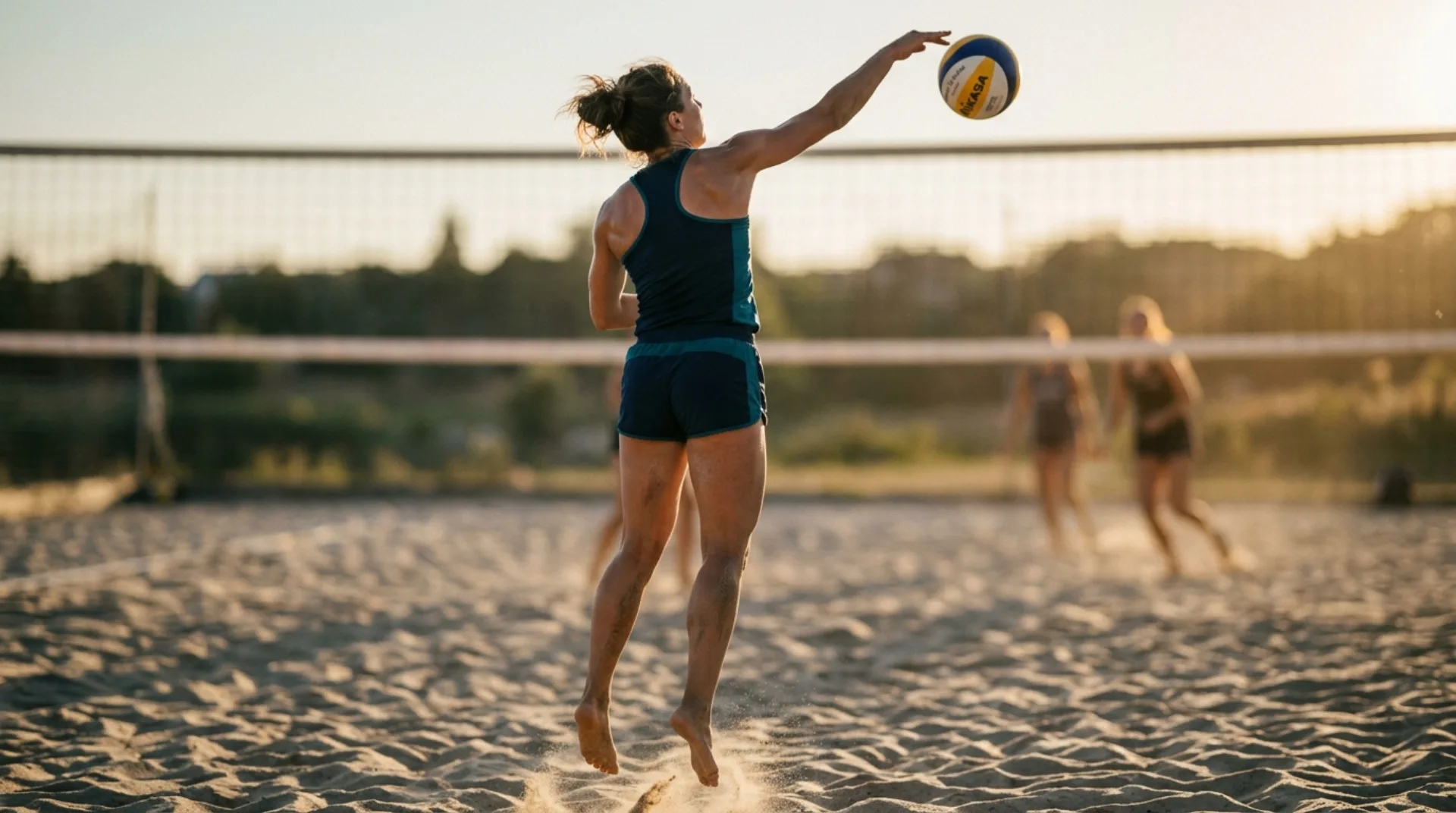
How to improve the bump set and counterattack on sand
Improve your chemistry in 2v2 beach volleyball: discover how to manage the bump set after a difficult defence and how to coordinate your run-up on the sand to score.
The end of August brings with it the great challenges of professional beach volleyball, such as the recent stage of the Campionato Italiano Assoluto in Vasto and the highly anticipated international tournament in Modena. For those who play on the sand every week in amateur tournaments, this period represents the highlight of the season. The fatigue of an entire summer of jumping starts to be felt in the legs, but the desire to take to the court does not diminish. What makes the difference between victory and defeat in a tight 21-point set, in the classic 16x8-metre 2v2 beach volleyball playing space, is not just the power of the spike, but the precision in rebuilding the play after a defence.
Knowing how to handle a messy ball and turn it into a perfect set for your partner is the quality that distinguishes the most solid pairings from improvised ones. In this guide, we analyse the secrets of the bump set and the attack transition, to allow you to make a concrete leap in quality in your next matches.
The second touch on the sand: why the bump set is the safe choice
Many amateur players, used to indoor volleyball on a hard surface, try to set with an overhead pass at all costs even on the sand. In beach volleyball, however, the overhead set is subject to very strict rules regarding double contacts and ball rotation. Furthermore, the late summer wind and the instability of the sand make the overhead set a risky option, especially if you have to move quickly after an acrobatic defence by your partner.
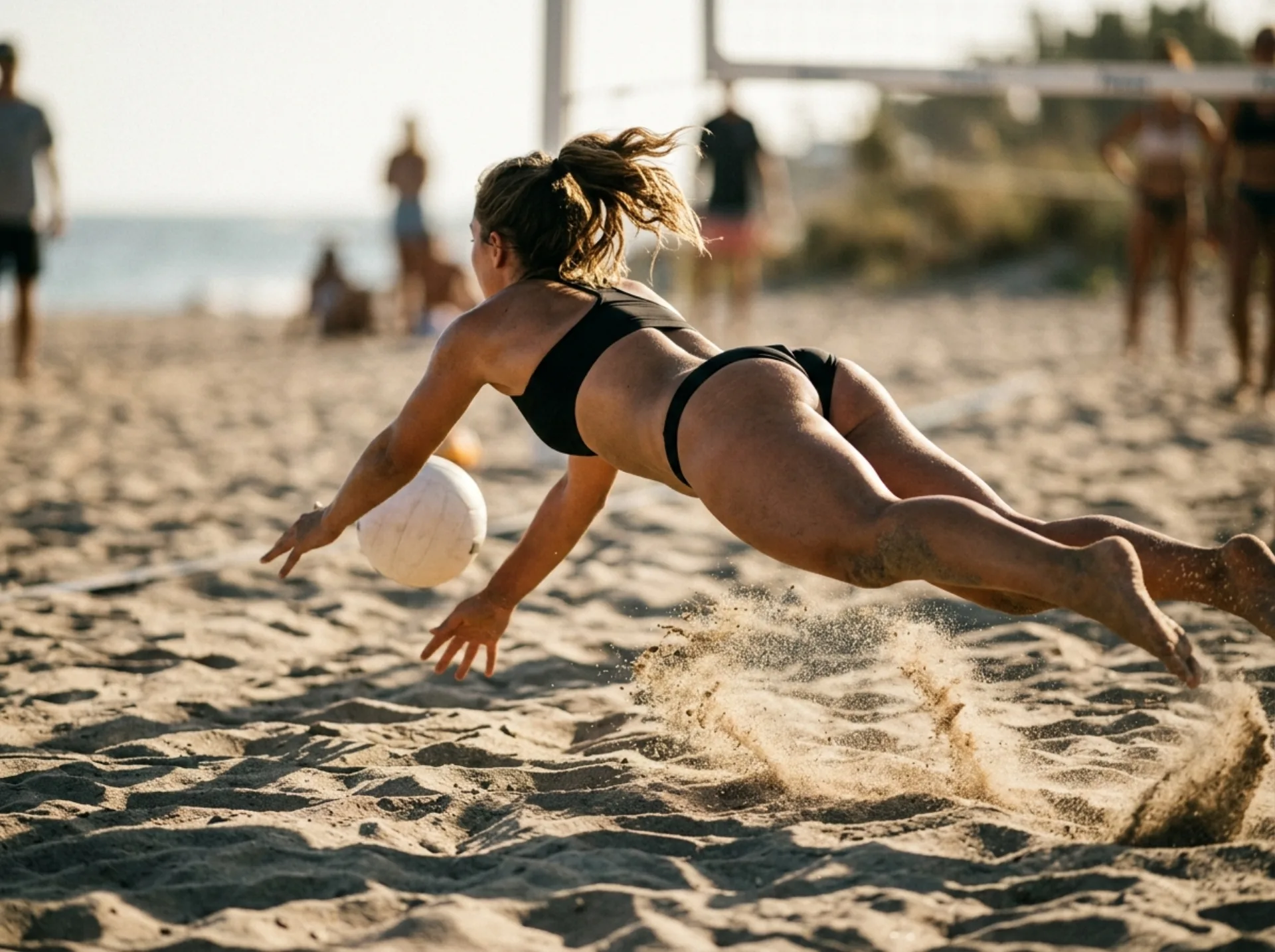
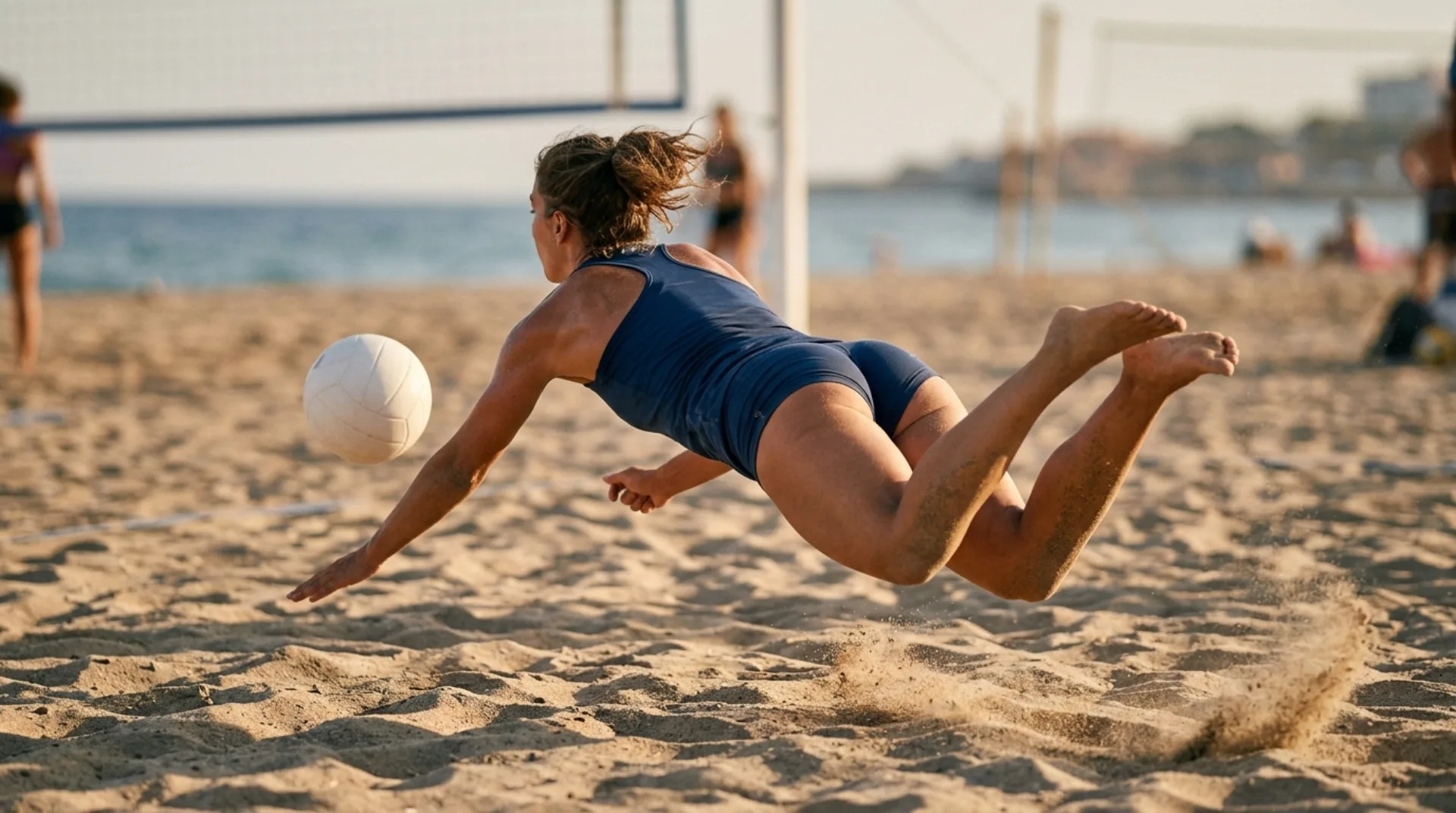
The bump set is the safest and most effective solution in almost all amateur game situations. Compared to the overhead set, the bump set allows you to handle balls that arrive low or very far from the net, offering a higher and more stable trajectory. A good rebuilding bump set gives your partner the necessary time to regain their balance after a dive or a quick lateral movement, allowing them to prepare an effective attack run-up.
The practical guide to a perfect bump set
To guarantee a precise set that puts your partner in the best position to attack, it is necessary to take care of your posture and body orientation. Here are the technical guidelines to follow step by step:
- Positioning on the court: Move quickly towards the ball's landing zone to be already stationary at the moment of contact. In the 16x8-metre beach volleyball court, the setter must try to position the ball about one metre or one and a half metres away from the net, to prevent the attacker from being forced to hit too close to the opponent's block or to invade the opposite space.
- The technical gesture: Create a wide and solid platform by bringing your arms together, with elbows fully extended and wrists pointed downwards. Do not swing your arms upwards during contact with the ball; the push must come mainly from the legs, which extend smoothly to guide the ball's trajectory.
- Typical mistake: Hitting the ball with bent or asymmetrical arms, a common flaw when arriving late to the ball. This mistake causes the trajectory to deviate sideways or makes the touch imprecise and unpredictable for the attacker.
- How to correct it: During training, focus on anticipating the movement. Try to stop your feet before bringing your arms together, keeping your torso slightly tilted forward and your shoulders oriented towards the direction you want to send the ball.
What amateur players usually get wrong
The most frequent mistake in amateur tournaments is not purely technical, but tactical and communicative. Too often, after a player defends a difficult ball, their partner runs towards the ball looking solely at its aerial trajectory, without considering the defender's position at all. This behaviour leads to two negative consequences: either the set is made too close to the player who has just defended, preventing them from taking a run-up, or the ball is sent too close to the net, exposing it to the opponent's block.
Another classic mistake is the total absence of vocal communication. Clearly calling who is taking the ball or calling the height of the set helps prevent collisions in the middle of the court and allows even the trickiest balls to be managed with clarity.
How to coordinate the attack run-up on heavy sand
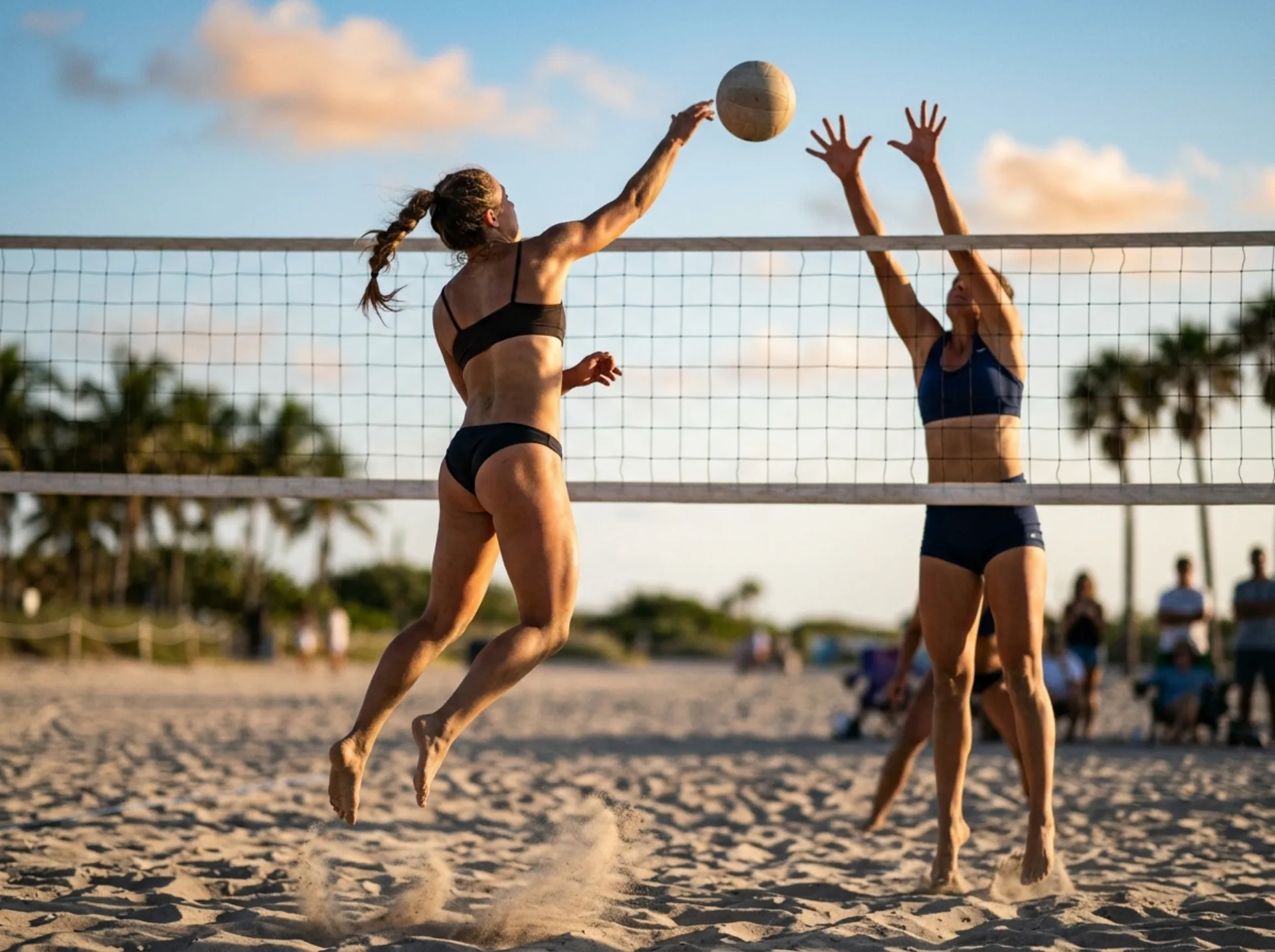
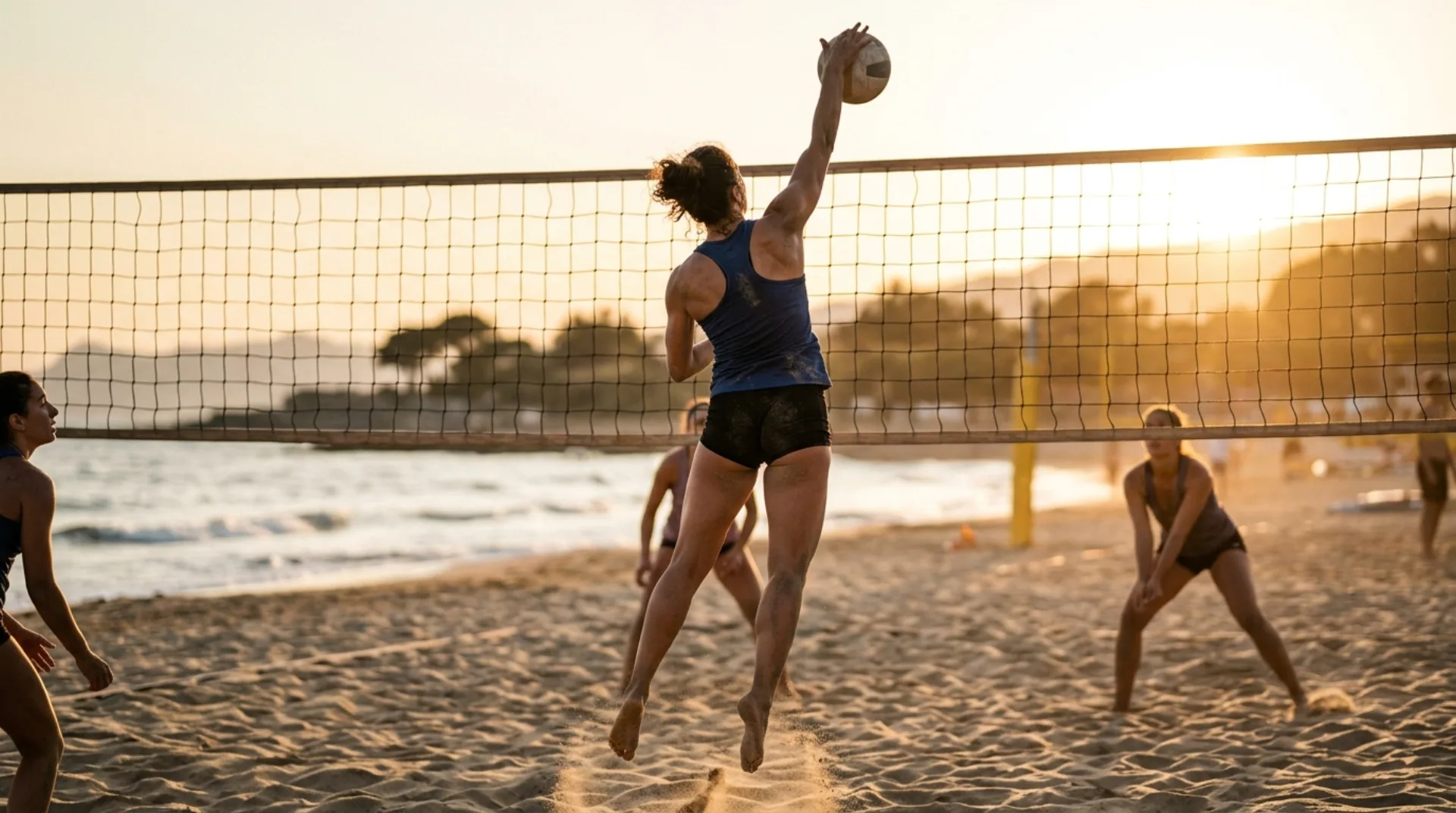
Once the set has gone up high and precise, it is up to the attacker to close the point. On sand, the run-up cannot be identical to the one performed in the gym. The unstable surface absorbs the energy of the jump, making a run-up that is too long or fast useless.
The run-up on sand must be shorter, generally consisting of three steps. The first steps serve to take direction and calculate the trajectory of the ball, while the last step must be deep and braking, to convert horizontal speed into vertical thrust. The arms play a fundamental role: they must be thrown back energetically during the loading of the legs and then swung upwards to maximise elevation. Remember that the management of the net height varies depending on the categories, and the specific details must be checked in the regulations of the individual event you are playing.
If you and your group of friends want to put these tips into practice and test your chemistry on the sand, organising a late-summer match or mini-tournament is extremely simple. With VolleyFriends you can create your event, invite participants and manage matches directly from your smartphone, focusing only on having fun and improving your game.