How to play your best in 2v2 beach volleyball tournaments in Naples
Tactical keys for amateur 2v2 beach volleyball tournaments in Naples: how to manage the coastal wind, court dimensions, and the most common mistakes on the sand.
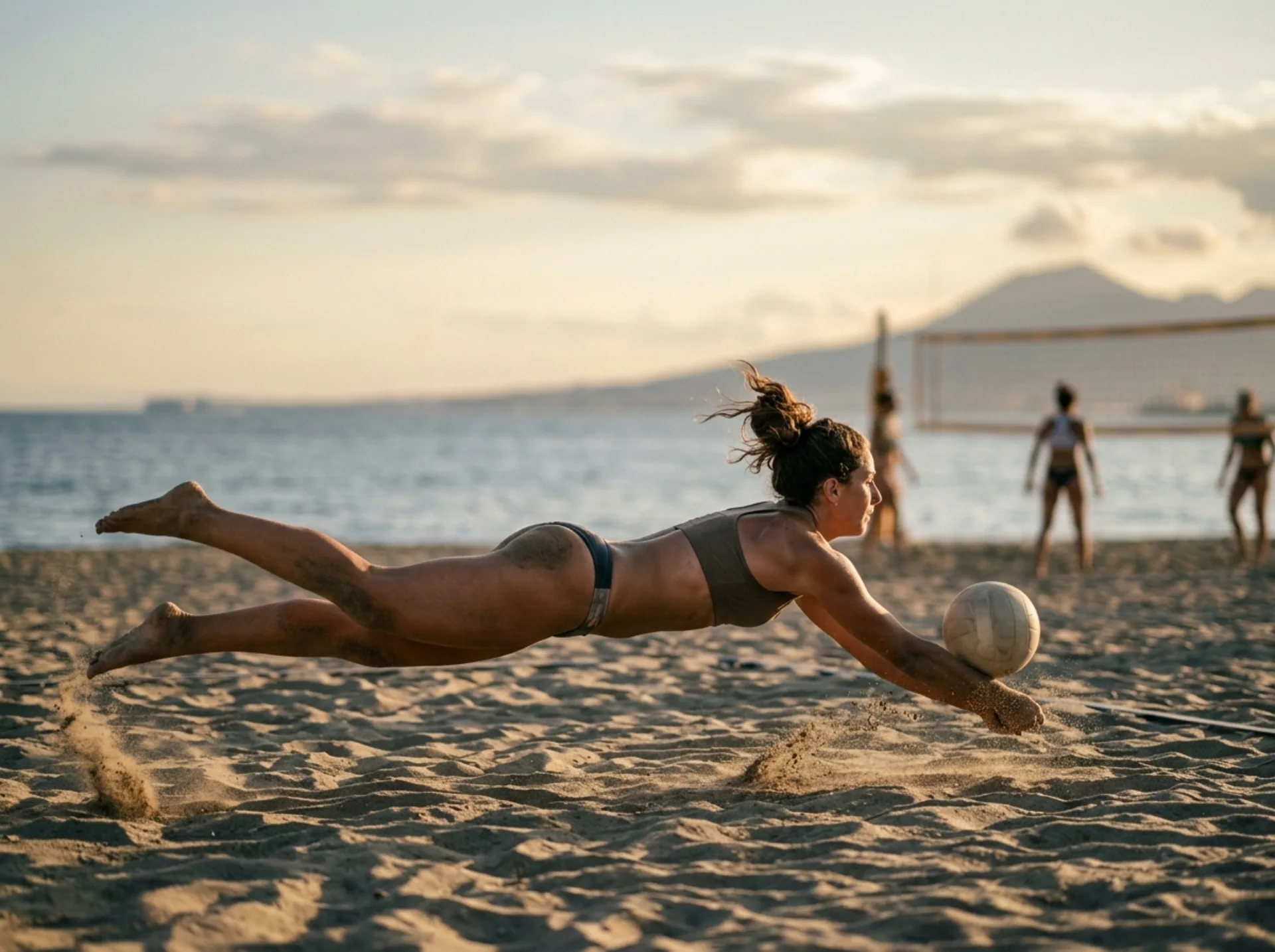
Playing beach volleyball in Naples during the summer season means dealing with unique elements: the hot sand of the coastline, the sea breeze rising from the gulf in the late afternoon, and the energy of the many enthusiasts competing on the courts from Pozzuoli to Miliscola. Anyone participating in an amateur 2v2 tournament must immediately adapt their technique and tactics to avoid finding themselves at a disadvantage right from the first rallies. On the sand, every single physical and organisational detail can make the difference between a victory and a quick elimination.
The golden rules of 2v2 beach volleyball on sand
Before taking to the court for an amateur tournament, it is essential to have a clear understanding of the official rules governing the game on sand in the two-on-two format. Often in amateur tournaments, there is a tendency to confuse beach volleyball rules with those of indoor volleyball, but the differences are substantial and directly influence how you position yourself on the court.
The 2v2 beach volleyball court measures exactly 16x8 metres, a reduced surface area compared to traditional indoor volleyball spaces, which requires a much more dynamic coverage of space and perfect understanding with your teammate. Official matches are played as the best of three sets: the first two sets are played to 21 points, while any deciding third set, the tie-break, is played to 15 points. As for the height of the net or the specifications on the weight and pressure of the ball to be used, these values vary depending on the category and type of tournament, so we always advise you to check them directly in the official regulations of the individual event you decide to enter.
How to manage the wind of the Neapolitan coastline
One of the most decisive factors when playing outdoors on the beaches of Naples, especially in the afternoon hours, is the wind. Knowing how to use the air currents to your advantage or, conversely, minimising the damage when playing against the wind is a skill that distinguishes experienced players from amateurs.
When playing with the wind in your favour, the temptation is to hit the ball hard. This is often a mistake, as the wind will push the ball past the baseline of the 16x8 metre court. In this situation, it is preferable to use short serves and placed attacking shots, such as dinks or flat trajectories directed towards the open corners. Conversely, when playing against the wind, you need to apply more force to the ball and keep the set trajectories lower and closer to the net to prevent the ball from drifting back or becoming uncontrollable for the attacker.
The most frequent mistakes that cost the match
In amateur challenges on the sand, most points are lost through unforced errors rather than the opponents' merits. Identifying these lapses allows you to correct them immediately during the match.
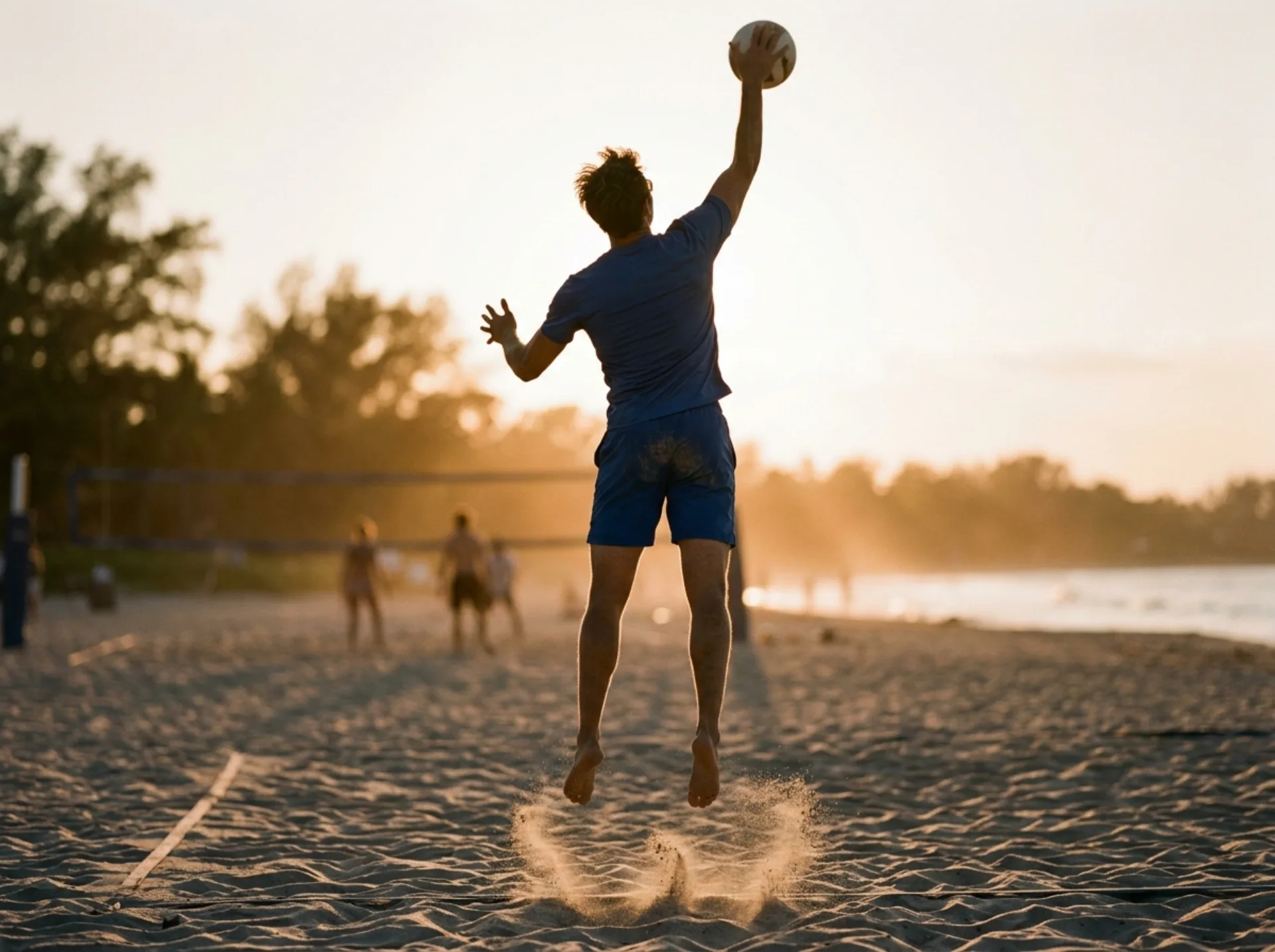
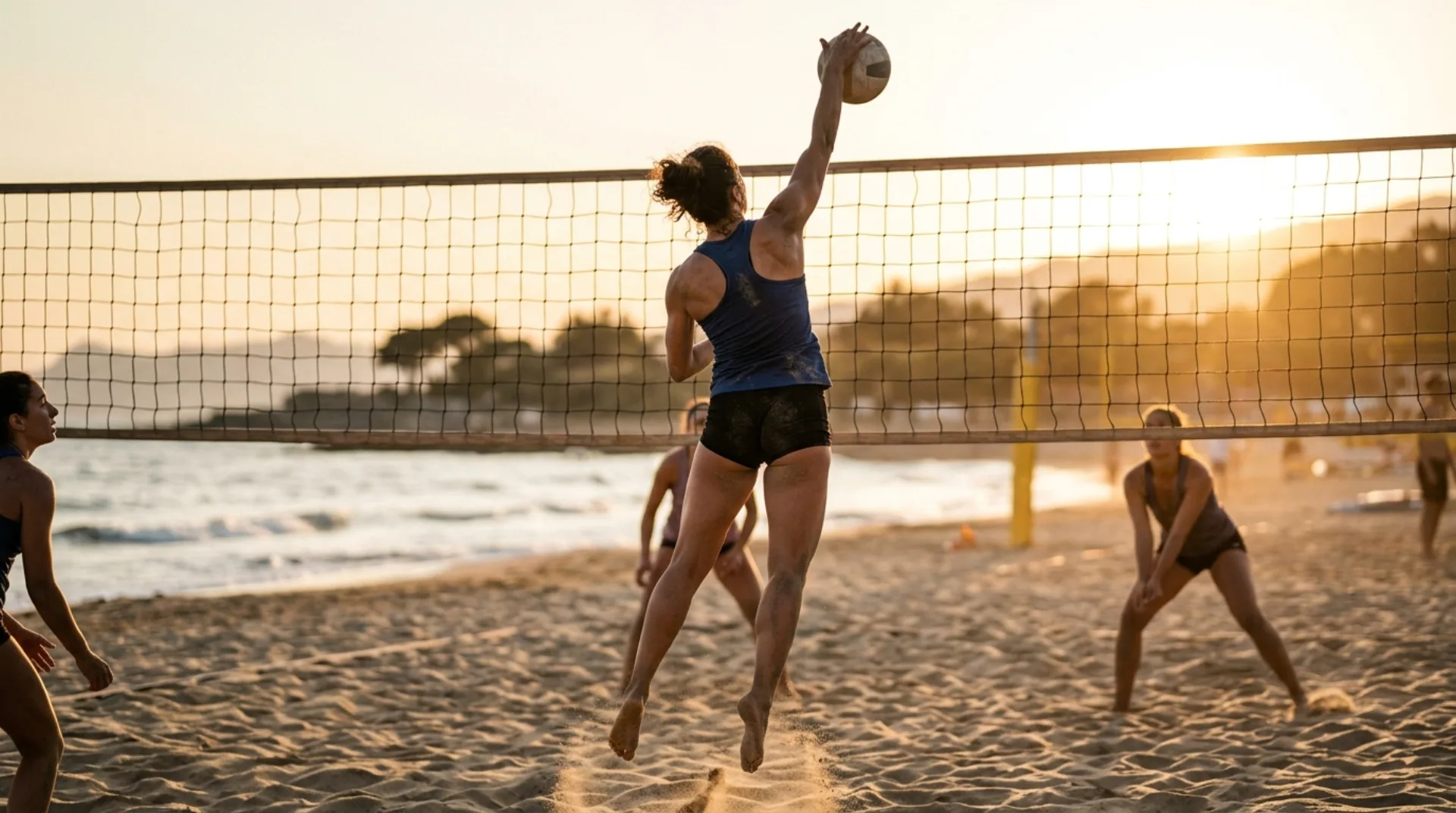
- The rigid attacking run-up: many players coming from indoor volleyball try to jump on the sand using the same run-up used in the sports hall. On the sand, there is no elastic bounce; steps must be shorter, the final step must sink well to convert speed into height, and the arms must actively assist the elevation.
- The lack of communication: in 2v2 there are no fixed roles. If you do not call the ball out loud in reception or defence, a collision or a dropped ball is inevitable.
- Net touches and net faults: the eagerness to finish the point at the net often leads to touching the top band or penetrating into the opponent's court. Remember that in beach volleyball, crossing under the net is always a fault if it touches or interferes with the opponent, so body stability is essential.
Practical guide to the forearm pass on sand
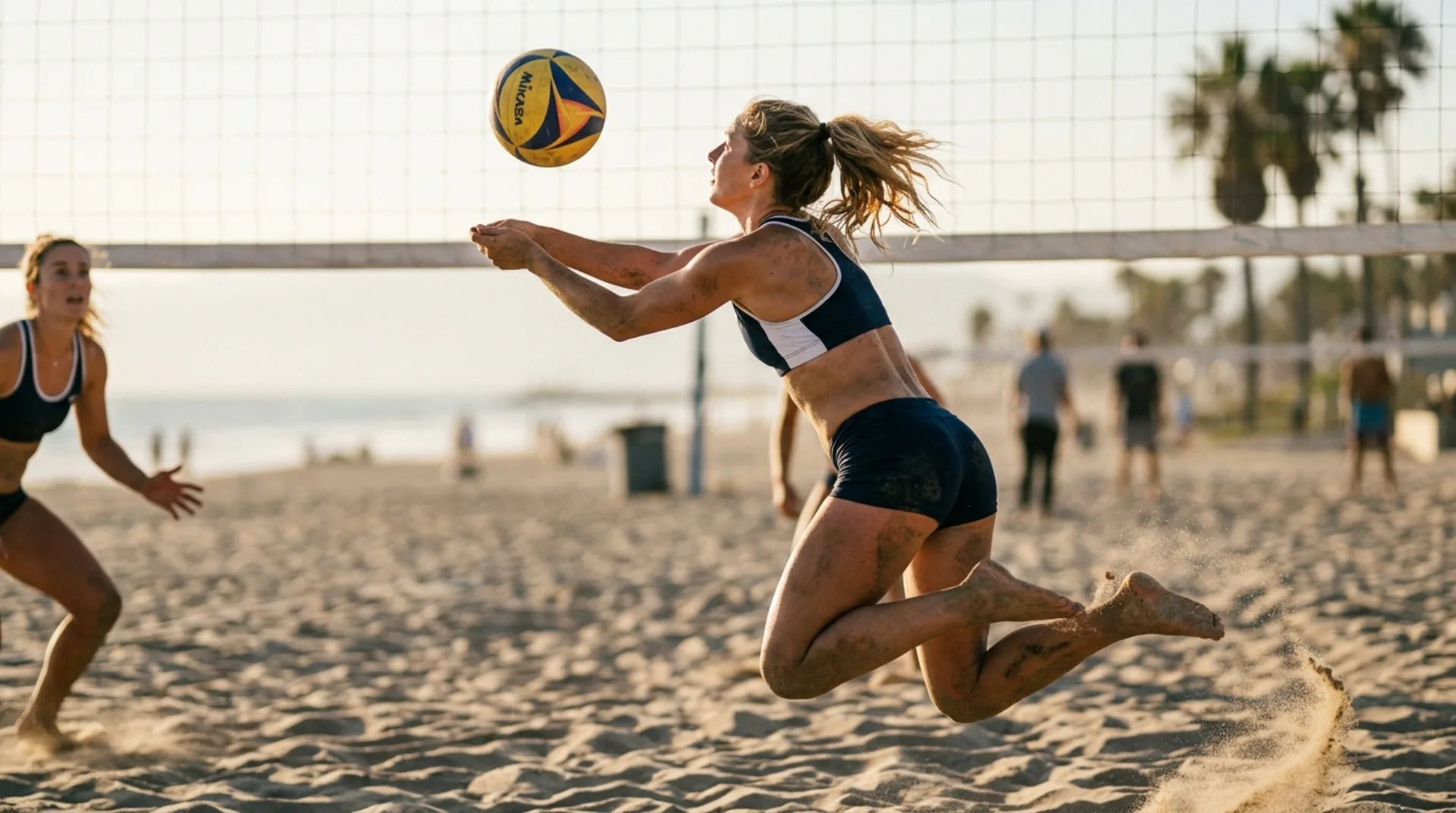
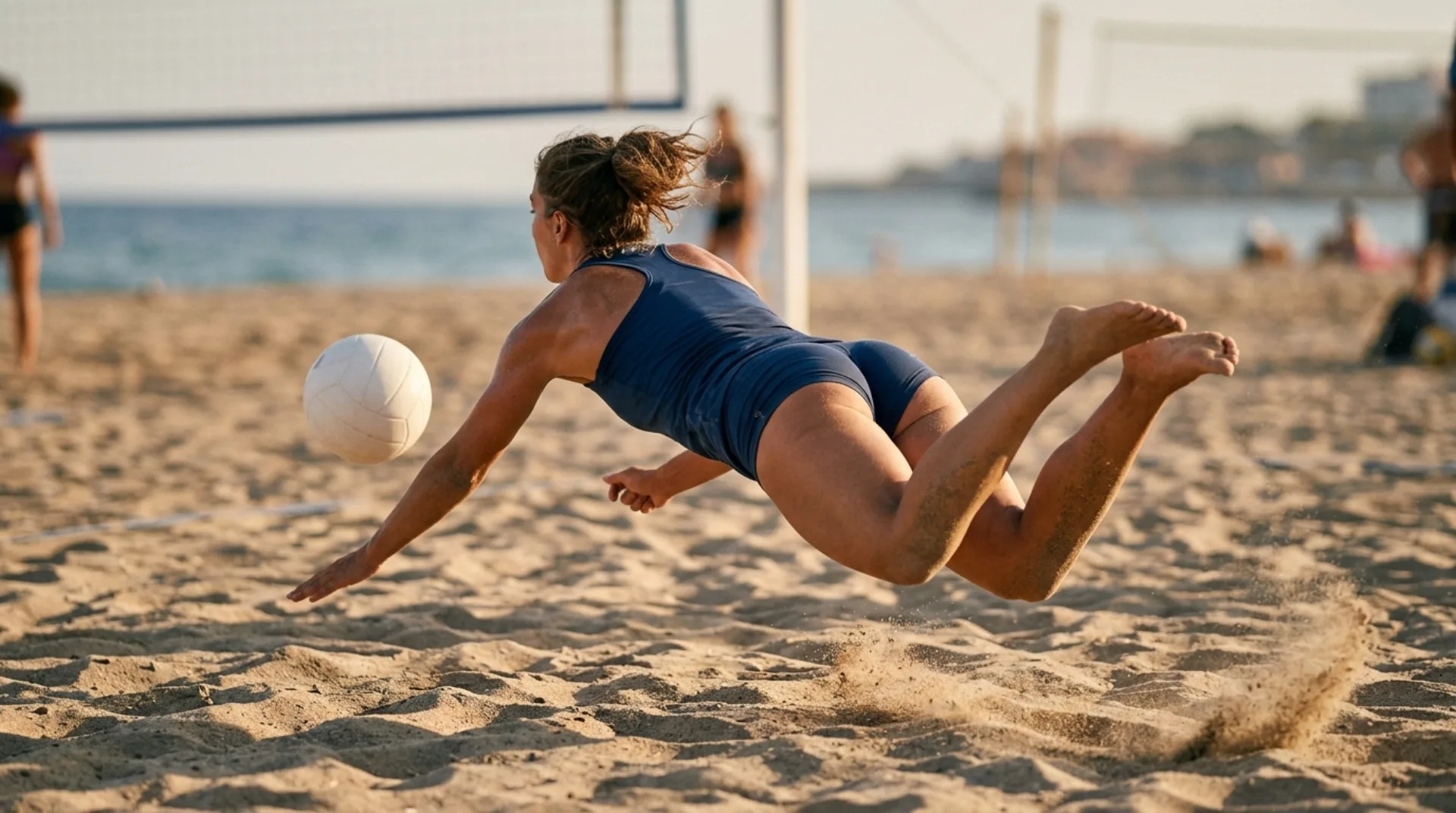
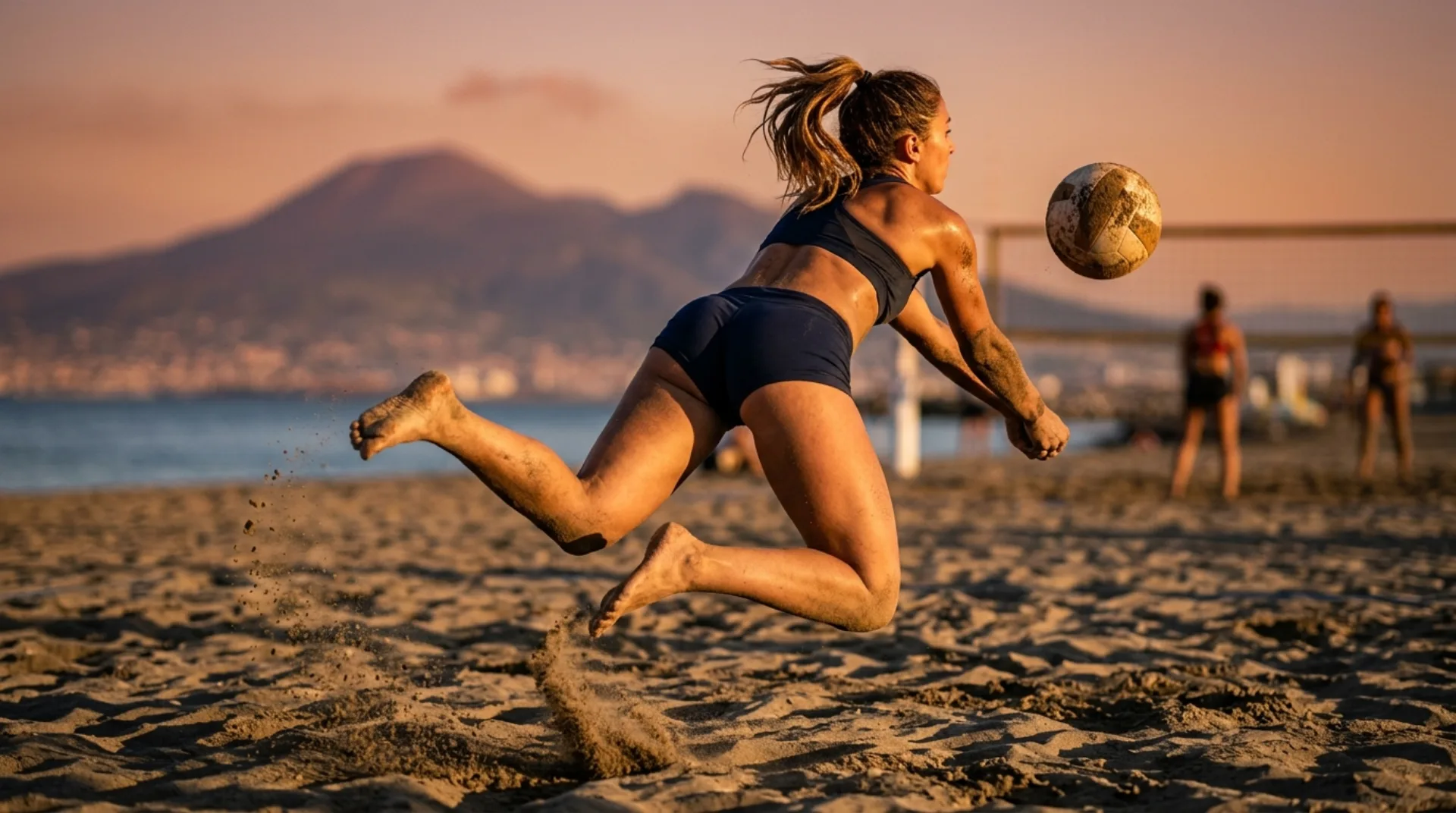
The forearm pass is the most used and important fundamental skill in 2v2 beach volleyball. Without an accurate reception, it is impossible to build an effective attacking play, especially when weather conditions are unstable.
Here are the practical guidelines to perform a perfect forearm pass on the sand:
- The starting position: feet wider than shoulder-width apart, knees bent, and body weight shifted onto the balls of your feet. Never stand with straight legs waiting for the serve.
- The platform: your arms must be together and extended, with wrists joined and pointed downwards to create a flat and even impact surface.
- The leg movement: do not hit the ball by swinging your arms from bottom to top. This is the typical mistake that causes loss of control over the trajectory. The movement must come from the push of the legs extending, guiding the ball towards the setting zone.
- Correcting the mistake: if the ball tends to slip backwards or sideways, it means your shoulders are not aligned towards the target. Before hitting, make sure to get your body behind the ball and direct the platform of your arms exactly where you want to send the ball, taking into account the dimensions of the court.
Taking on a summer tournament requires physical preparation and a great desire to have fun under the sun. To find the perfect event or simply to put together the ideal teammates for a beach match, using a dedicated digital tool can simplify the management of sign-ups and courts, leaving you with only the fun of the challenge on the sand.