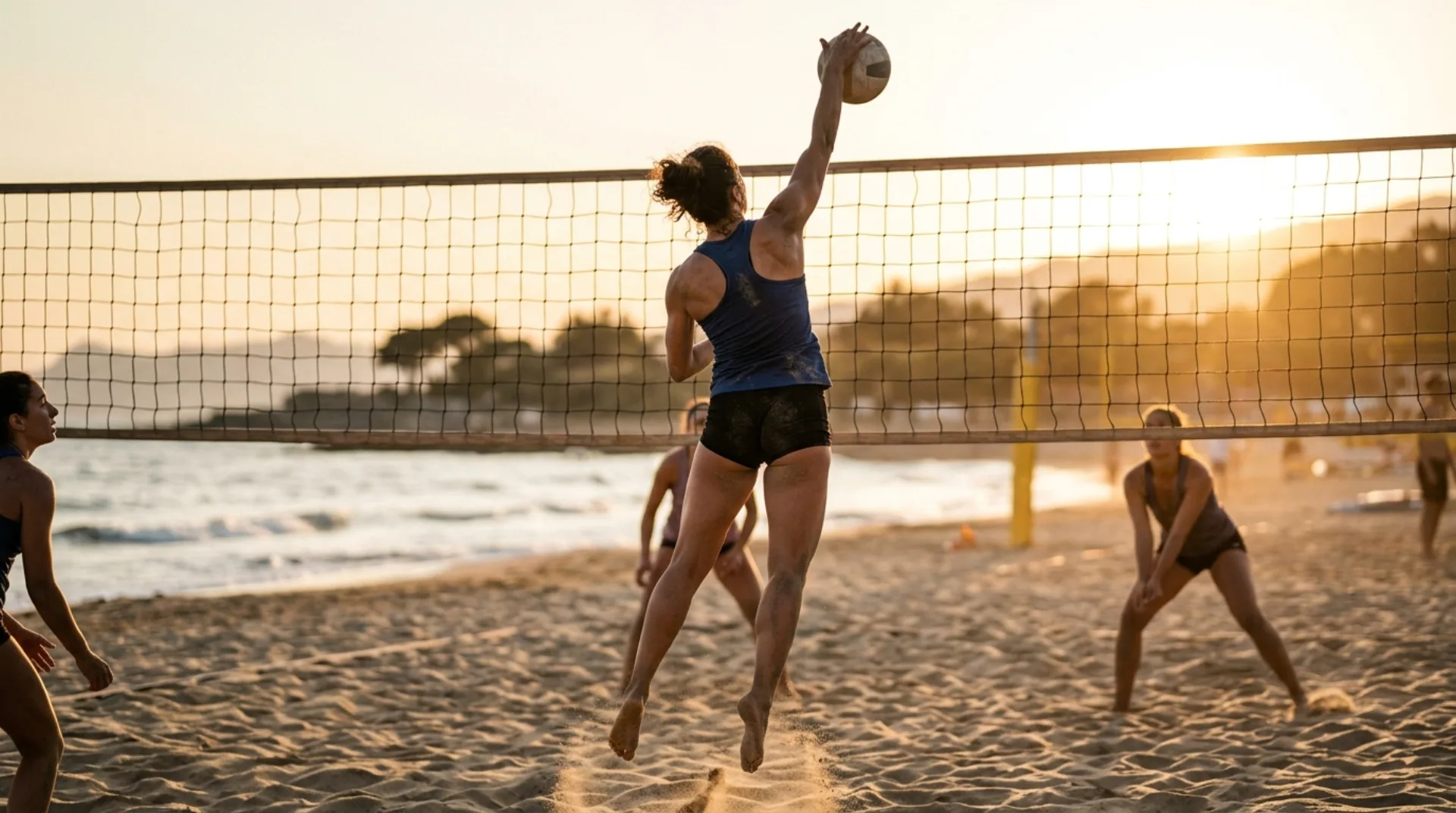
How to play amateur late-summer beach volleyball tournaments
From night matches to mixed tournaments on the late August sand: here is practical advice to take to the court and have fun in amateur beach volleyball tournaments.
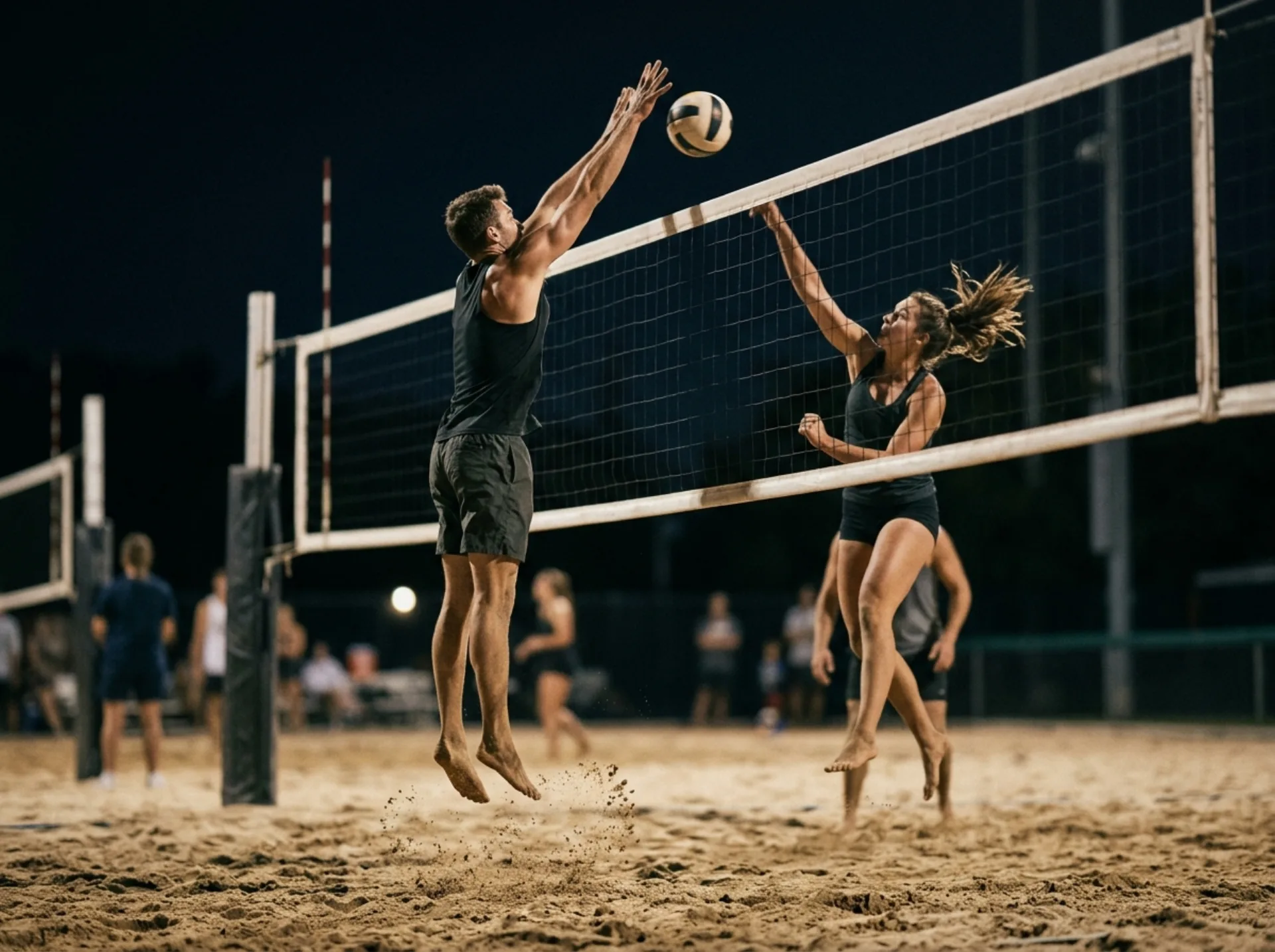
The end of August represents the golden moment for those who love the sand and outdoor play. Warm days and the desire to share sport with friends drive many enthusiasts to sign up for the last beach volleyball tournaments of the season. Whether it is atmospheric night events, such as Moonlight Volley in Bari on Pane e Pomodoro beach, or friendly challenges in a mixed format like the Gran Torre Cup in Torregrande and themed tournaments in Tirrenia, taking to the court in this period requires a mix of adaptation and fun. Playing conditions change rapidly, especially when transitioning from the blinding afternoon sun to the floodlights of evening matches.
To tackle these challenges in the best way without risking injury and to enjoy every single match, it is essential to understand how to adapt your technique and court management to different situations. Here is a practical guide to getting ready on the sand.
How the game changes under the floodlights and in mixed tournaments
Playing in the evening or participating in tournaments with mixed formats profoundly alters visual reference points and team dynamics. Under the artificial light of floodlights, depth perception and the trajectory of the ball can deceive even the most experienced players. The ball seems to move at a different speed, and the contrasting shadows on the sand make movement more complex. Furthermore, in mixed formats, collaboration and communication between teammates become even more crucial to cover the court efficiently and avoid collisions.
When playing in these conditions, the key is to simplify the game. Avoid trying for millimetre-perfect shots or useless acrobatics. Focus on the cleanliness of the technical execution and constant loud communication. Calling for the ball before hitting it avoids misunderstandings and allows your teammate to position themselves correctly to support you in the next action.
Space management and tactics for amateur beach volleyball
To play well on sand, you need to know the rules of the space you move in and apply a specific technique for this unstable surface.
- Court measurements: In standard 2v2 beach volleyball, the court measures exactly 16x8 metres. For all other highly popular game formats in summer amateur tournaments, such as 3x3 mixed tournaments, youth tournaments or promotional championships, the court dimensions and net height must be checked in the specific regulations of the event.
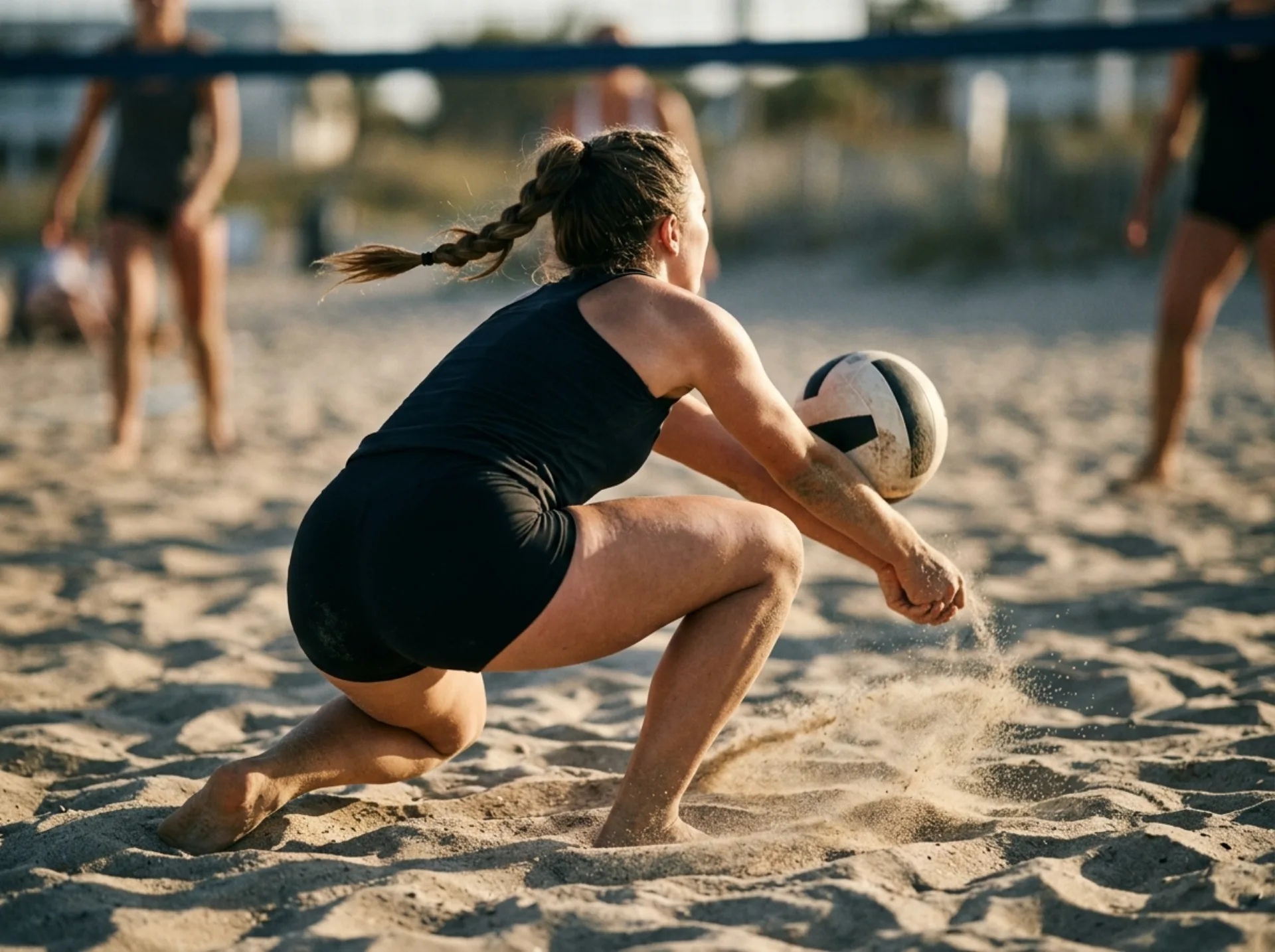
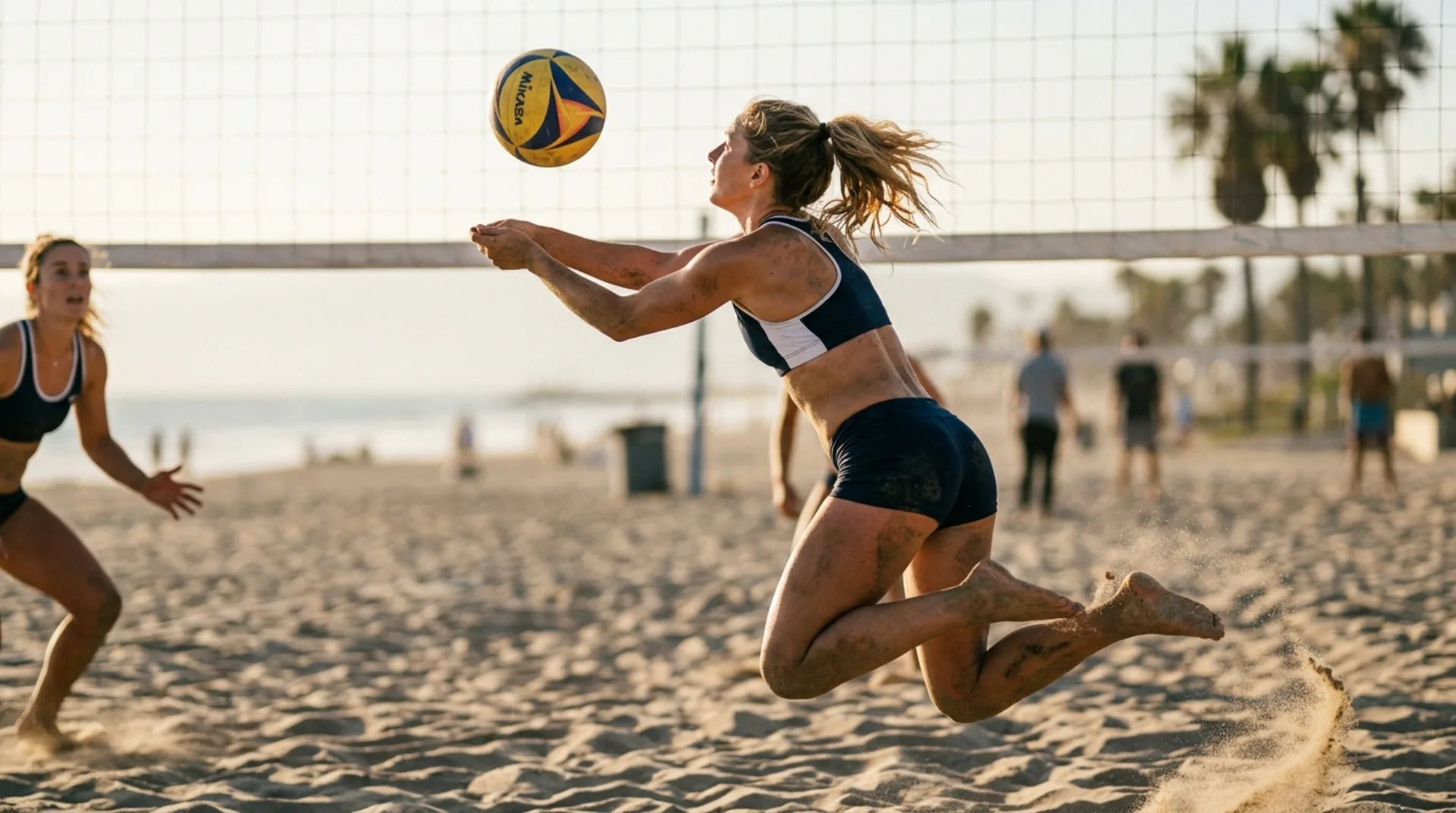
- The technical execution (the forearm pass): To control a ball on the sand, the forearm pass is your best ally. Position yourself with your legs well bent and your feet slightly wider than your shoulders to maintain balance on the unstable surface. Create a solid rebounding platform by bringing your forearms together and keeping your wrists joined and pushed downwards.
- The typical mistake in the forearm pass: Many amateur players tend to swing their arms from bottom to top at the moment of impact with the ball. This movement disrupts the rebounding platform and makes the trajectory of the ball totally unpredictable, often sending the ball behind their own shoulders or out of court.
- How to correct it: Keep your shoulders locked and your arms still. The push to direct the ball must not come from the arms, but from the legs. Slightly extend your knees during impact, guiding the ball towards the desired direction without swinging your forearms above the shoulder line.
The most common amateur mistake in late-summer tournaments
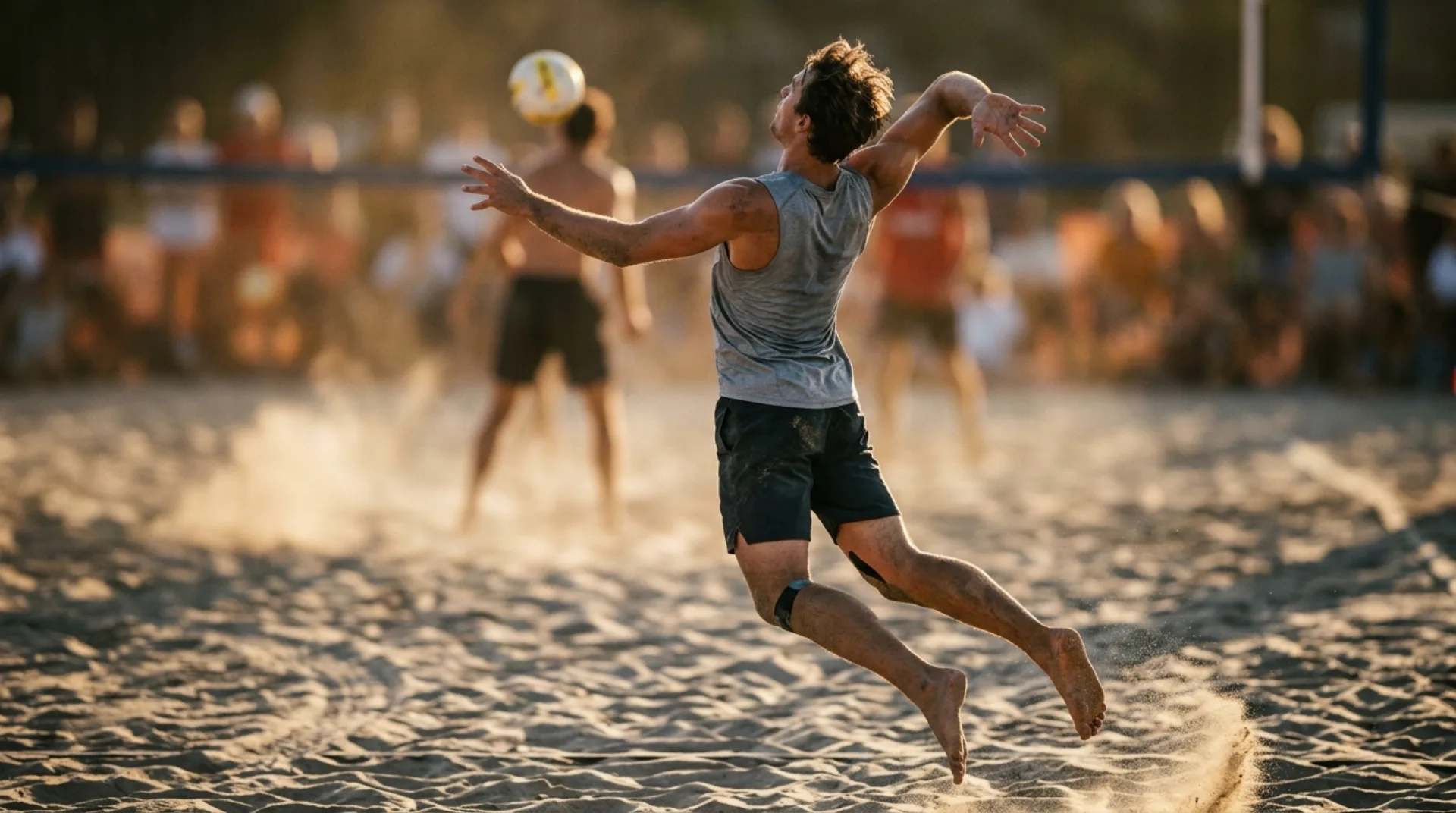
The most frequent mistake observed in late-season amateur tournaments is the incorrect management of energy and attacking shots. Driven by enthusiasm and the desire to emulate the professionals of the national circuit, many players try to hit the ball with maximum force on every occasion, even when they are out of balance or on imprecise sets. On the sand, chasing wet or heavy balls and continuously jumping requires an enormous expenditure of energy.
Forcing the attack on a less-than-perfect ball almost always leads to a direct error or gives an easy counter-attack to the opponents. Those playing at an amateur level achieve significantly better results by placing the ball with precision into empty spaces on the opponent's court, using lobs or placed shots, rather than seeking a powerful finish. Learn to read the position of the opposing defence even before jumping and use tactical intelligence to win the point with minimal physical effort.
How to organise with friends for the final summer tournaments
Participating in a beach volleyball tournament is first and foremost an opportunity for socialising and fun. To avoid unforeseen issues, make sure to pack your kit bag with everything you need. Even if it is warm during the day, always bring a spare sweatshirt or thermal top for evening matches or for break times between sets, when the evening dampness begins to be felt on the sand.
If you want to test yourself and experience the unique atmosphere of these late-summer challenges, gathering a group of friends is the first step. Organising the team, dividing roles and planning training sessions before the opening whistle makes the experience even more engaging. You can easily coordinate to decide playing rotations and manage everyone's availability, so you can take to the court focused only on the fun and the beauty of playing together under the summer sky.