The game is a chain
Volleyball is the only team sport where you cannot hold the ball: every touch lasts an instant and prepares the next. From this comes the most important thing to understand before any technique: a poorly executed fundamental ruins the next two. An imprecise reception forces an emergency set, which produces an attack with no options, giving away a counter-attack.
This is why the order in which you learn matters. The sequence that yields the best results in an amateur team is: forearm pass, serve, set, attack, block, defence. It is not the most fun order — everyone wants to spike straight away — but it is the one that wins matches, because a team that receives and sets plays, while a team that spikes well without receiving never touches the ball.
What sets good players apart
Three things, and none of them are about strength.
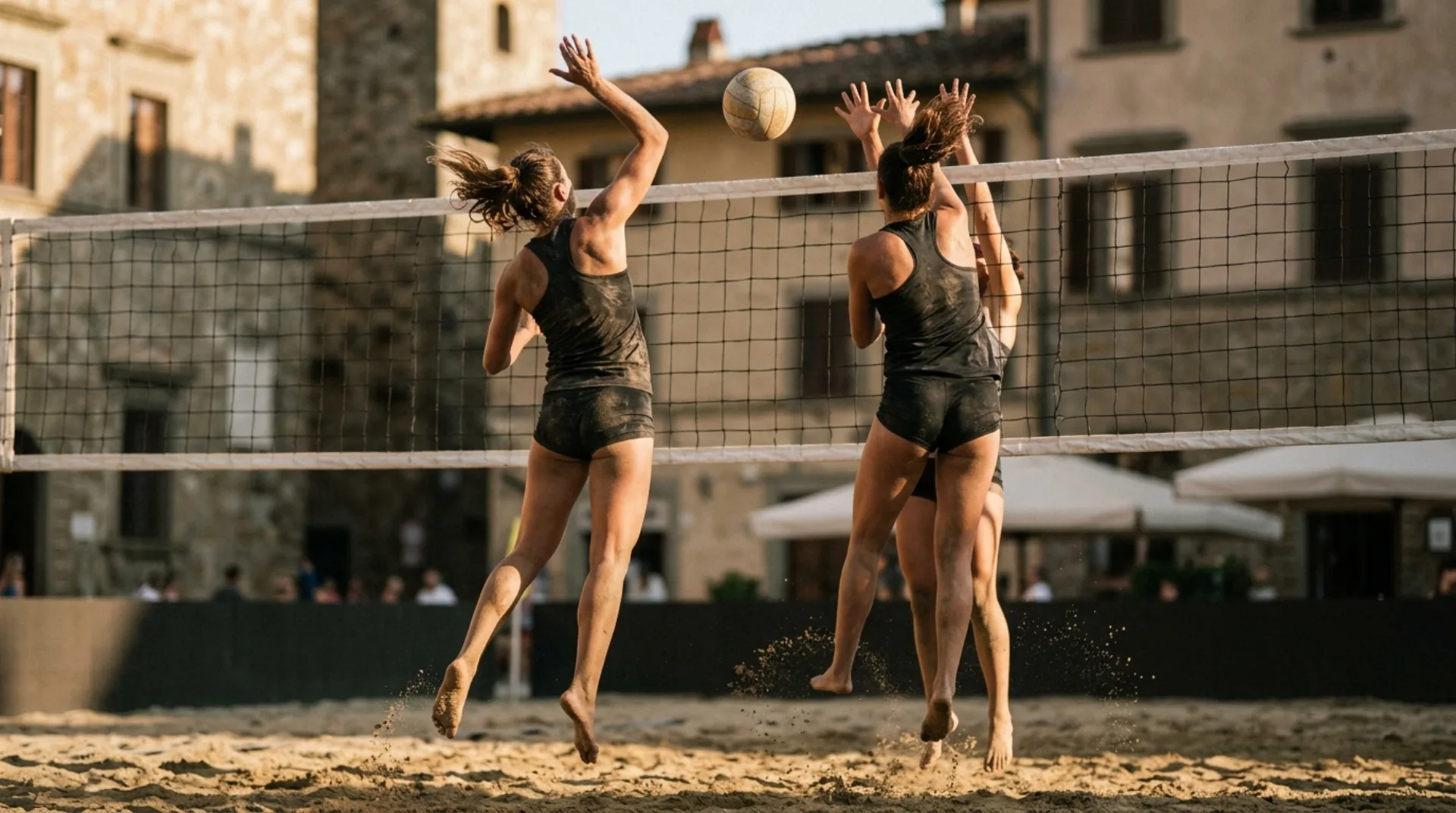
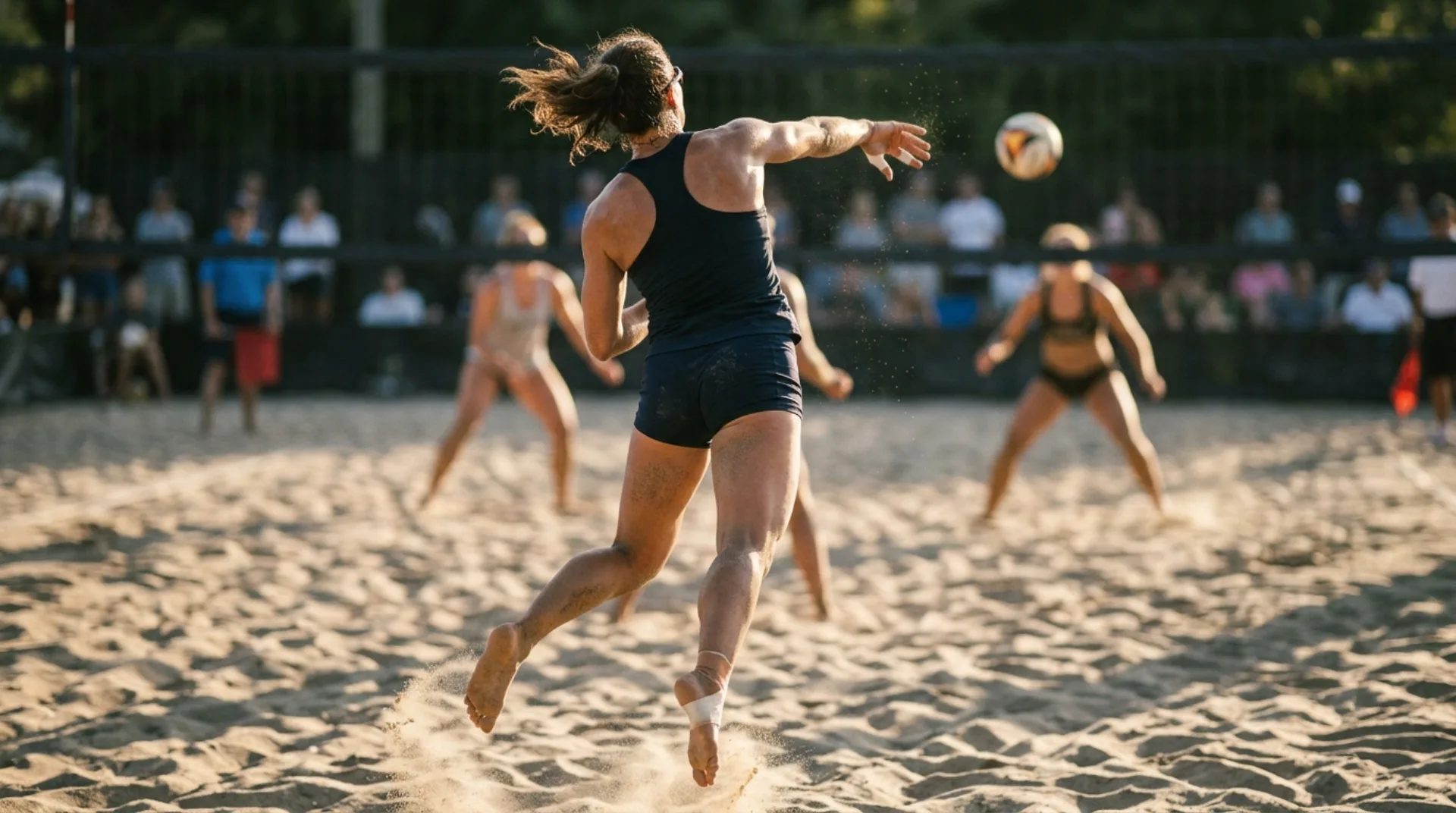
Feet. Every action in volleyball is executed from a stationary position, or almost. The forearm pass is made after moving, not while sliding; the set is made under the ball, not by reaching; the spike takes off from a run-up that ends before the jump. Most mistakes that look like arm errors are actually footwork errors.
Reading the game. Those who have played for years are not faster: they start earlier, because they watch the opponent's set and the attacker's shoulders instead of the ball. It is the skill you train by watching, not by running.
Voice. Calling the ball, saying "mine", "out", "leave", "free" prevents more lost points than any technical improvement. In a new team, it is the first intervention to make, and it costs nothing.
The criterion for self-correction
Without a coach, the most effective way to improve is to have a target for every action, not a feeling:
- the forearm pass must reach two or three metres from the net, in a precise area,
not just "high";
- the serve must land in a half of the court declared beforehand, not just
"in";
- the set must always reach the same spot relative to the net, not just
"well";
- the attack must hit an area chosen before taking off, not just "hard".
With a target, you know if an attempt succeeded, and you can count it. Without one, you repeat a mistake for years, convinced you are training.
What an amateur player does not need
It is worth saying, because it saves time. You do not need a powerful jump serve: it costs months of work and produces more errors than points. You do not need a back-row attack. You do not need a three-man block. You do not need to spike at full power against a closed block.
What you do need, in this order, is: a serve that always goes in and causes trouble, a reception that reaches the setter, a repeatable set and an attack that finds the empty space. These are four actions within reach of anyone with a few months of practice, and with four actions like these you win most amateur tournaments.
The pages in this hub
Each fundamental has its own page, with basic technique, typical mistakes and a way to train it even in twos or threes: serve, set, spike, block, reception and defence. The hub closes with a page on physical preparation, with the minimum work to protect ankles, shoulders and knees — the part that in a team of friends is always skipped and that decides who is still playing in ten years.