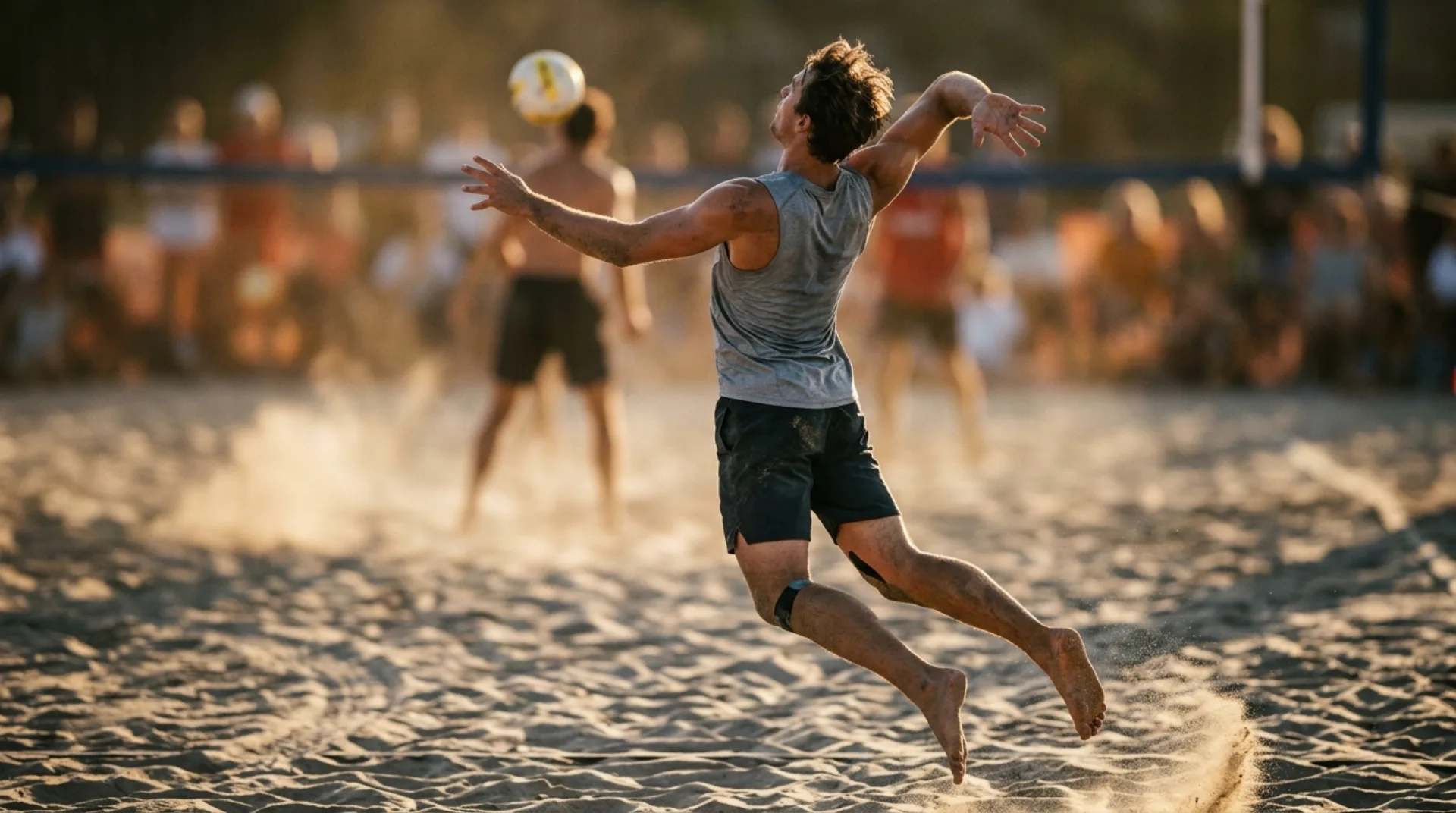
How to prepare for the Bibione Beach Volley Marathon
Practical tips and technical adjustments to tackle the Bibione Beach Volley Marathon from 18 to 20 September 2026, transitioning from the indoor court to the sand.
From the indoor court to the late-summer sand
Today, Sunday 6 September 2026, Italian volleyball is experiencing extraordinary hours. At 18:00 in Istanbul, the women's national team faces Turkey in the grand final of EuroVolley 2026, after defeating Poland 3-1, with set scores of 25-19, 25-19, 21-25 and 25-16. A few days later, on 10 September at 21:05, it will be the men's turn to make their outdoor debut in Naples in Piazza del Plebiscito against Sweden. But for those who love to play themselves, the hottest event of the autumn is on the Venetian sand, with the second stage of the AeQuilibrium Beach Volley Marathon in Bibione, scheduled from 18 to 20 September 2026.
Transitioning from the indoor court to the sand in September requires an immediate adaptation of your playing style. The cooler autumn temperatures and beach humidity alter the consistency of the sand, making movement even more tiring than in the summer months. If you want to arrive prepared for this event and have fun with your friends without injuries, you must change your tactical and physical approach as soon as possible.
Typical amateur mistakes on autumn sand
Many amateur players make the mistake of directly transferring indoor patterns and movements to the sand. This approach leads to rapid fatigue and a drastic reduction in attacking and defensive effectiveness. The sand does not return the push like parquet or rubber, making the fast, jumping run-up usually used indoors completely useless.
Another frequent mistake concerns managing the wind, which can be highly variable on the Adriatic coast in September. Trying to hit the ball with flat, powerful trajectories without considering the air currents turns every attack into an unforced error. Those who play for fun also tend to neglect the accuracy of the forearm set, preferring overhand sets which, under the strict rules of beach volleyball, risk being called very often by referees or opponents.
Practical guide to dominating the beach volleyball court
To take to the court prepared and win matches against friends, you need to focus on a few precise technical elements. In classic two-a-side beach volleyball, the court officially measures 16x8 metres and matches are played as the best of three sets to 21 points, with a potential tie-break to 15 points. However, for amateur tournaments featuring mixed, three-a-side or four-a-side categories, the exact dimensions of the playing court and the height of the net must be checked in the specific regulations of the event.
Here are the key steps to follow to immediately improve your effectiveness on the sand of Bibione:
- The active ready position: Always keep your centre of gravity low with knees bent and feet firmly planted in the sand. Do not wait for the ball with straight legs, otherwise you will not have time to take that extra little step needed to cover the court.
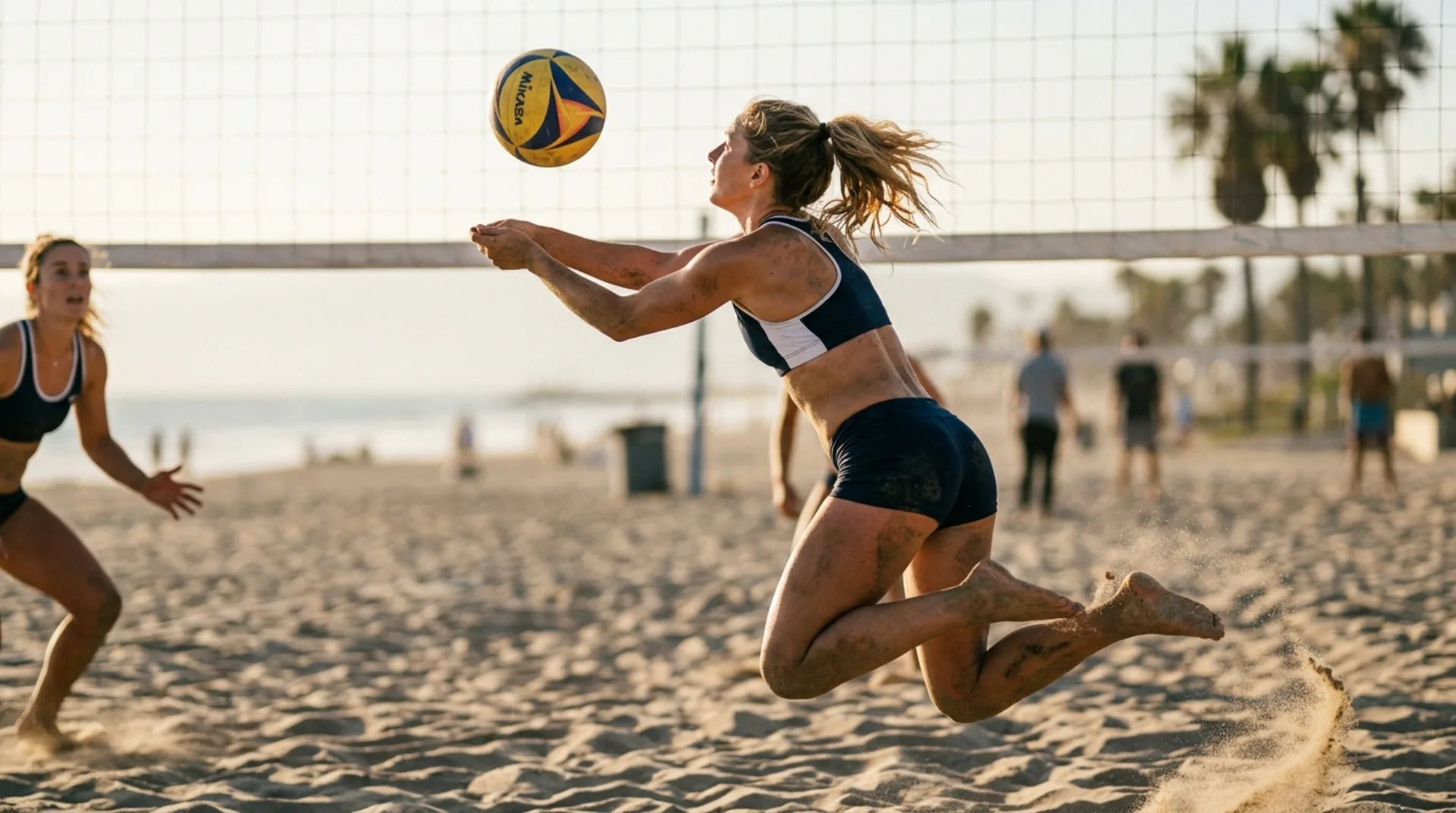
- The forearm set: On sand, the forearm set is the safest choice to avoid double-contact faults. Create a wide, flat platform with your arms, keeping your thumbs together and pointing downwards. Do not hit the ball by swinging your arms from bottom to top, but guide the trajectory by extending your legs.
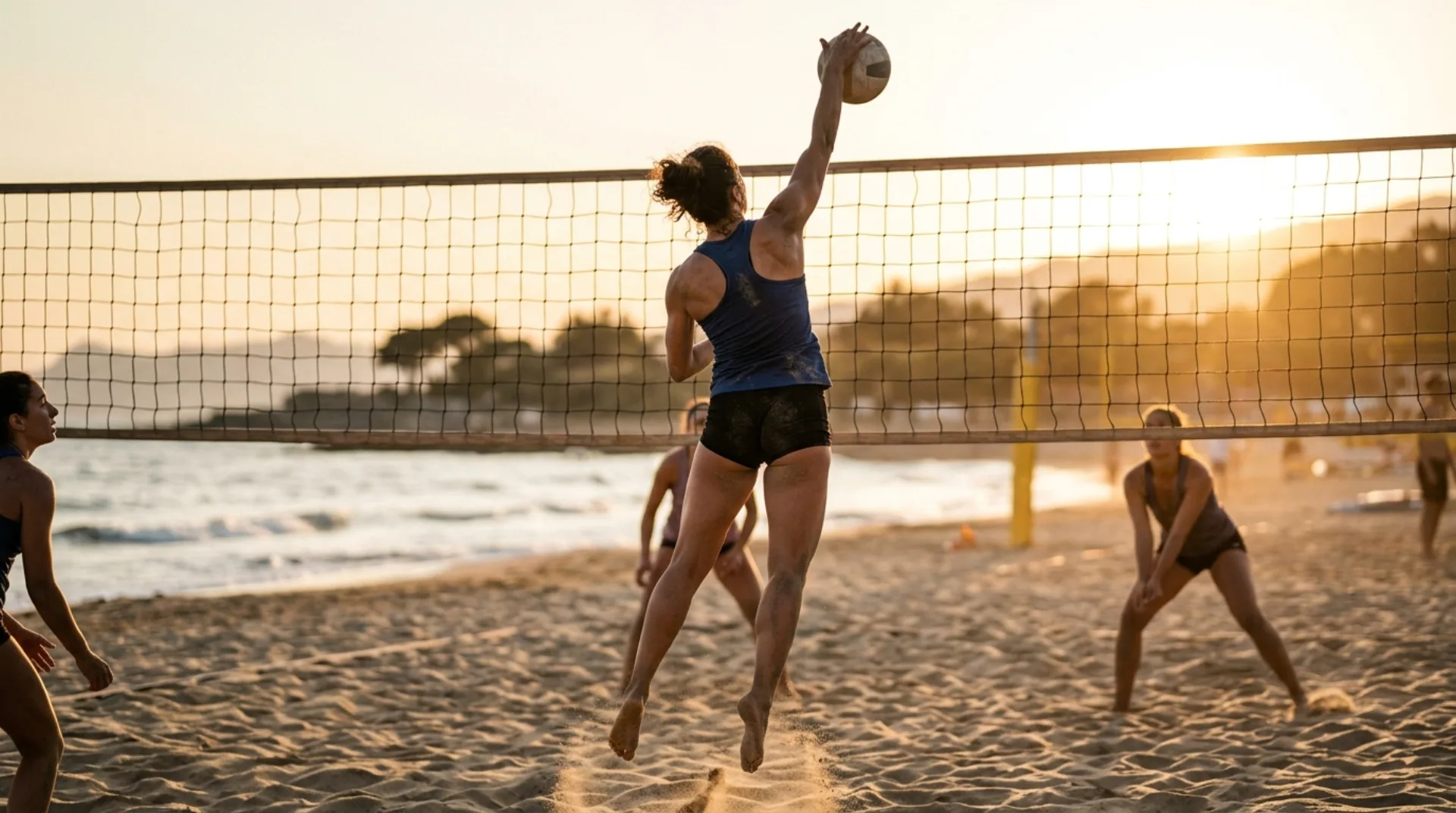
- Managing the jump: In the wet or damp sand typical of late summer, do not strive for maximum elevation by taking off at the last second. Reduce your run-up to just two controlled steps and jump straight up, not forward, to avoid touching the net or penetrating the opponent's court.
- The placed attacking shot: Instead of trying for a power spike, learn to use a shot with your knuckles or closed fingertips. Placing the ball into the open corners of the opponent's court is much more effective and requires significantly less energy consumption.
How to correct the most common mistake in defence
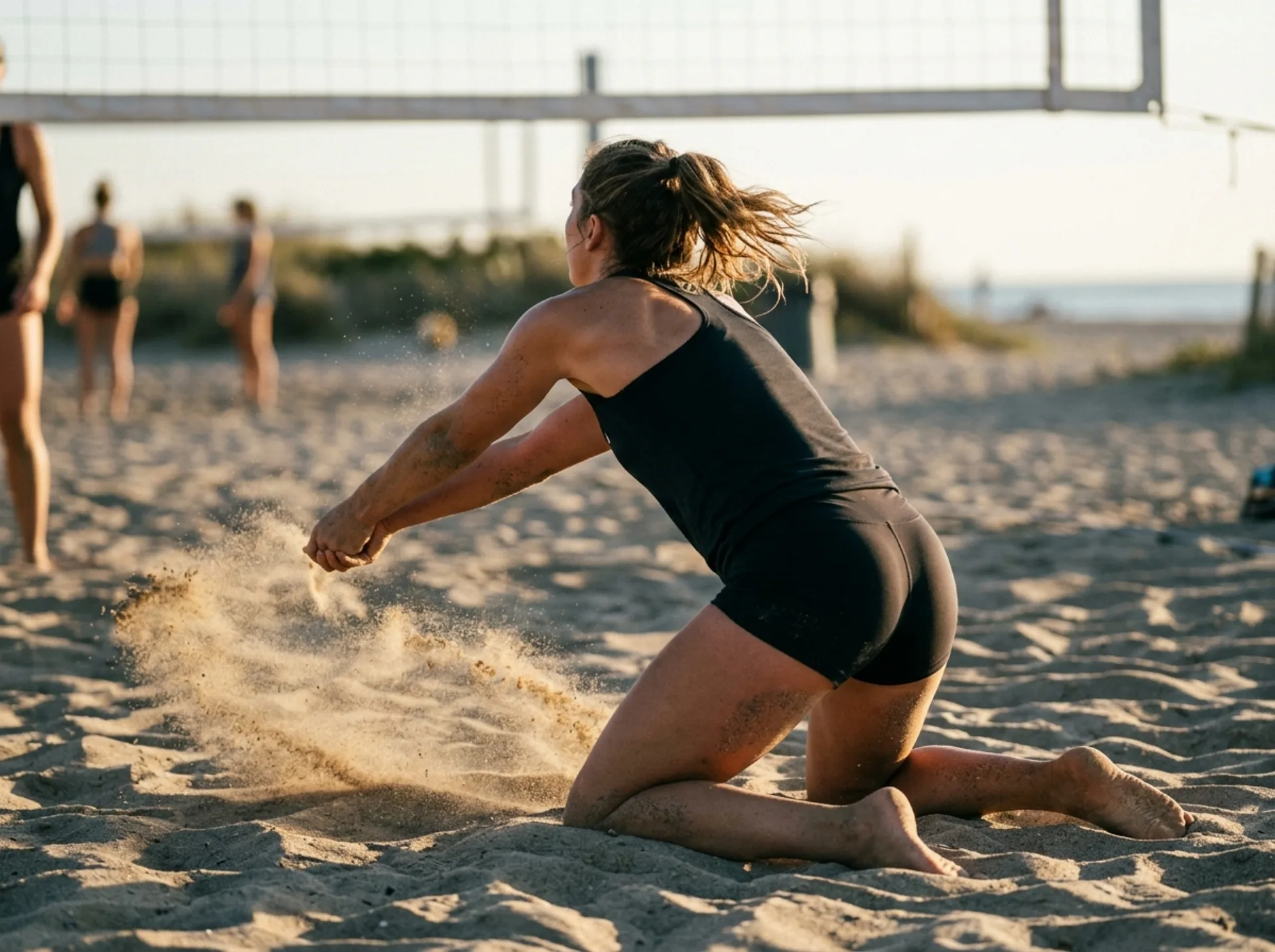
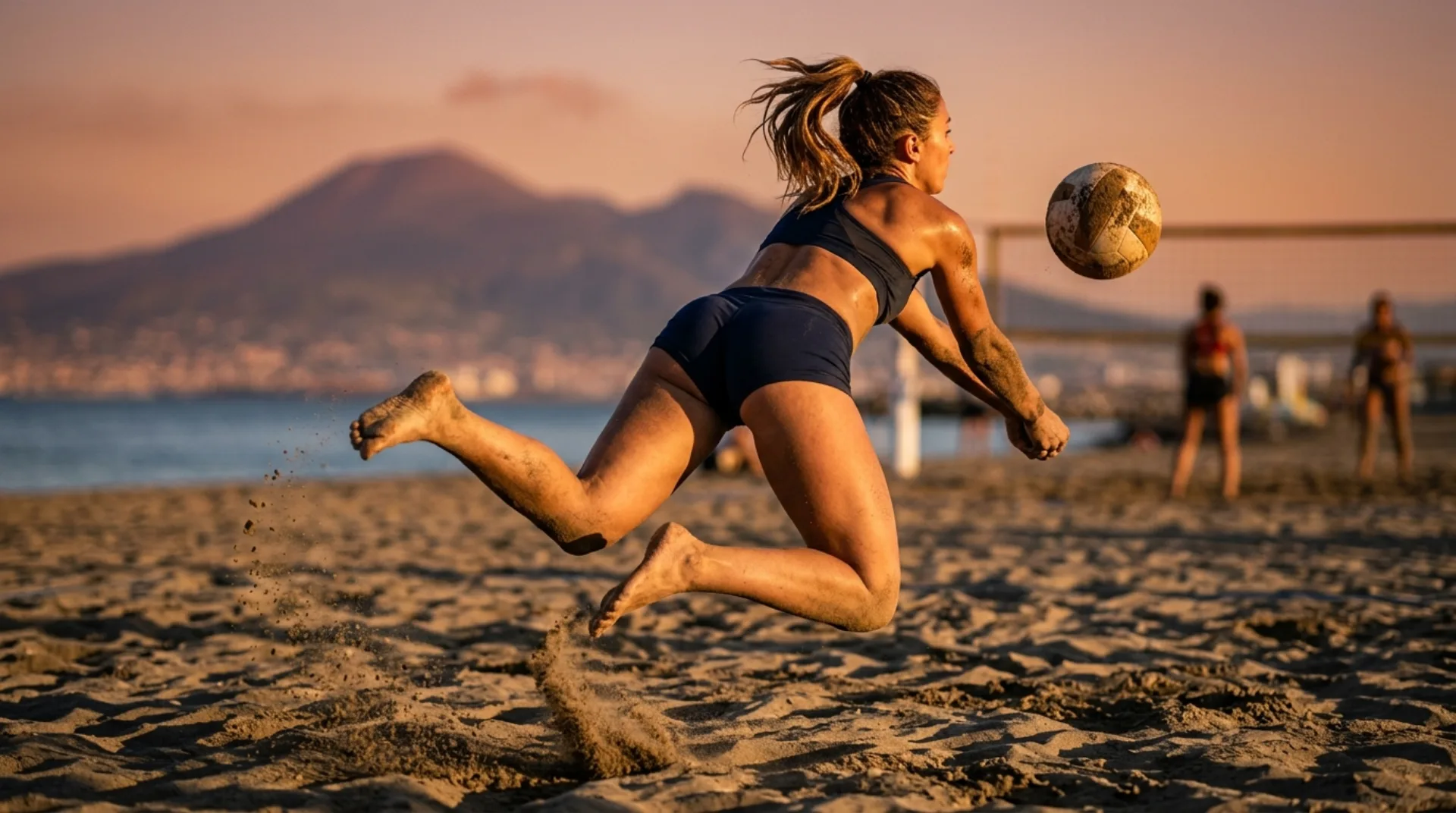
The most obvious flaw seen in amateur tournaments on sand is the attempt to defend difficult balls with a diving dig, as you would on parquet. On sand, this movement pins the player to the ground for several seconds, preventing them from getting up quickly to participate in rebuilding the point.
To correct this mistake, learn to move your feet before positioning your arms. Take small, quick steps to always position yourself behind the trajectory of the ball. If you absolutely must go to the ground for an extreme recovery, use a low lateral defence, sliding on your side to keep your eyes on the ball and be able to get up immediately using the push from your arms.
Organising for the Bibione weekend
Participating in an immense event like the Bibione Marathon also requires a good deal of logistical organisation within the group. Sharing matches, break times and mutual cheering is the best way to experience the spirit of amateur volleyball. With the right technical preparation and a touch of strategy, every match will become an opportunity for pure fun for the whole team.