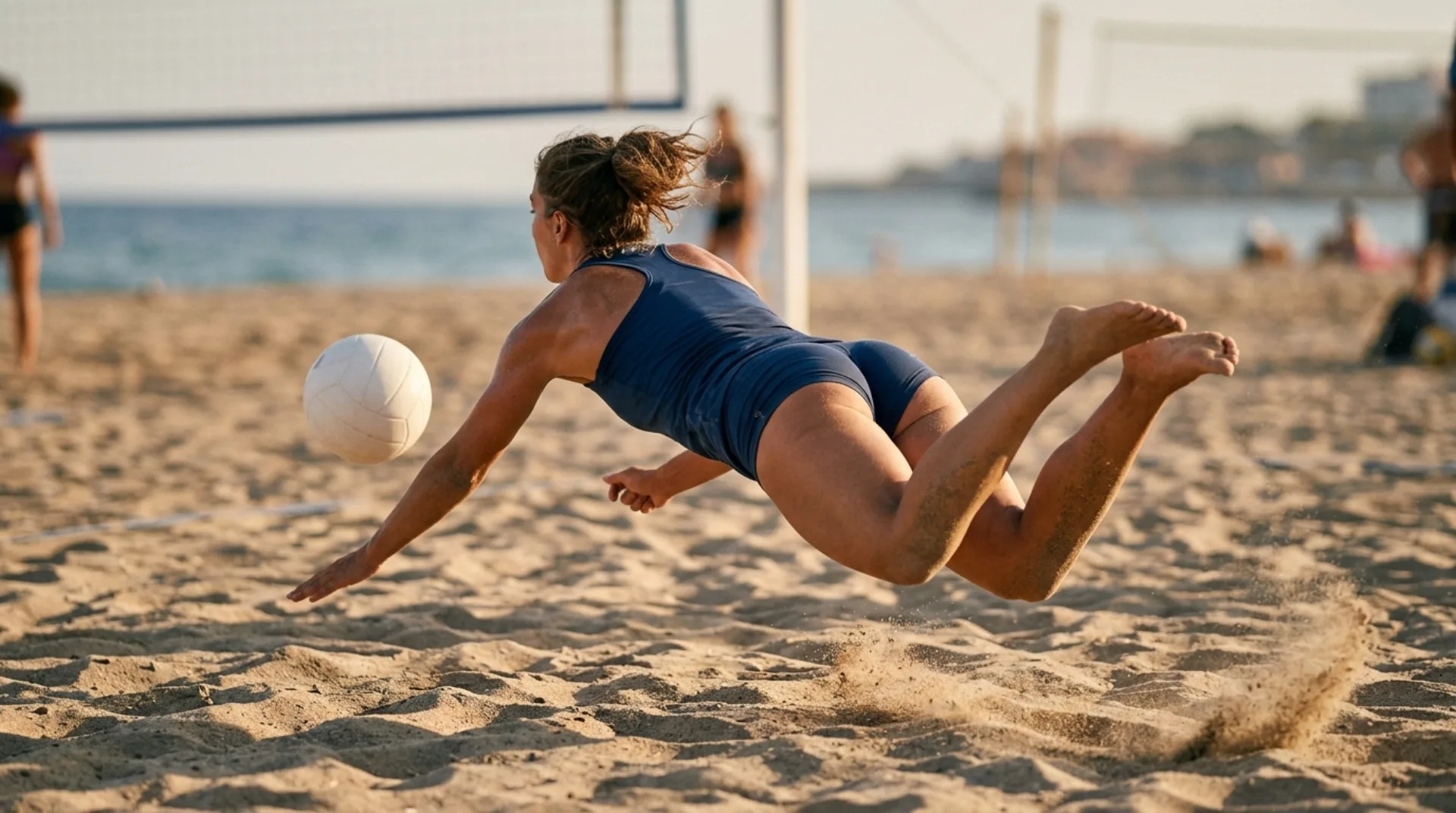
How to improve your defence in beach volleyball on sand
Discover how to improve your defence in 2v2 beach volleyball on sand with practical tips, reactivity drills, and typical mistakes to avoid to win your summer matches.
The enthusiasm for great summer volleyball is felt all over Italy, especially in Naples, a city preparing to host the national team champions. This energy is the perfect boost to get on the court and improve your game on the sand. In 2v2 beach volleyball, where there is a lot of space to cover and only two defenders, the ability to read the opponent's attack and react quickly makes all the difference between conceding a point and a winning counter-attack.
Playing on sand requires a completely different approach compared to the indoor gym. The unstable surface slows down movements and reduces vertical jump, making an impeccable positioning technique essential. It is not just about running fast; you need to know where to position yourself even before the opponent hits the ball.
Reactivity on sand starts from the ready position
To defend effectively in 2v2 beach volleyball, on a regular court measuring 16x8 metres, you cannot afford to be caught stationary or off-balance on your heels. The sand absorbs the energy from your feet, so every millisecond lost to regain balance is a point gifted to your opponents.
The correct ready position is built from the ground up:
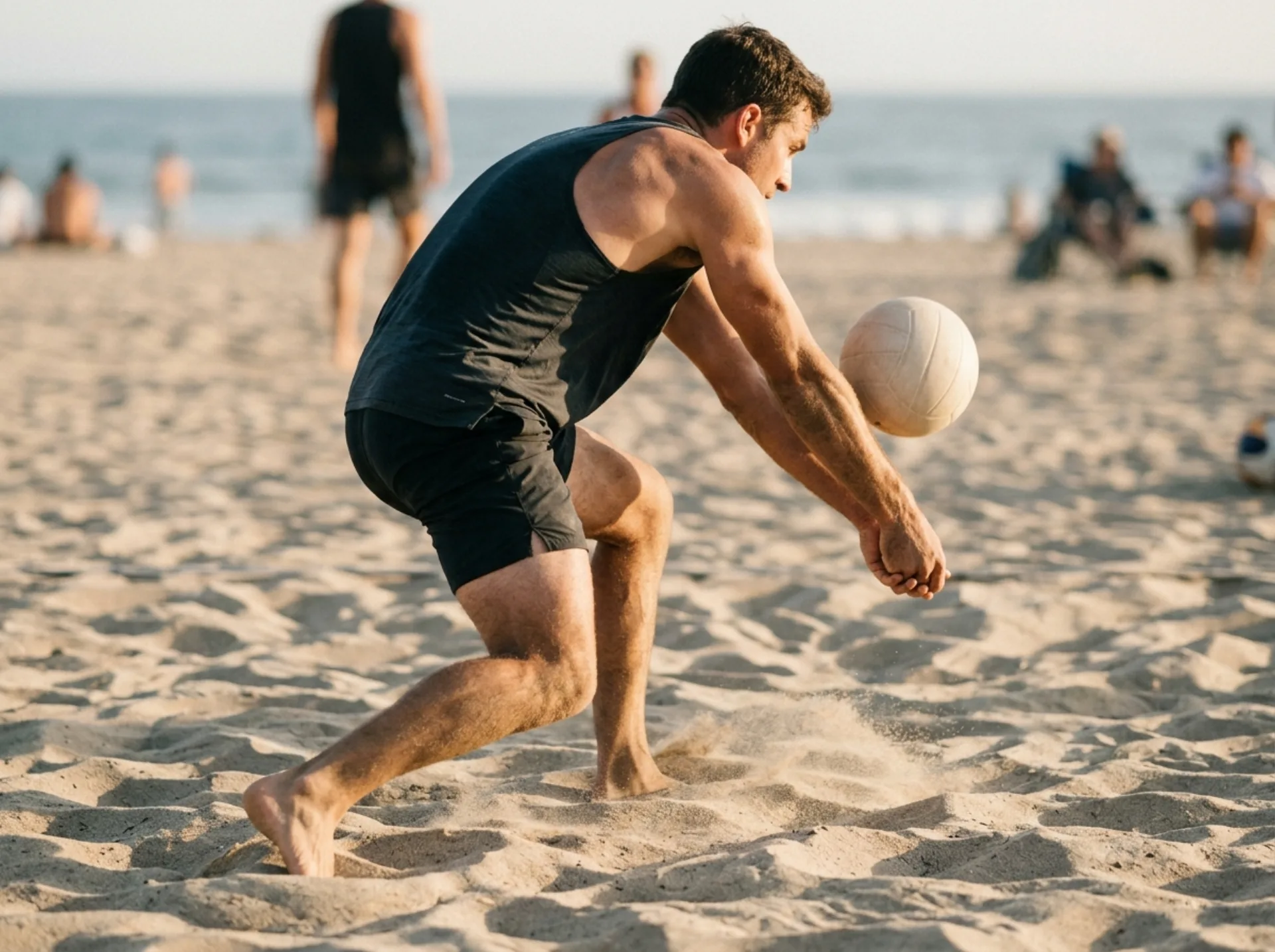
- Wide feet and weight on the balls of your feet: Your feet should be positioned slightly wider than shoulder-width apart. Your body weight must be projected forward, with your heels barely brushing the sand without sinking.
- Bent knees and low centre of gravity: Lowering your centre of gravity allows you to sprint sideways or forwards with greater drive. If you keep your legs straight, you will have to bend them first to move, losing precious playing time.
- Ready hands in front of the chest: Your arms should be semi-flexed, with your hands open at sternum height. Do not clasp your hands together in a dig (bagher) before the opponent's hit, as this limits your ability to react to a high ball or a short touch.
This posture allows you to cover both powerful attacking hits and short dinks placed behind your partner's block.
How to move on a two-on-two beach volleyball court
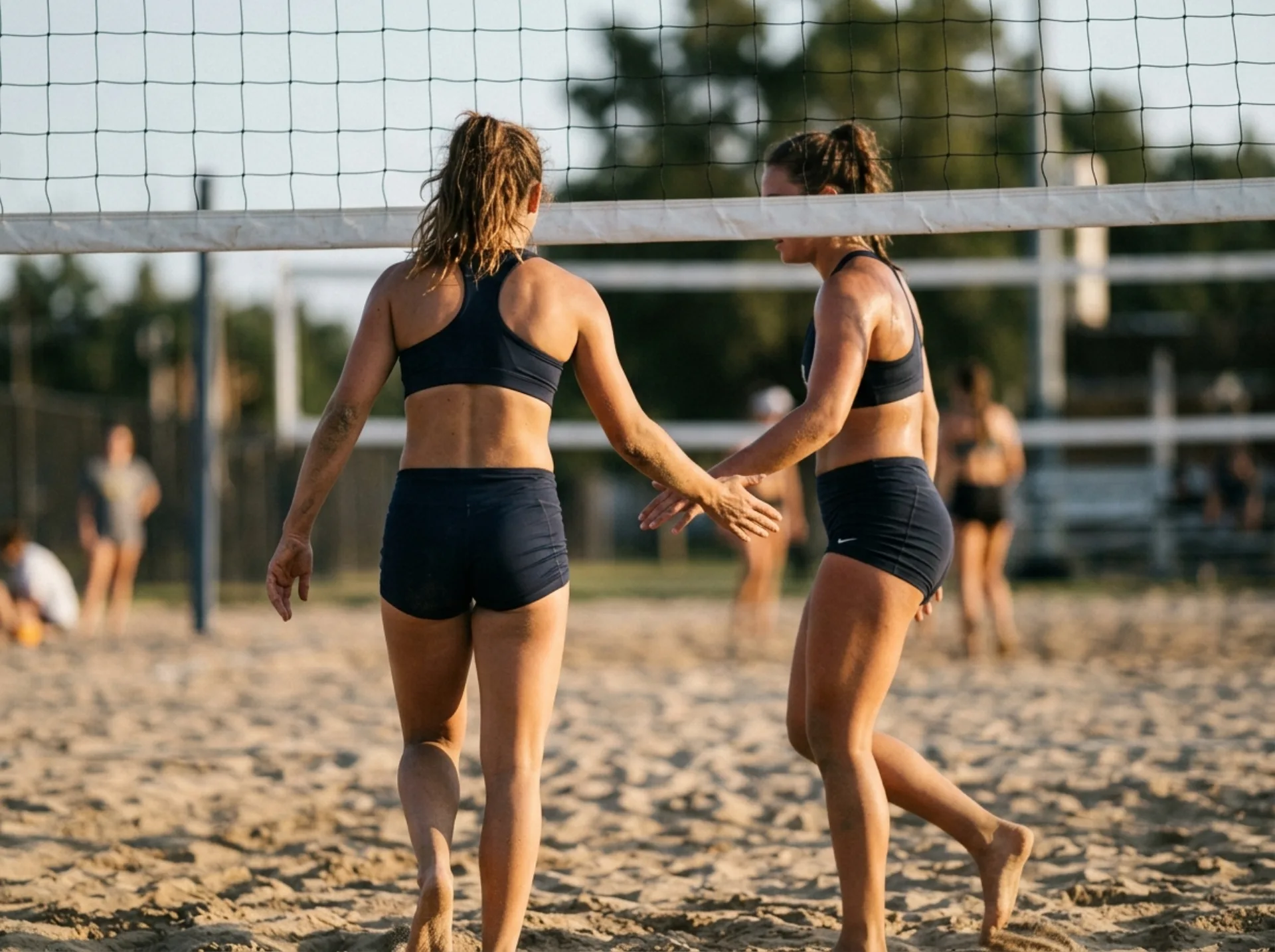
In 2v2 beach volleyball, sets are played to the best of 21 points, with a potential tie-break to 15 points. In such a large space for only two people, understanding with your partner is fundamental. Before every action, you must decide who covers the diagonal and who covers the line of defence, especially if one of you is blocking.
If your partner decides to block the line, you must position yourself to cover the deep diagonal. The movement must be fluid: do not run backwards with your back to the net, but use side-steps or cross-steps, always keeping your eyes fixed on the ball and the attacker's shoulder. The golden rule is to be completely stationary at the exact moment the opponent hits the ball. If you are still moving when the attacker hits, you will not have control of your body to direct the trajectory towards the ball.
The most common mistake made by amateurs in defence on sand
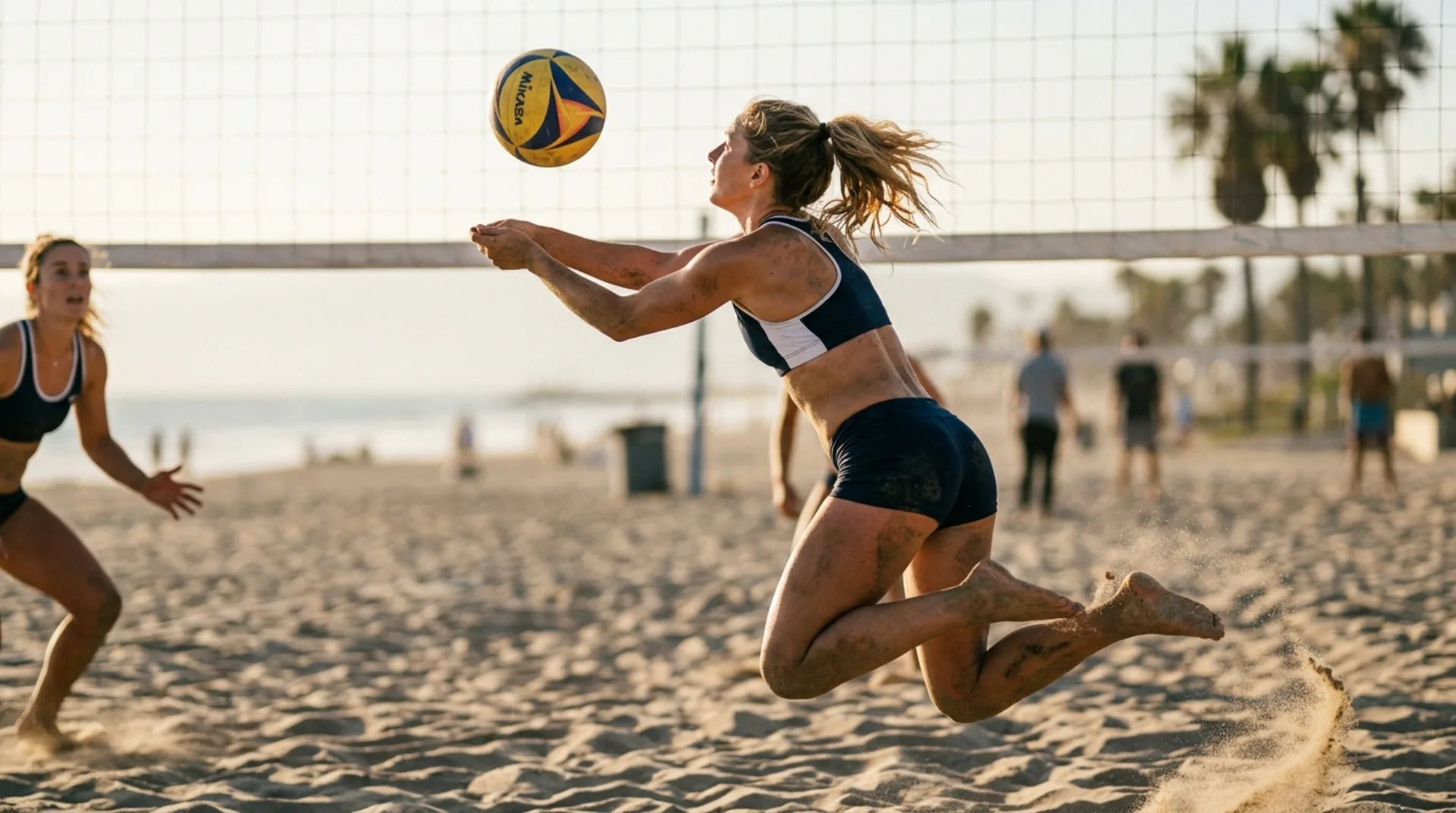
The most widespread flaw among those playing at an amateur level is the instinct to dive too early or, conversely, to remain rooted to the spot, convinced that the ball is unreachable. Many amateurs tend to chase the ball only with their arms, performing the dig gesture while running or while still in the air.
This behaviour produces an unstable rebound platform, sending the ball out of court or directly into the net. Another classic mistake is the lack of communication: the two defenders collide in the middle of the court because neither calls the ball with a clear vocal signal. Remember that on sand, silence is the worst enemy of defensive organisation.
Practical drills to improve game reading
To correct these mistakes and train reactivity during your summer matches in Naples or on any beach, you can incorporate some practical adjustments into your playing session.
- The visual touch game: Before the attacker hits, make an effort to observe their run-up. If the ball is off the net, it is highly likely that the opponent will choose a placed shot or a soft trajectory. If the ball is close to the net, prepare to defend a hard hit.
- Kneeling defence: An excellent drill to get used to keeping a low centre of gravity consists of starting from an almost crouched position. This forces you to push with your legs to reach short balls, eliminating the bad habit of only bending your back.
- The early call: Get used to, as a pair, calling the ball at the exact moment it crosses the net. Saying "mine" or "yours" out loud removes any hesitation and allows your partner to prepare immediately for the set.
To best organise your challenges on the sand with friends, define playing rotations, or keep track of scores, you can rely on simple and effective digital tools. With the right spirit and a bit of consistency in taking care of these technical details, every summer match will become an opportunity to improve and have even more fun.