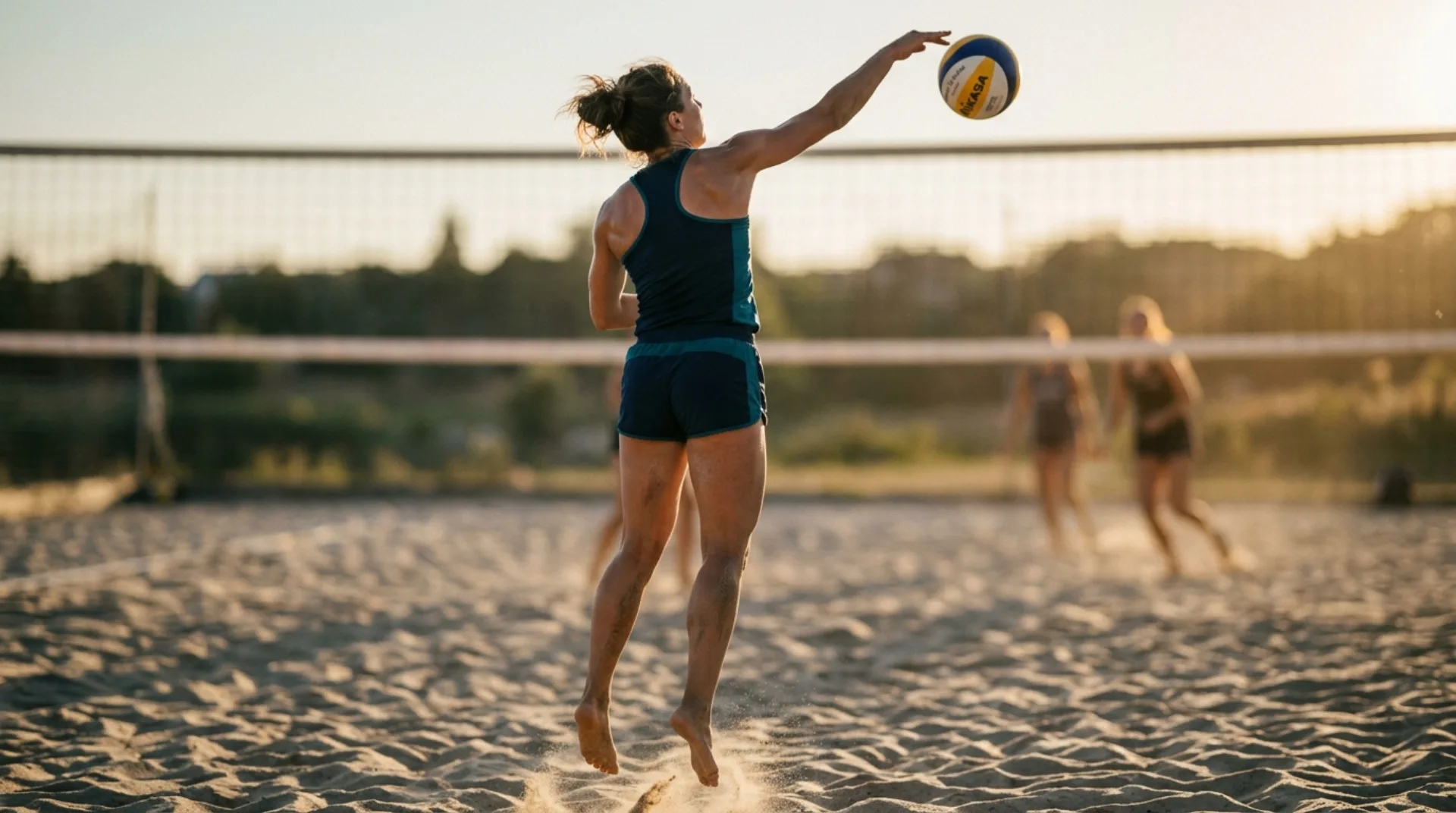
How to avoid arguments under the sun: the new beach volleyball rules
Discover how refereeing on sand is changing with the four-year cycle rules and international tests to play without arguments in summer tournaments.
Under the sun without arguments: the sword touch and the new rules
Playing beach volleyball in summer means fun, diving on the sand and, unfortunately, some inevitable arguments over the rules of the game. When there is no official referee to blow the whistle, self-refereeing can turn into a minefield, especially on fast plays or acrobatic touches. One of the most interesting updates in the official rules of the four-year cycle concerns the so-called "sword touch". Many amateur players still consider it a double contact or an illegal touch, but the regulatory reality is different.
The sword touch consists of playing the ball with the fingertips, keeping the fingers stiff and closely grouped together. According to the rules in force, this specific intervention is not considered a fault. It is an exceptional technical resource for saving difficult balls or placing a precise touch without risking a catch or throw infraction, which is punished with extreme severity in classic setting on the sand.
How to perform the sword touch and avoid mistakes
To prevent your opponents from shouting fault during your next match on a 2v2 beach court (which, let us remember, has the canonical dimensions of 16x8 metres, with sets to the best of 21 points and a potential tie-break to 15), it is essential to perform the gesture with precision. Here is a practical guide to mastering this touch and avoiding disputes:
- The technical gesture: bring the fingers of one hand together, keeping them well stretched and rigid, as if to form a solid point. Hit the ball using exclusively the very tips of your fingers. The contact must be quick and clean, without any bending of the fingers.
- The typical beginner's mistake: slightly spreading the fingers during impact or trying to push the ball by guiding it with the wrist. This movement causes the hand to lose rigidity, turning the touch into a catch or an illegal set.
- How to correct it on the court: practise hitting the ball against a solid wall while keeping your hand contracted. Focus on a clean impact. Remember that the ball must not "rest" on your hand, but must bounce instantly off your joined fingers.
What people get wrong most in summer amateur tournaments
The most common mistake made in self-managed tournaments on the sand is the rigid application of indoor rules. In 2v2 beach volleyball, for example, an open-hand dink with the fingertips (the classic indoor volleyball tip) is always a fault. Those who only play in summer often forget this, giving away easy points to opponents and sparking heated arguments under the net.
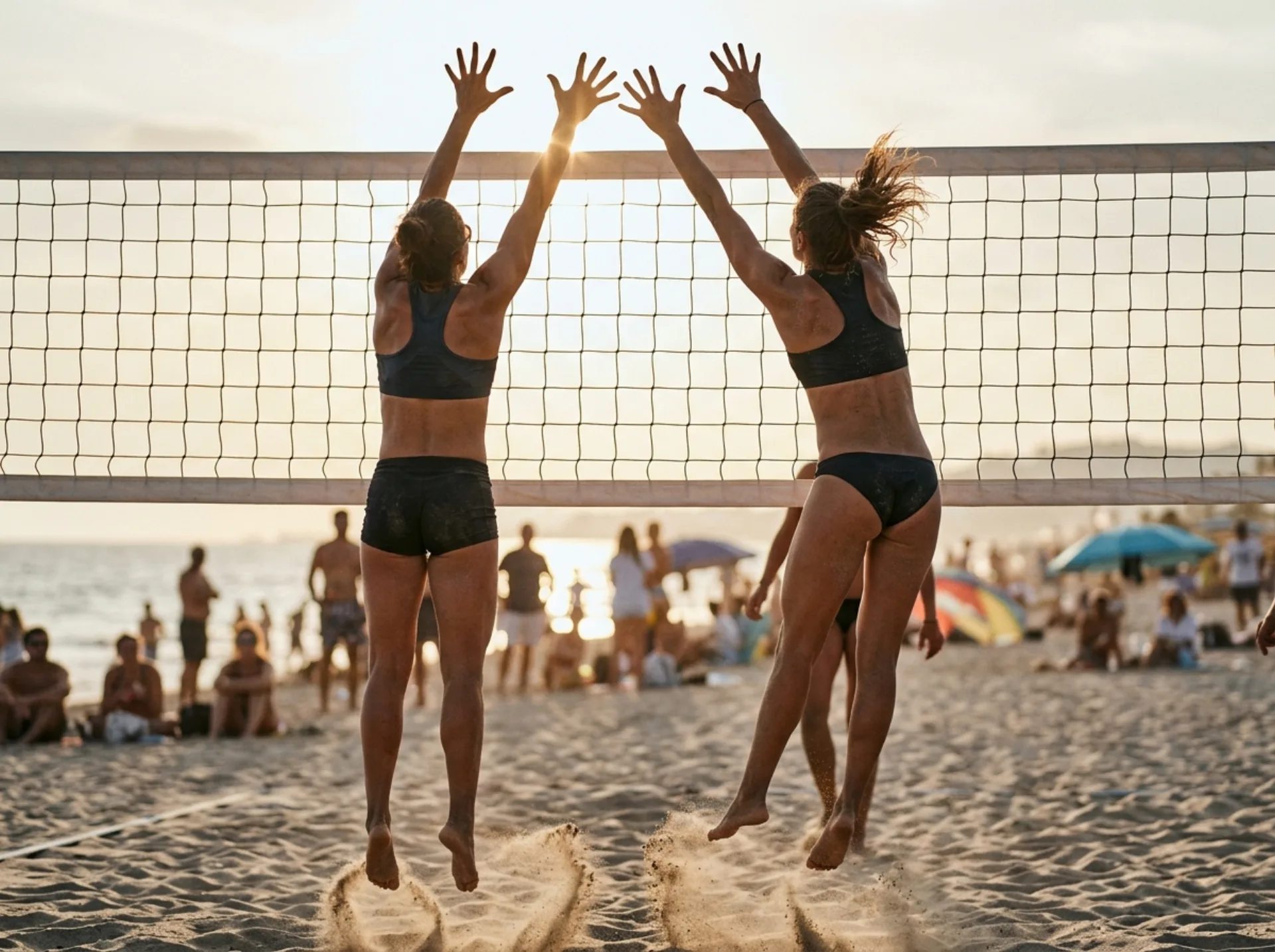
Another frequent mistake concerns the evaluation of the block touch. On the sand, unlike indoor volleyball, a block touch counts as the team's first touch. This means that, after the block, only two more touches remain to return the ball over the net. Confusing this dynamic often leads to committing a four-touch fault.
From international tests to the next indoor season
While we are having fun on the sand, the International Federation (FIVB) is testing important regulatory changes at an international level to make the game even more fluid and spectacular. Among the most interesting tests launched in the 2026 season, the increase in allowed substitutions per set stands out, rising from six to eight. Furthermore, to reduce downtime, teams can no longer request a video challenge while the rally is in progress, but must wait until the end of the point for any referee review.
These experiments demonstrate how modern volleyball always seeks to reduce unnecessary interruptions. It is a philosophy we should also adopt in beach matches, limiting protests to focus only on having fun and recovering the next ball.
Preparing for autumn championships: deadlines and registrations
Even though we are now in the height of the summer season, August is the month when groups of friends start planning the resumption of indoor activity. If you wish to continue playing in official or amateur championships, there are important deadlines to mark on your calendar:
- UISP amateur championships: the UISP Committee of Florence has set 15 September 2026 as the deadline for registration for the championships of the 2026-2027 season. It is the perfect time to gather documents and complete the roster.
- FIPAV affiliations: for those participating in federal championships, the deadline for ordinary affiliation is 30 September 2026, while for promotional and beach volleyball activities there is time until 4 March 2027.
- Youth and mixed regulations: the new FIPAV Practical Guide introduces updates for youth categories such as Under 13, whose age requirements must be checked in the official regulations of the event. In mixed championships (such as those organised in Trieste by Tuttinsport and ASD Voleada), precise rules apply to ensure fairness, such as the fixed presence of at least two women in the starting line-up, on pain of default defeat with the worst possible score. The net height for these mixed categories must always be checked in the specific regulations of the event.
Organising a group of friends for a summer tournament on the sand or for an entire winter championship requires coordination, but with the right app, it only takes a few steps to collect sign-ups, confirm attendance and take to the court without a worry.