How to set up a beach volleyball court for summer tournaments
Everything you need to know to set up and check a perfect beach volleyball court for your summer games with friends, from measurements to net rules.
The measurements that matter on the sand in summer
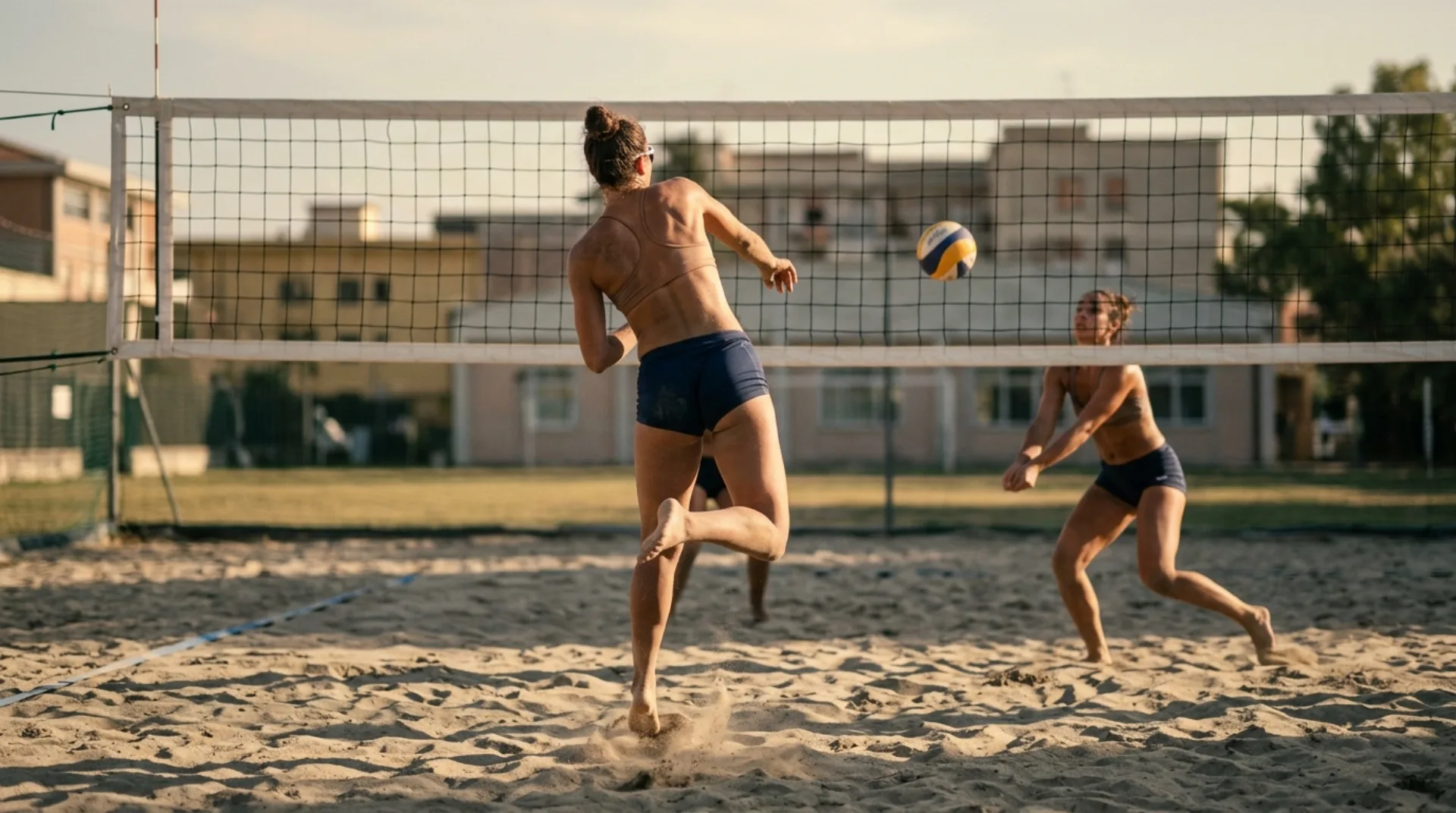
Anyone organising a game with friends knows all too well that a crooked line or a net at the wrong height can ruin the fun before it even starts. To avoid endless arguments about "in or out", the starting point is knowing the basic rules of the playing space. If we are talking about the Olympic discipline of 2v2 beach volleyball, the official dimensions of the court are 16x8 metres. This means that each half of the court must be a perfect square of 8 metres per side.
In 2v2 beach volleyball matches, sets are played to 21 points, with a potential tie-break to 15 points. If, on the other hand, you decide to opt for different formats in your summer tournament, such as mixed 3v3 or 4v4, the court size and net height might vary to adapt to the number of players on the sand. In these cases, to avoid disputes, each specific value should be checked in the event regulations or agreed upon before starting.
If for some reason you find yourself playing on a converted indoor volleyball court or if you want to make a comparison with classic 6-a-side volleyball, remember that the measurements change significantly. In the indoor 6-a-side game, the court measures 18x9 metres, the net is set at 2.43 metres for men and 2.24 metres for women, and sets are played to 25 points with at least a two-point lead (with the tie-break always to 15 points). On the sand, the reduced space of 2v2 is designed precisely to compensate for the greater difficulty of movement and the fatigue of getting around.
How to set up and mark out the court without making mistakes
Setting up a temporary court on a public beach or checking the one at a beach club requires precision. The court lines must be clearly visible and safe for the physical safety of those diving. Amateur players often make the mistake of using ropes that are too thin or elastic, which shift at the first gust of wind or during an attacking run-up.
Here is a practical guide to positioning the lines and checking that everything is in order before blowing the whistle for the first service:
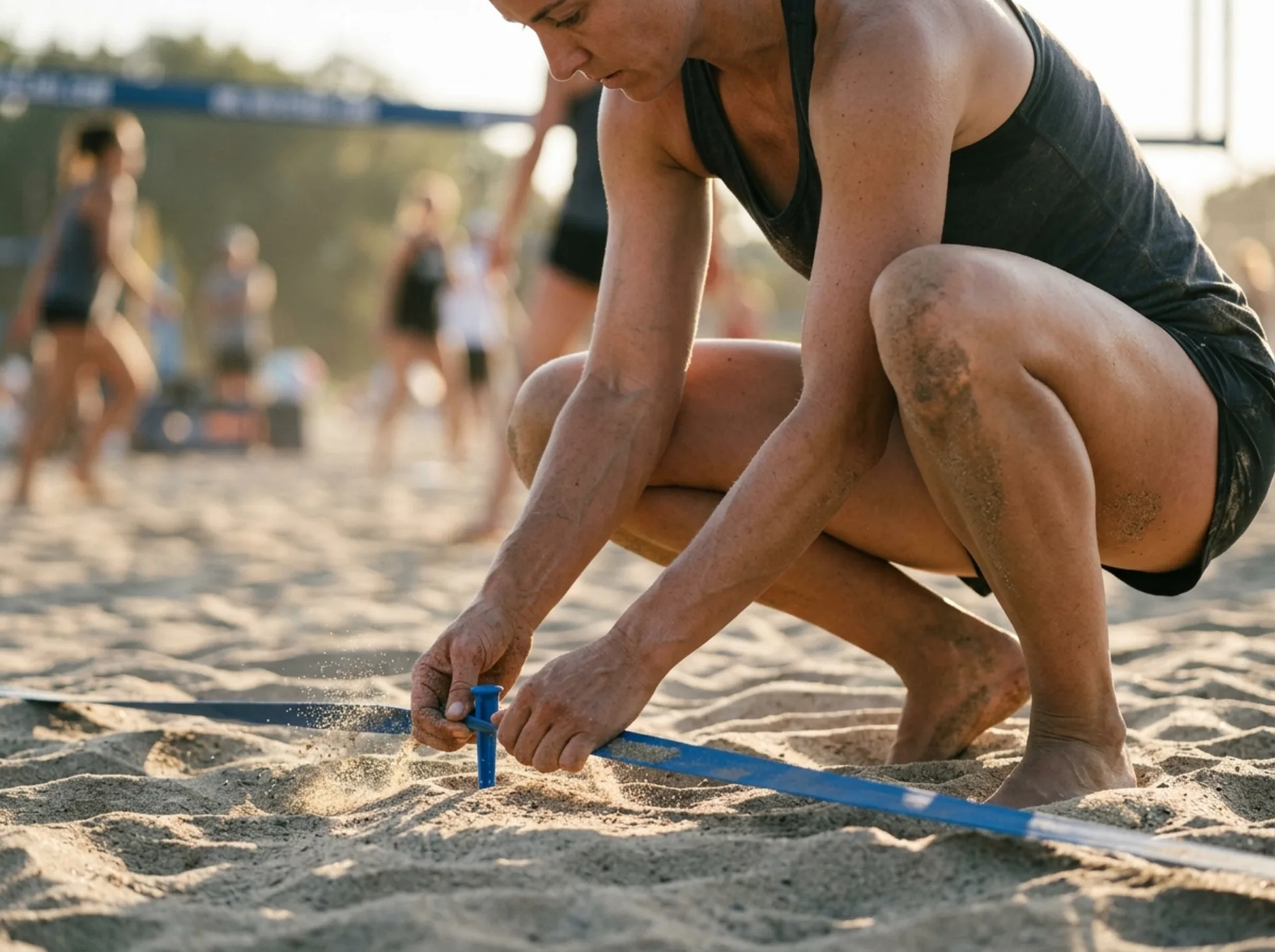
- Choosing the right materials: Use synthetic fabric tapes between 5 and 8 centimetres wide, preferably in a colour that contrasts sharply with the sand, such as blue or bright red.
- Securing the corners safely: Metal pegs are strictly forbidden on the sand because they are extremely dangerous in the event of a fall. Use plastic corner plates or small anchoring discs to be buried under the sand at a depth of at least 20 centimetres.
- Checking the diagonals: To make sure that the 16x8 metres rectangle is perfect and not a distorted parallelogram, measure the two diagonals of the court. They must be exactly the same length to ensure that the two sectors are identical.
- Tensioning the lines: The lines must be taut but not excessively elastic, to prevent them from lifting and creating an obstacle to trip over during intense phases of play.
Net height and wind management
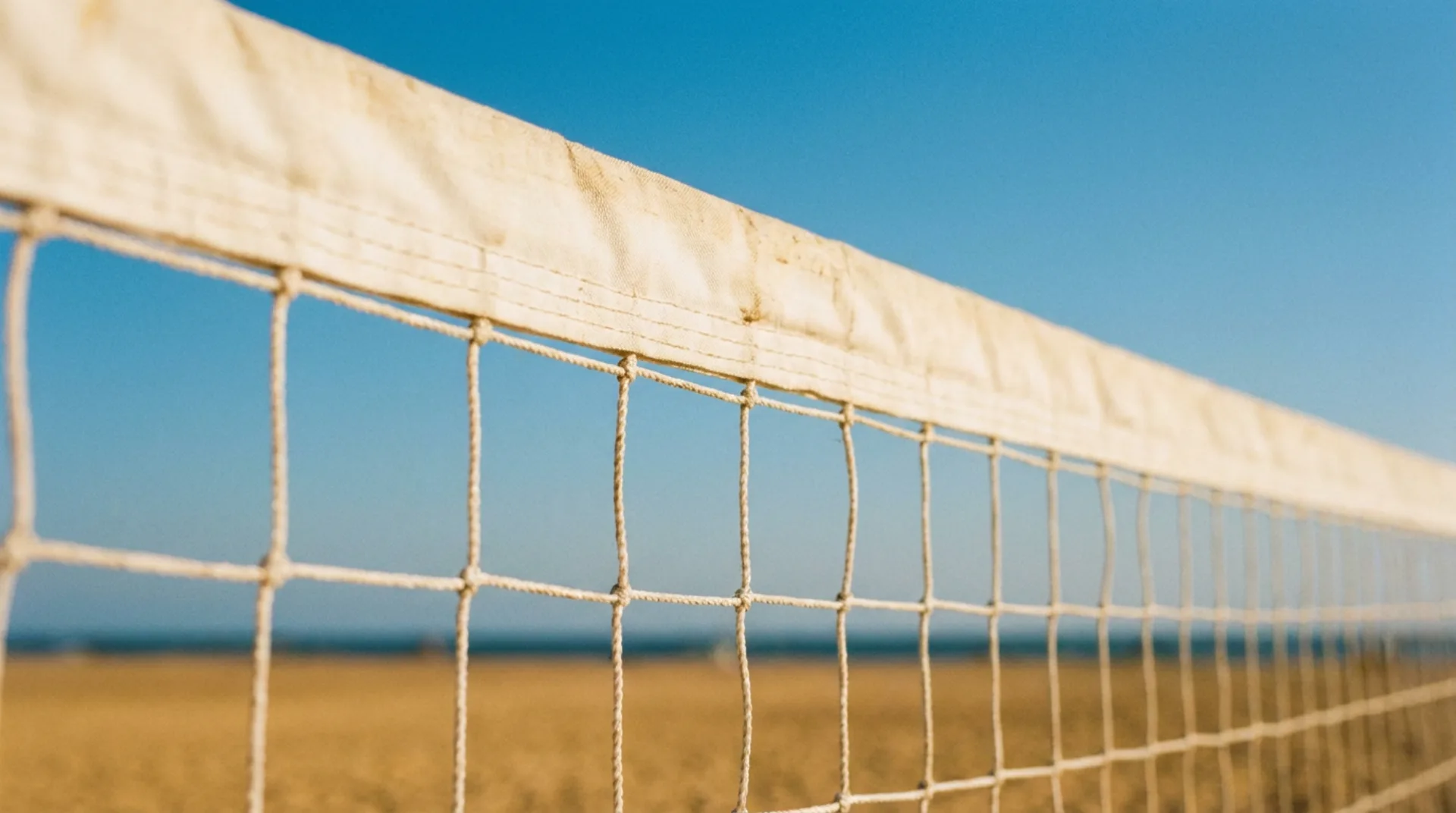
Another critical element that often sparks arguments under the August sun is the height of the net. In men's pairs beach volleyball, the net must be 2.43 metres high, while for women's matches, the regulation height is 2.24 metres. The measurement must be taken exactly at the centre of the court, where the net naturally tends to sag slightly.
In mixed amateur matches, players often tend to look for a compromise. However, since there is no single standardised measurement for unofficial mixed play, the correct height must be checked in the regulations of the event you are participating in. Playing with a net that is too low makes attacking far too easy, while a net that is too high risks turning the match into an endless series of lobs and placed balls, killing the excitement.
A typical mistake made by those setting up a portable net on the beach is failing to consider the action of the wind. The posts must be firmly anchored with external guy ropes and sandbags or sand pegs positioned well outside the playing area and the free service zone, to avoid dangerous collisions.
The most common mistakes made by amateurs in managing space
On the sand, the most widespread mistake among amateur players concerns foot positioning during service. In beach volleyball, the end line is part of the court, but it cannot be stepped on or crossed at the moment of hitting the ball to serve. Many players tend to drag sand over the line, making it invisible and causing constant doubts about the legality of the service.
Another frequent mistake is not clearing the surrounding space. The free zone around the court should be clear of water bottles, sunglasses, towels or spare balls. During an acrobatic defensive play, a player must be able to run outside the 16x8 rectangle without risking stepping on sharp or slippery objects.
Organising your next challenge on the sand
Once the court is set up and the rules are clear to everyone, all that is left is to step onto the warm sand and start playing. Organising a small tournament with friends under the beach umbrella requires just a bit of coordination and the desire to have fun together. To keep track of scores, define teams and decide who brings the regulation ball, a group of enthusiasts can easily coordinate using the VolleyFriends app, simplifying the management of summer matches and focusing only on spectacular spikes and digs.