Amateur tournaments in Naples: how to play outdoors in summer
Naples rediscovers its passion for outdoor volleyball. Discover how to organise successful summer amateur tournaments, from court rules to technical tips to avoid mistakes.
Anyone wishing to play volleyball or beach volleyball in Naples this summer is spoilt for choice, thanks to the enthusiasm sparked by major events visiting the city's symbolic locations, from Piazza Municipio to Piazza del Plebiscito. Indeed, Piazza del Plebiscito will host the official Men's European Championship match between Italy and Sweden, an event that connects the amateur grassroots, already celebrated with Volley S3 on 22 April in Piazza Municipio, to the highest continental levels. If you plan to gather a group of friends for an amateur outdoor tournament, there are some fundamental organisational and technical rules to know to avoid arguments and have fun safely.
Choosing the game format and court dimensions
Depending on the number of participants and the surface, you must decide whether to play classic six-a-side volleyball or two-on-two beach volleyball. The distinction is not just a matter of how many friends to invite, but directly affects the dimensions of the playing space you will need to mark out on the sand or grass. Correctly preparing the playing court avoids misunderstandings over contested balls landing near the end lines.
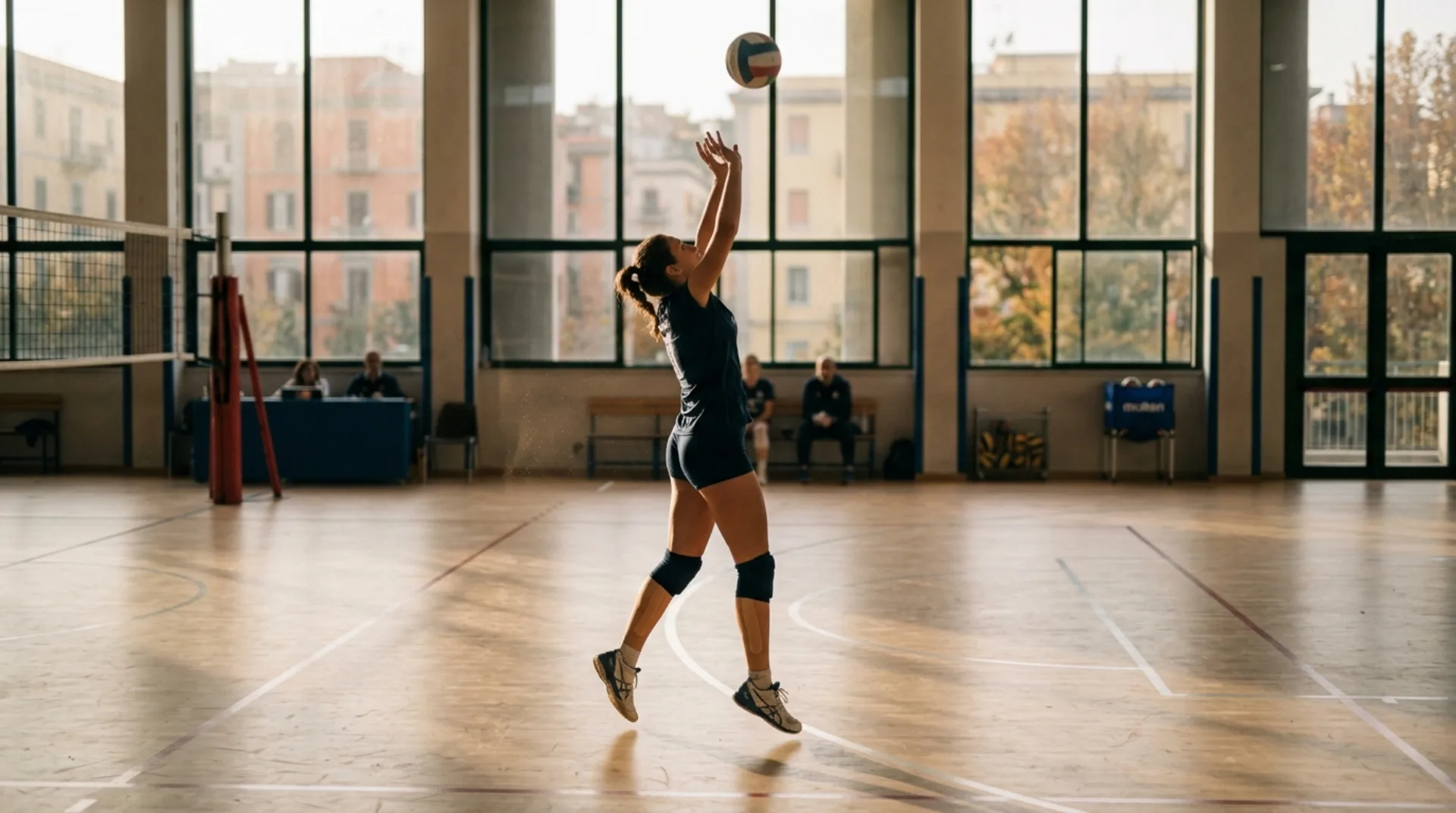
In the classic six-a-side game, the regulation court measures 18x9 metres, with the net positioned at a height of 2.43 metres for men's matches and 2.24 metres for women's. If you opt for the mixed format, remember that the specific facility requirements and the exact net height must be checked in the regulations of the event you decide to follow. If, on the other hand, you prefer sand with the two-on-two beach volleyball format, the court shrinks to 16x8 metres. In this case, matches are played with sets to 21 points, with a potential tie-break to 15 points.
The forearm pass: the correct technique outdoors
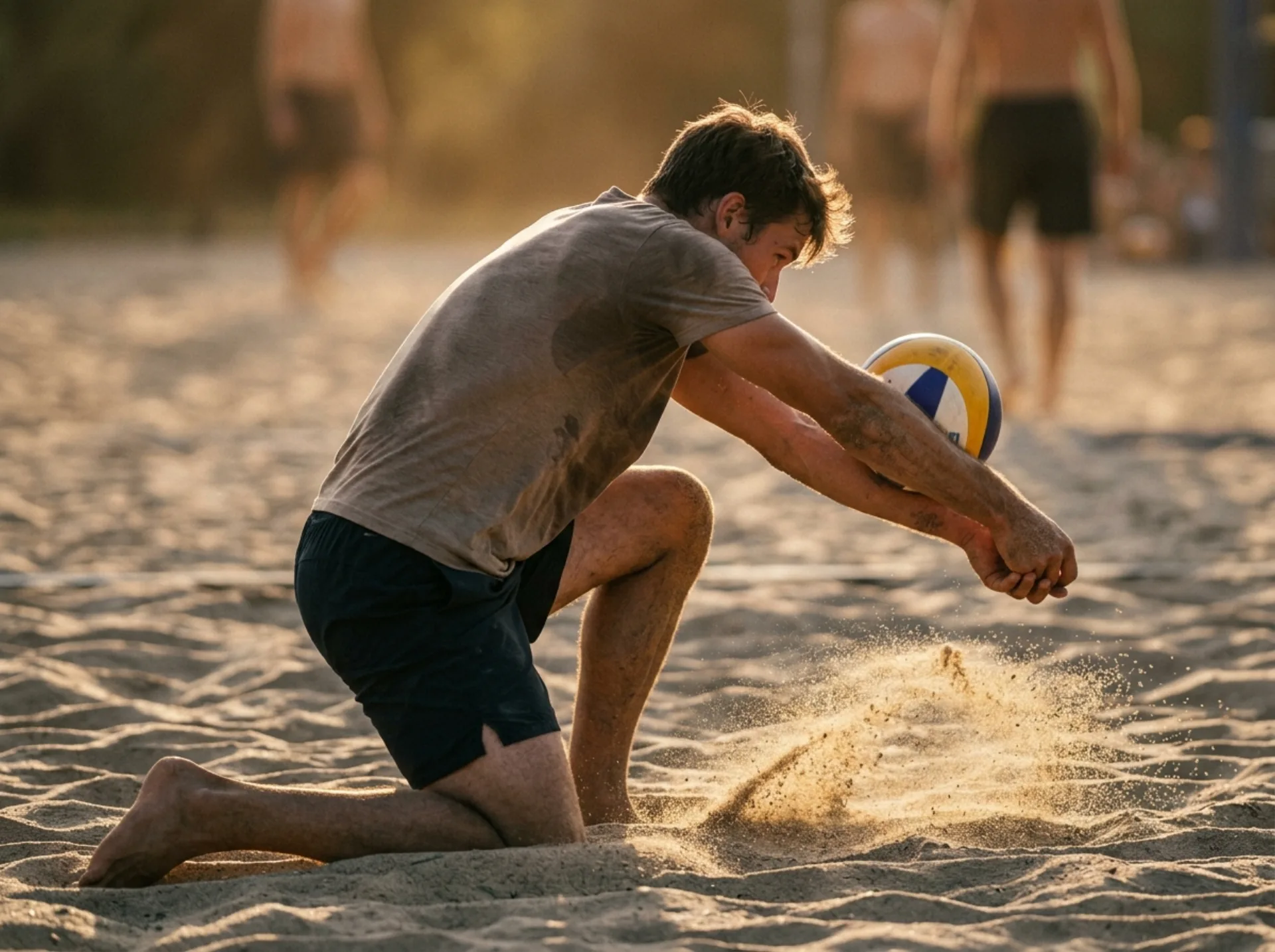
Both on sand and on outdoor courts, the wind and unstable surface complicate reception and defence. The forearm pass becomes the fundamental shot to keep the ball alive and set up the attacking play. To execute it at its best in outdoor conditions, it is necessary to pay attention to posture and impact with the ball.
Here are the practical guidelines for an effective forearm pass:
- The starting position: keep your knees bent and your centre of gravity low, with your feet wider than your shoulders to maintain balance even on soft sand.
- The platform: join your hands by bringing your thumbs together parallel to each other and fully extend your arms, pushing your elbows towards each other to create a flat and rigid surface.
- The body movement: do not hit the ball by swinging your arms upwards, but guide the trajectory by extending your legs and directing the platform towards the setter.
- The typical mistake: bending your elbows at the moment of impact to cushion the blow or hitting the ball with your wrists instead of your forearms.
- How to correct it: lock your elbows before the ball arrives and focus on making the ball contact the flat area of your forearms, keeping your eyes fixed on the point of contact.
What amateur players usually get wrong
In summer amateur tournaments, the most common mistake is not technical, but tactical and communicative. Many players tend to follow the ball visually without looking at the position of their teammates or opponents, ending up colliding or leaving entire areas of the court uncovered. On sand, where movement is more tiring, this flaw translates into a rapid loss of energy that compromises performance in decisive sets.
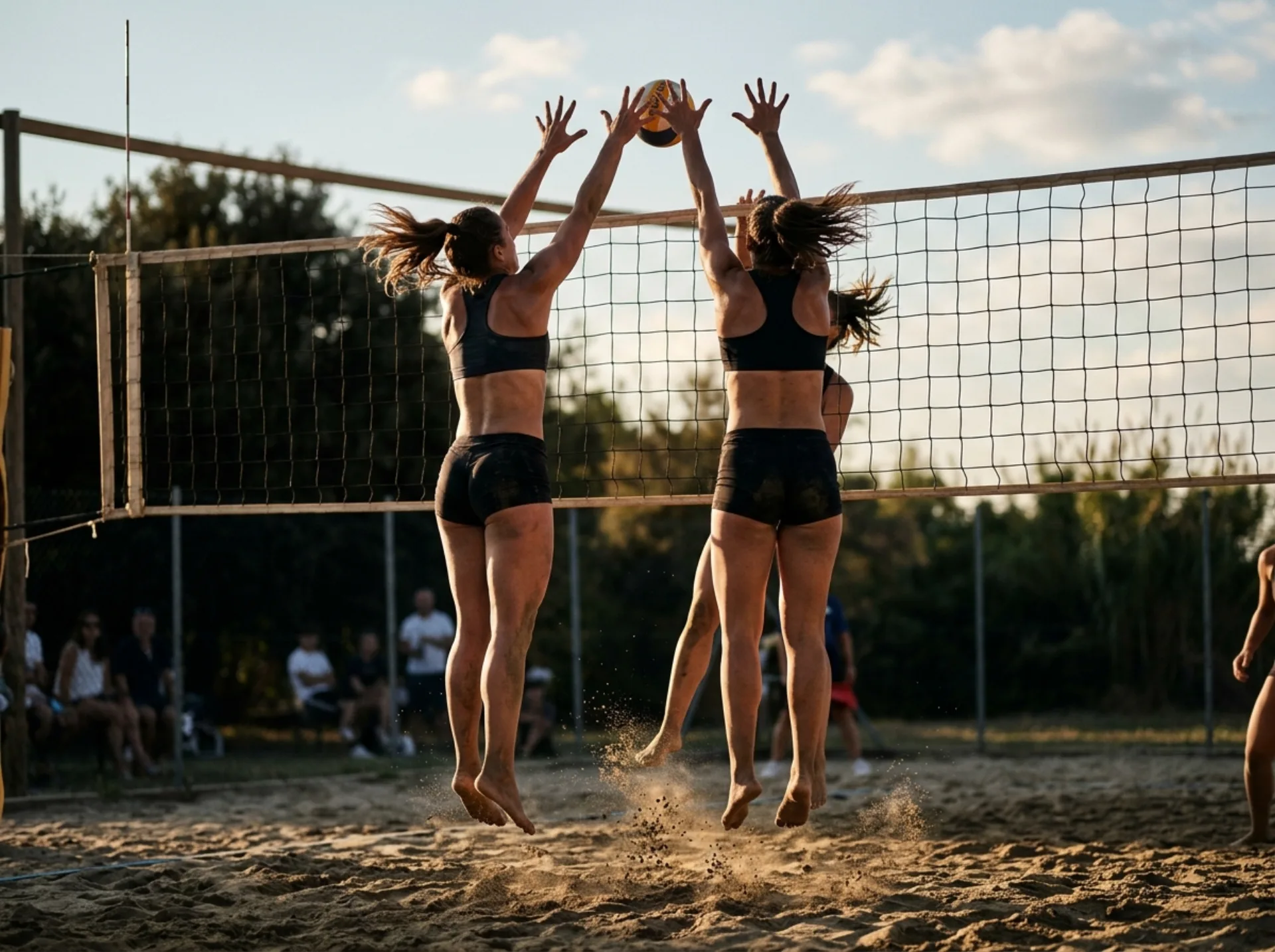
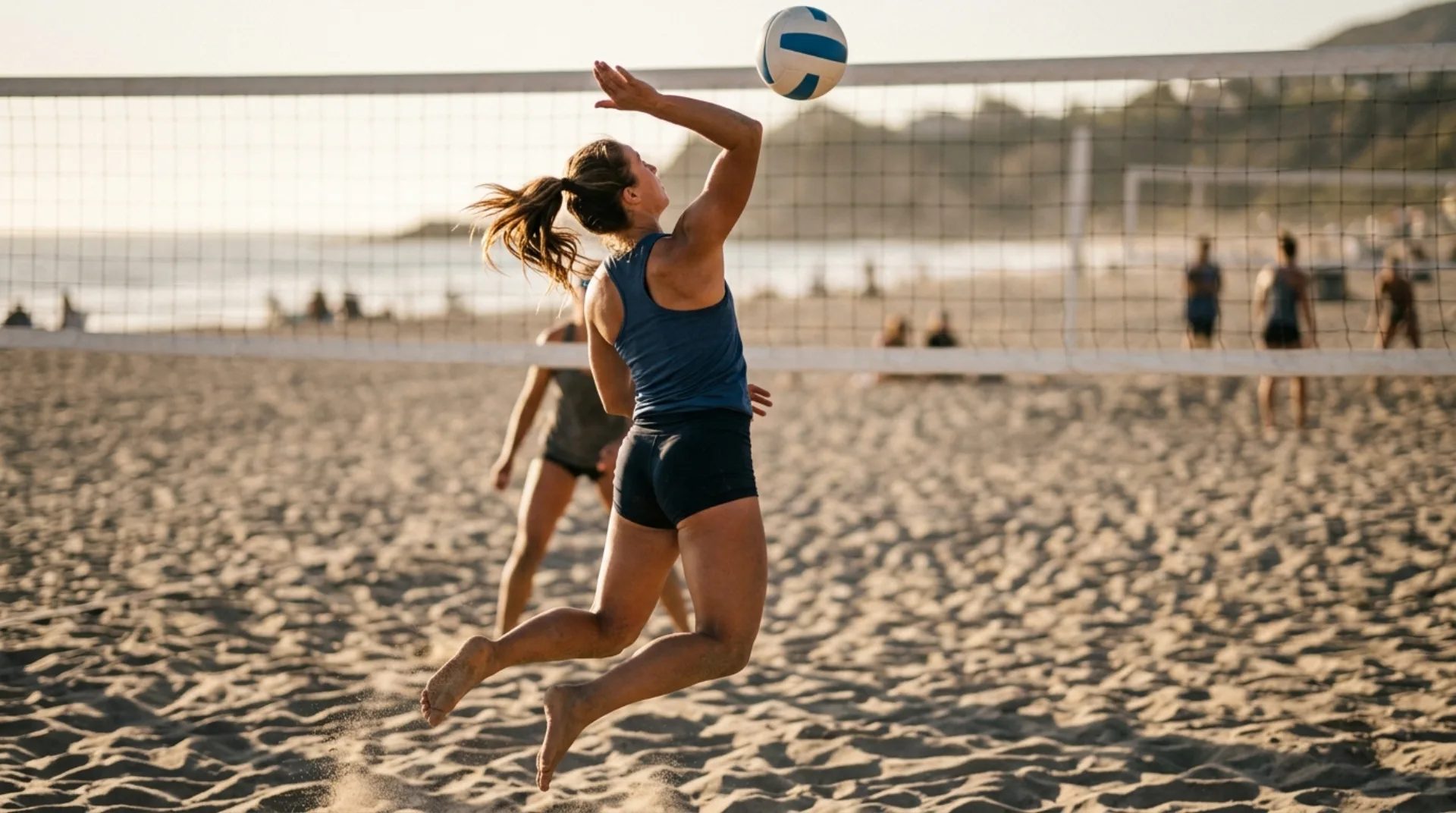
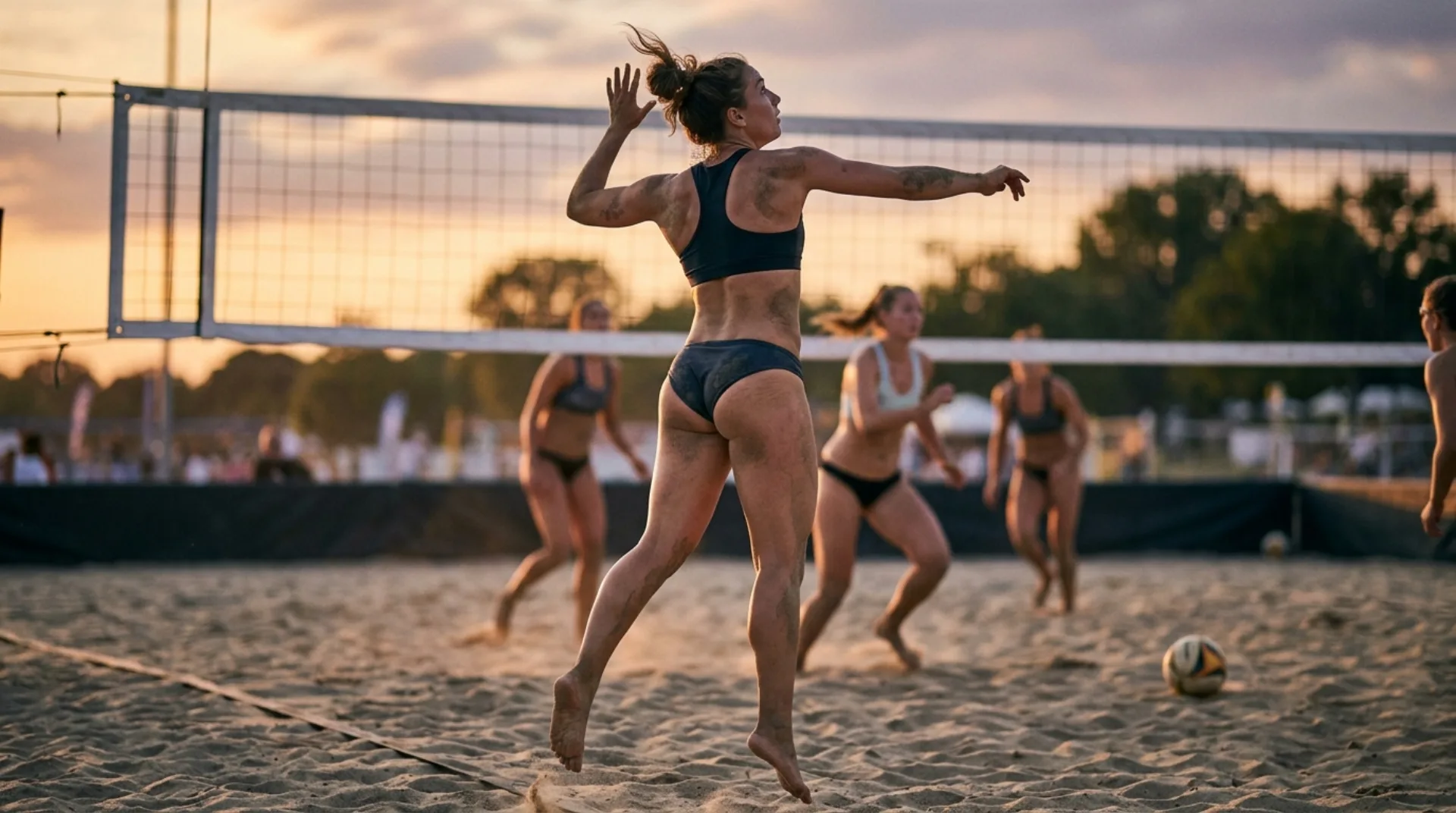
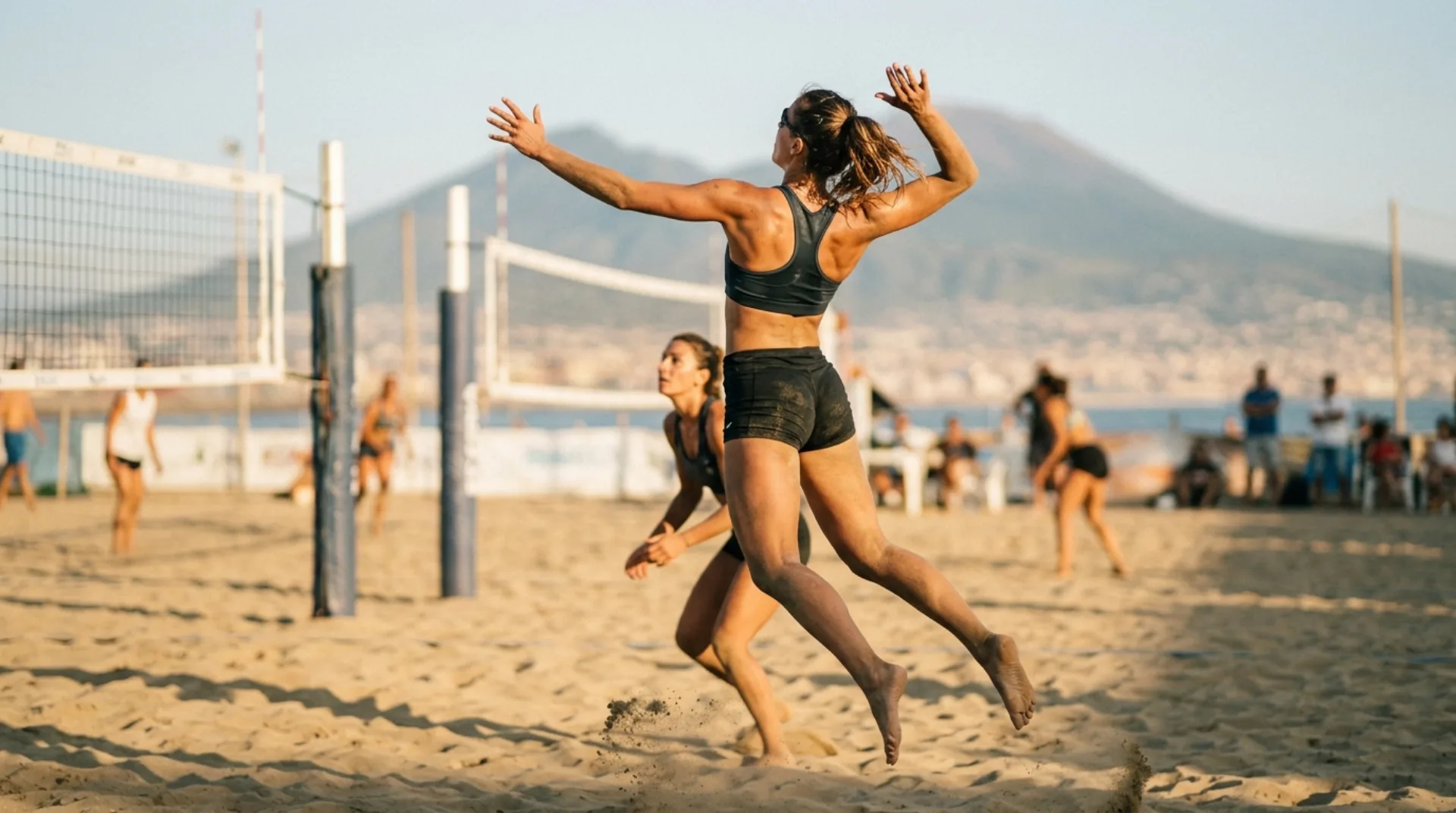
Another frequent mistake concerns over-eagerness at the net. In an attempt to spike with power, players lose coordination by jumping too close to the net, risking touching it or invading the opponent's court. Remember that precision and ball placement pay off much more than pure power, especially when playing outdoors and having to deal with summer wind gusts.
How to organise matches and set scores
To ensure the tournament runs smoothly, establish the scoring system before the opening whistle. In six-a-side volleyball, classic sets are played to 25 points with at least a two-point lead, and any deciding set, called a tie-break, is played to 15 points. Choosing impartial referees from resting players helps maintain a calm competitive atmosphere.
If you are organising a mixed or youth amateur tournament, keep in mind that the rules on ball weights per age group or other structural specifications are not fixed. For these details, it is always necessary to refer to the regulations of the event or the local federation to avoid disputes. Defining a clear tournament bracket with round-robin groups guarantees all teams the same playing time, keeping the fun high for the entire day. A group of friends can easily coordinate and manage registrations or match schedules to make the most of their passion for outdoor sport.