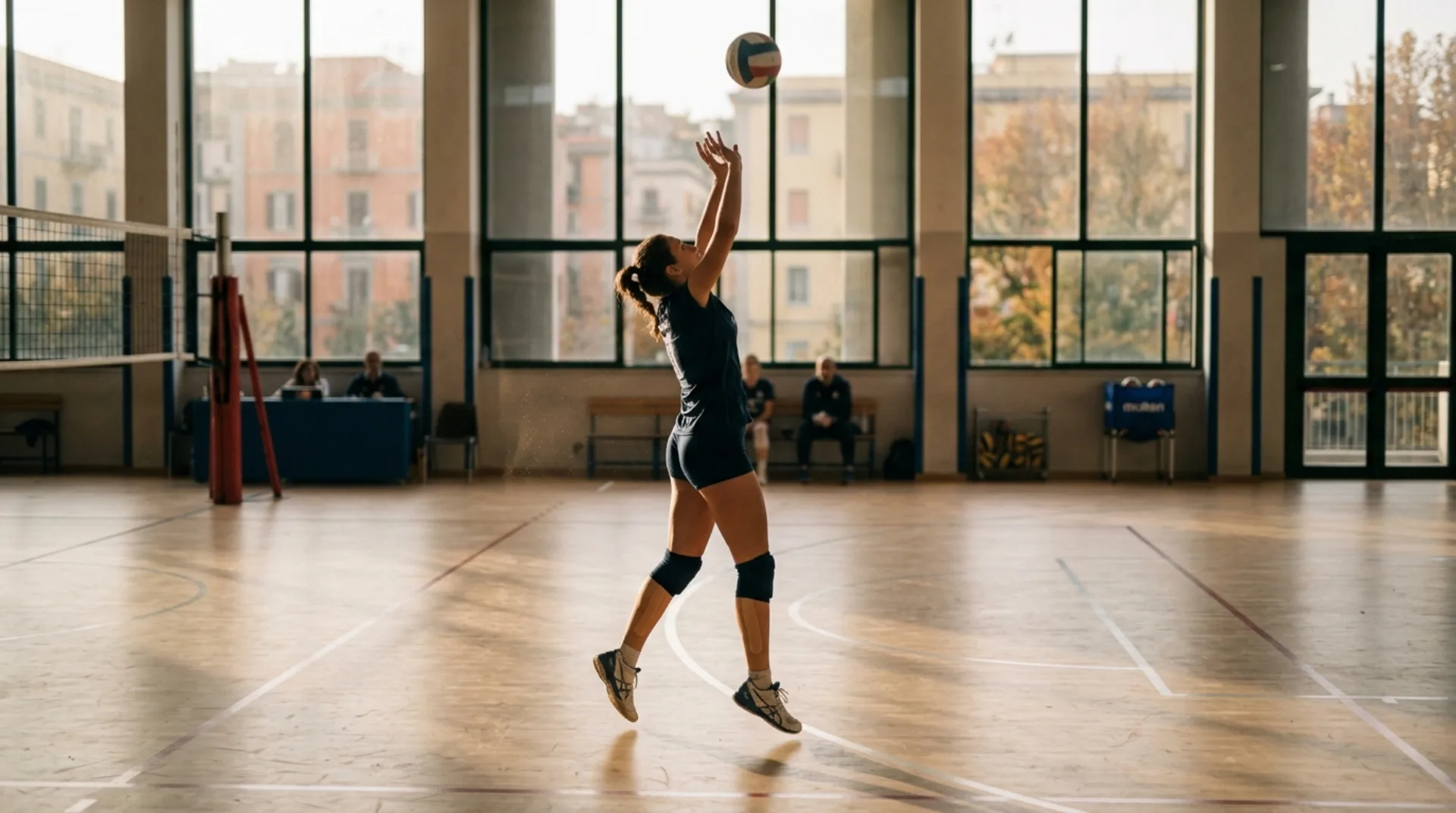
How to organise an amateur tournament in Naples' sports halls
The indoor season restarts in Naples. Discover how to organise a perfect amateur tournament, choosing the right venues and match formats suitable for everyone.
September has always represented the true new year for those who play volleyball. With the end of summer, attention shifts from the sunny beaches to the wooden or rubber floors of city gyms. In Naples, the restart of the amateur season is a moment of great excitement, where groups of friends and historic rivals meet up to plan matches, challenges and proper autumn tournaments.
Organising an amateur tournament during this period requires good logistical planning and knowledge of the opportunities offered by the local area. For those who want to take to the court for pure fun, there is no shortage of options, but it is necessary to move in advance to secure spaces and define the rules of the game.
The map of the restart in Naples
The amateur volleyball landscape in Naples offers several organisations that are reopening their doors in these very weeks. For those looking for inspiration or wanting to establish collaborations to structure a tournament, it is useful to look at those who already manage activities in the area.
Napoli Pallavolo ASD, for example, is reactivating its mixed amateur volleyball courses in the Ponticelli and Portici areas, offering excellent ideas for understanding how to bring enthusiasts together. In the Scampia and Ponticelli areas, Athena Volley organises activities designed specifically for parents, former athletes and groups of friends who wish to keep their connection with the court alive. Furthermore, for the student population and beyond, CUS Napoli represents a fundamental point of reference with its historic university mixed courses.
Looking at these organisations helps to understand which gyms are active and how to structure schedules. Many provincial committees, such as CSI, open registrations for official championships right in mid-September, making this the perfect time to decide whether to participate in an organised circuit or start a self-managed private tournament.
Court rules and match formats
When organising a classic 6-player amateur tournament, it is essential to refer to the official rules to ensure the fairness of the game. The court must respect the standard size of 18x9 metres, divided in half by a net. The height of the net must be set at 2.43 metres for entirely men's tournaments and 2.24 metres for women's ones.
Matches are usually played as the best of three or five sets, where each regular set is won by reaching 25 points, with at least a two-point lead over the opponents. In the event of a tie in sets, the eventual deciding tie-break is played to 15 points, again with the two-point lead rule.
For all other match formats, such as mixed tournaments (men and women together on court) or youth tournaments, the height of the net and team composition do not follow a universal fixed standard. This value must be checked in the specific regulations of the individual event or agreed upon in advance between the captains before the start of the tournament, to avoid arguments close to the opening whistle.
The typical mistake of the amateur player in autumn
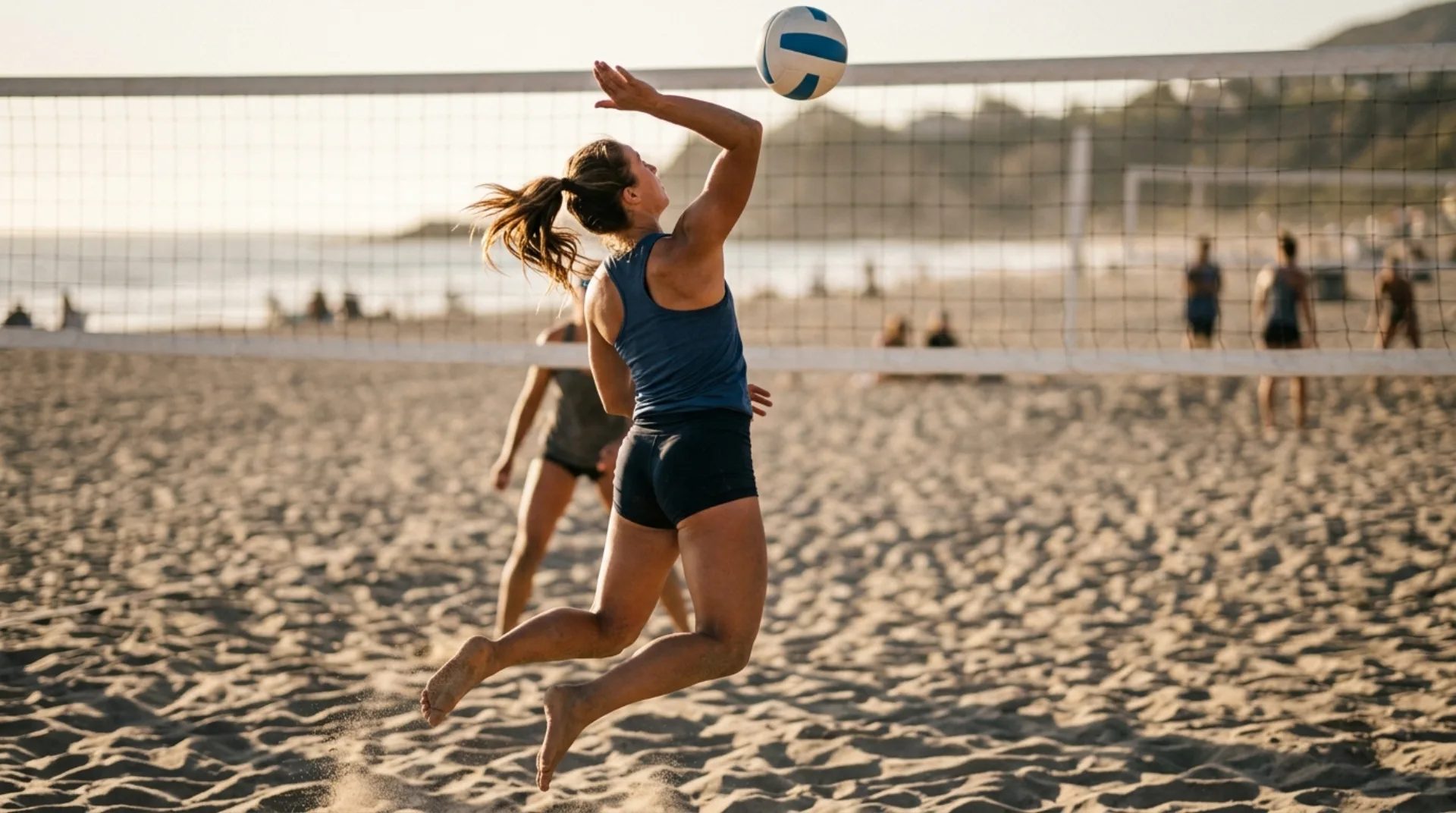
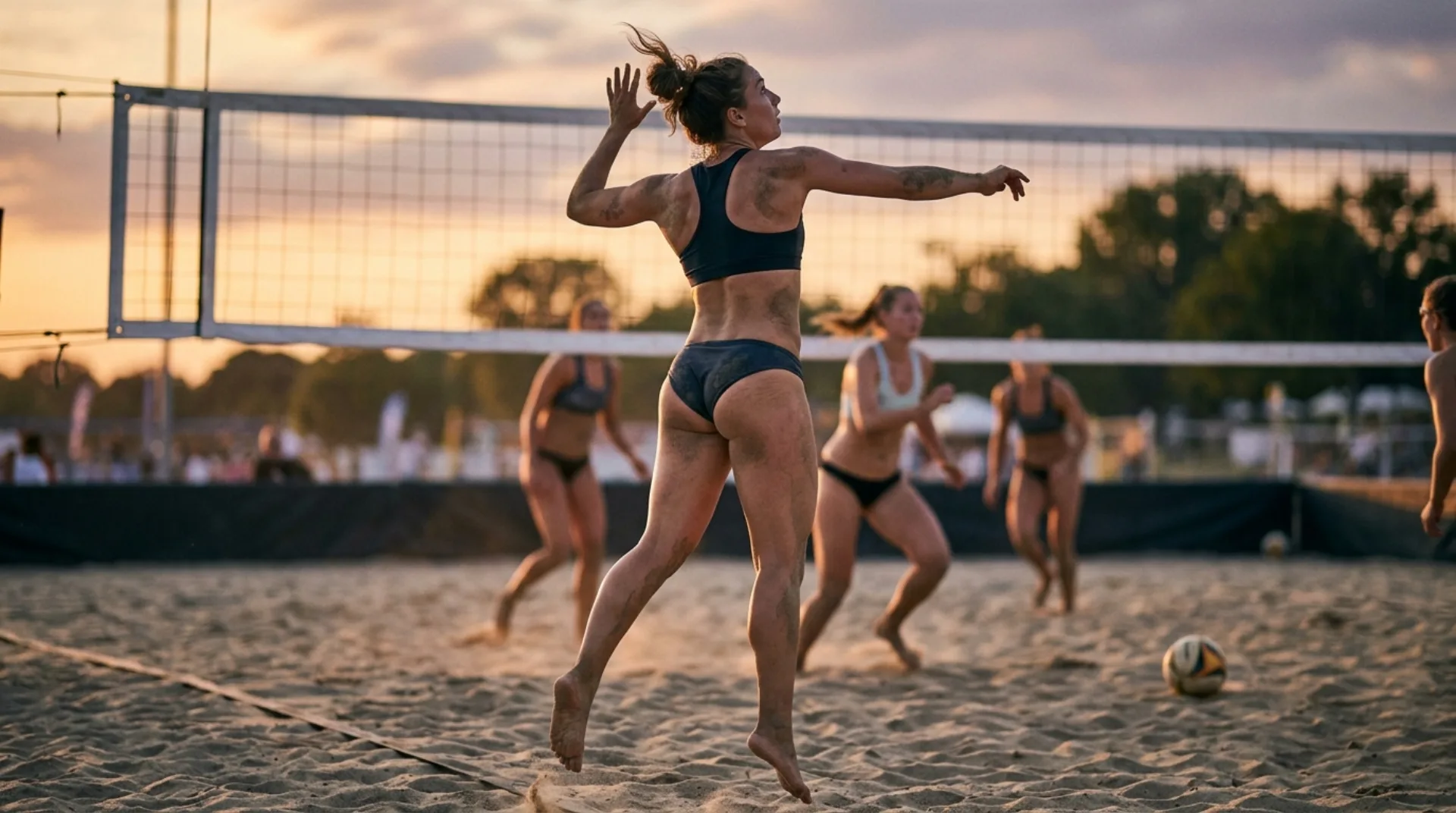
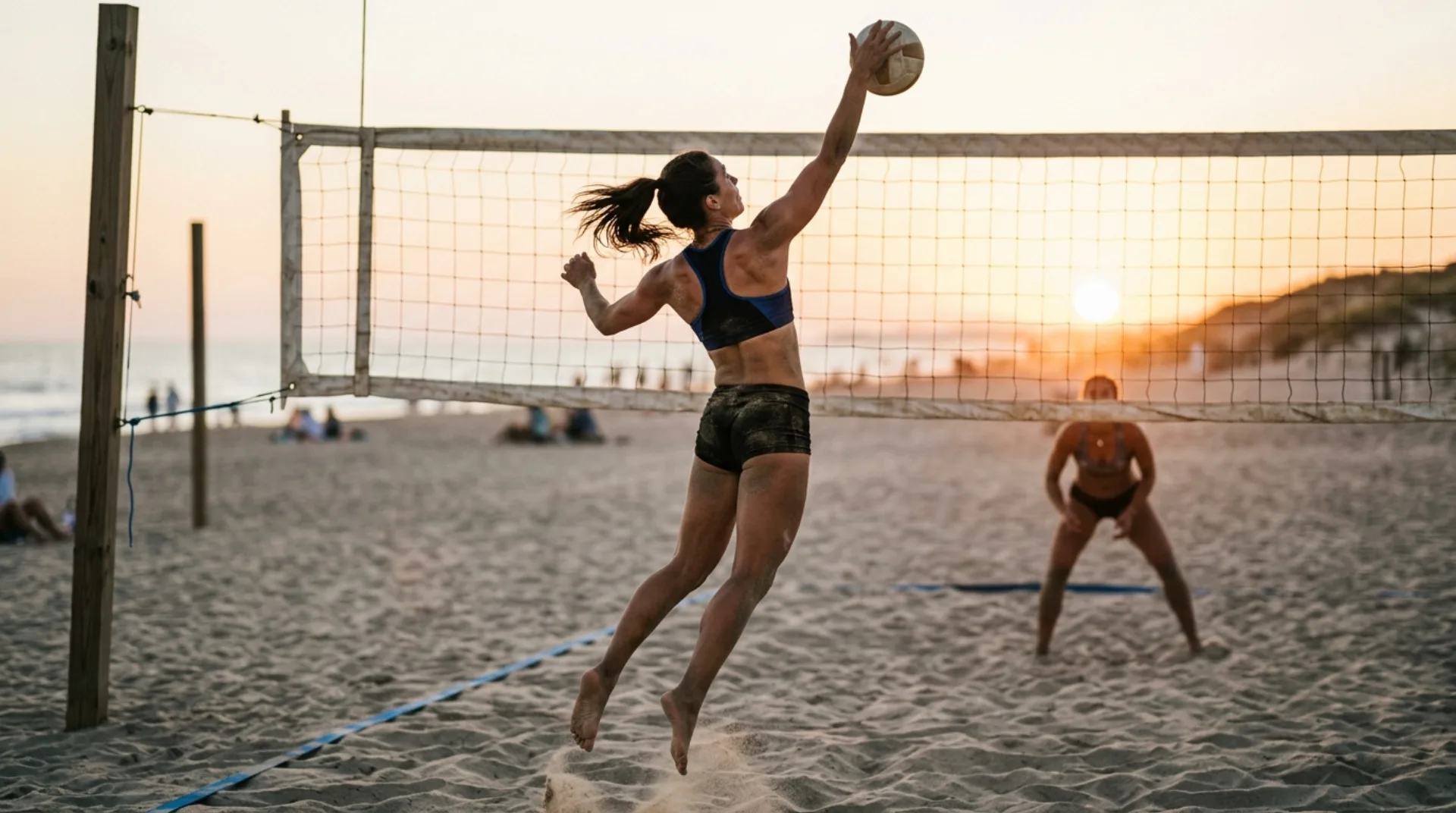
The transition from summer beach volleyball to autumn indoor volleyball hides physical pitfalls that many underestimate. The most common mistake made by those who play at an amateur level is maintaining the same posture and reaction times used on sand.
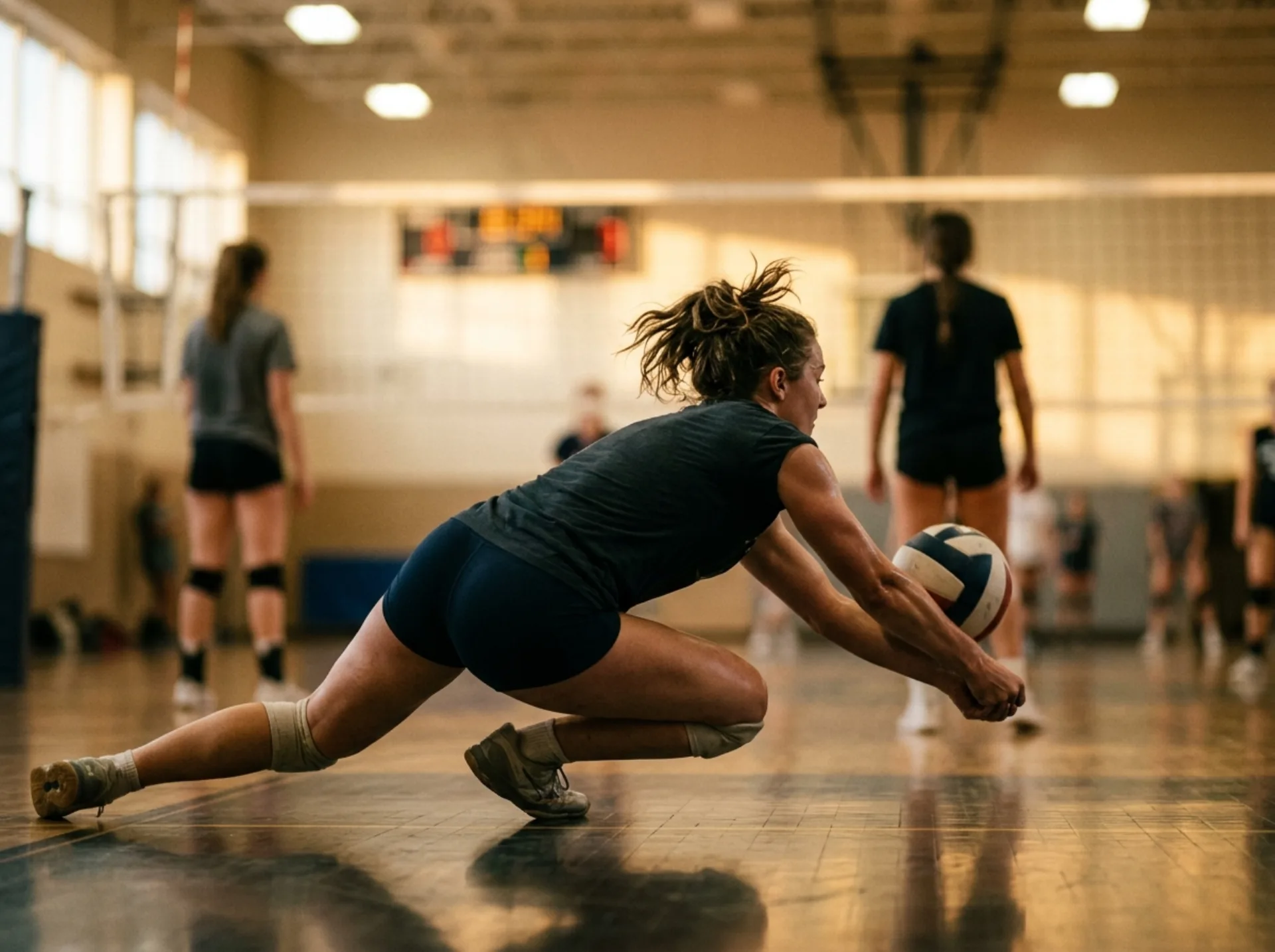
On sand, players tend to compensate for the instability of the ground with slower movements and by jumping with a greater load on the knees. When returning to the hard gym floor, the impact with the ground is rigid and lacks natural cushioning. Continuing to jump and land without taking care of landing technique, or attempting diving defences without protection, drastically increases the risk of joint trauma and annoying muscle strains.
Practical guide for playing in the gym
To ensure the safety of all participants and raise the level of fun, here are some practical guidelines to share with your team before taking to the court:
- Court check: Ensure that the playing space is free of obstacles for at least two metres around the 18x9 metres perimeter.
- The forearm pass technique: Use the defensive forearm pass (bagher) to handle the most difficult balls, keeping your arms straight and together.
- The mistake to avoid in the forearm pass: Bending your elbows at the moment of impact with the ball or guiding the ball with an upward shoulder movement.
- The effective correction: Create a flat surface by bringing your wrists together and pushing your shoulders down, directing the ball solely through the controlled push of your legs.
Organising an amateur tournament only requires a bit of coordination among friends. Simple digital tools can help groups manage attendance, split gym expenses and agree on match times, leaving the teams with nothing but the fun of taking to the court and playing.