How to organise a perfect 2v2 beach volleyball tournament among friends
All the practical tips to organise a self-managed late-summer 2v2 beach volleyball tournament, from quick game formats to the official rules to respect on the sand.
Organising a late-summer 2v2 beach volleyball tournament is the perfect opportunity to gather friends on the sand before the indoor leagues start again. To prevent the day from turning into an endless series of arguments and delays, you need to define a few clear rules before blowing the whistle for the first service. Knowing exactly how to manage the bracket, the court dimensions and the most common faults allows everyone to focus solely on having fun and defending every ball.
How to structure the game format to avoid running late
One of the most frequent problems in self-managed tournaments on the sand is time management. When planning a one-day tournament, you must realistically calculate the duration of the matches to avoid risking playing the final at sunset with no visibility. Official 2v2 beach volleyball features best-of-three sets to 21 points, with a potential third tie-break set to 15 points. If the number of registered teams is high, an excellent format for the qualification pools is a single set to 21 points with a change of ends every 7 points.
This system speeds up the tournament flow and guarantees all pairs play a minimum number of matches. Reserve the classic format with two out of three sets to 21 points and the eventual tie-break to 15 points only for the semi-finals and finals. In this way, the level of competition remains high in the hot phase of the event, while respecting the physical integrity of the players who have already faced several hours under the sun.
Court dimensions and managing space on the sand
Precision in setting up the court avoids disputes over doubtful balls that decide crucial points. In 2v2 beach volleyball, the official court dimensions are 16x8 metres overall, divided into two perfect squares of 8x8 metres each. Before stretching the elastic lines, ensure that the corners form a perfect right angle by measuring the diagonals, which must be equal.
As for the net height, this varies depending on whether you are playing a men's, women's or mixed tournament. To avoid errors or arguments before the starting whistle, the exact net height value should be checked in the regulations of the event or the facility hosting you. Also, remember to leave a safety space free of obstacles of at least two metres around the lines to allow for diving recoveries without danger.
Practical guide to avoiding the most common faults on the sand
To guarantee fluid and sporting play, all participants must know the basic rules that differentiate beach volleyball from the indoor game. Here are the fundamental points to respect during every action:
- Canonical court dimensions: the playing court must measure exactly 16x8 metres, delimited by flexible coloured lines well anchored to the sand.
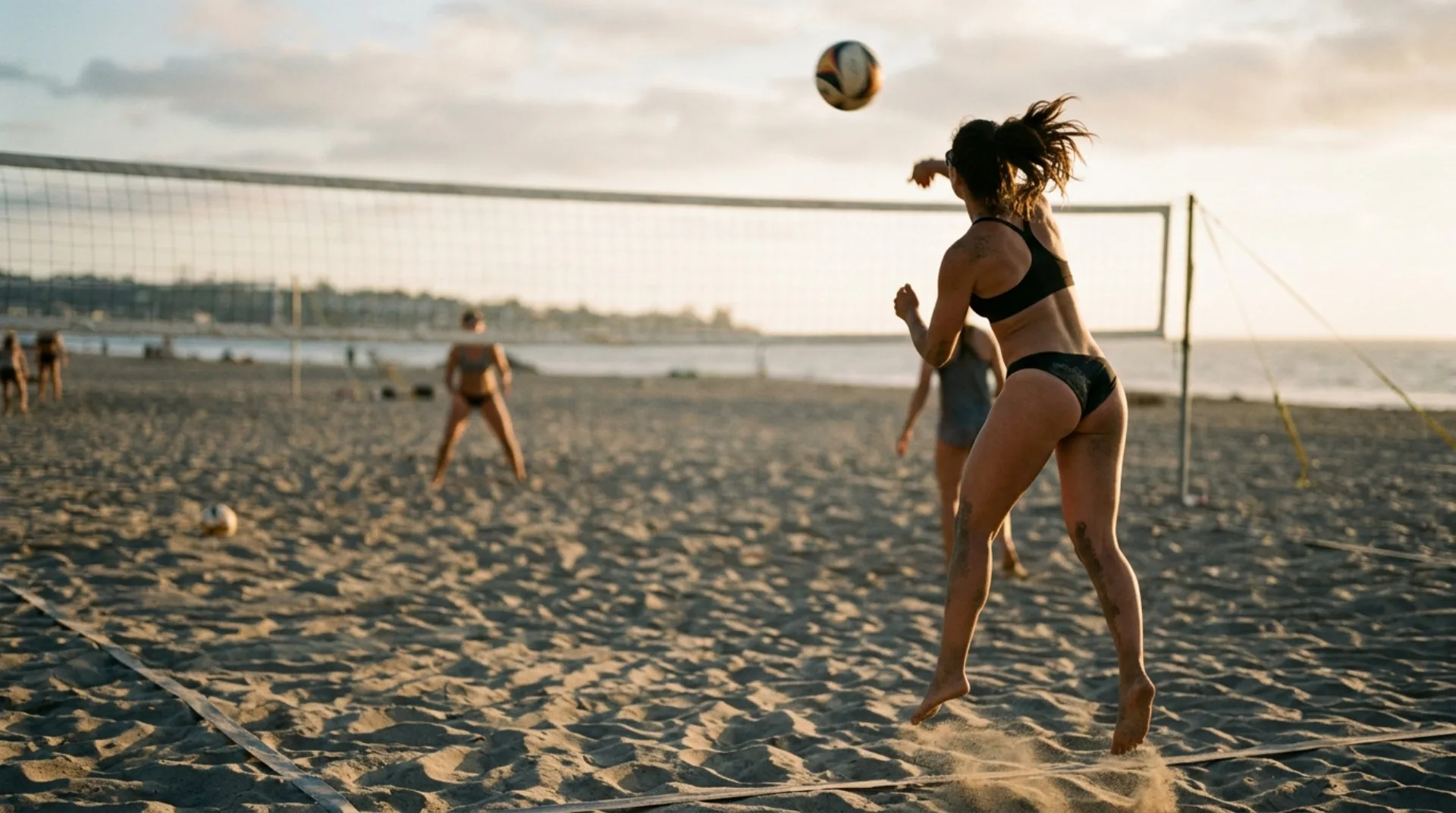
- The technical gesture of the service: the serve must be executed by hitting the ball with one hand or any part of the arm, after it has been tossed or released from the hand.
- The typical service error: stepping on the endline before or during contact with the ball. Many amateurs start their run-up too close to the line, committing a foot fault.
- How to correct the error: position yourself at least a generous step behind the endline before tossing the ball. Focus on maintaining body balance without leaning forward before the hit.
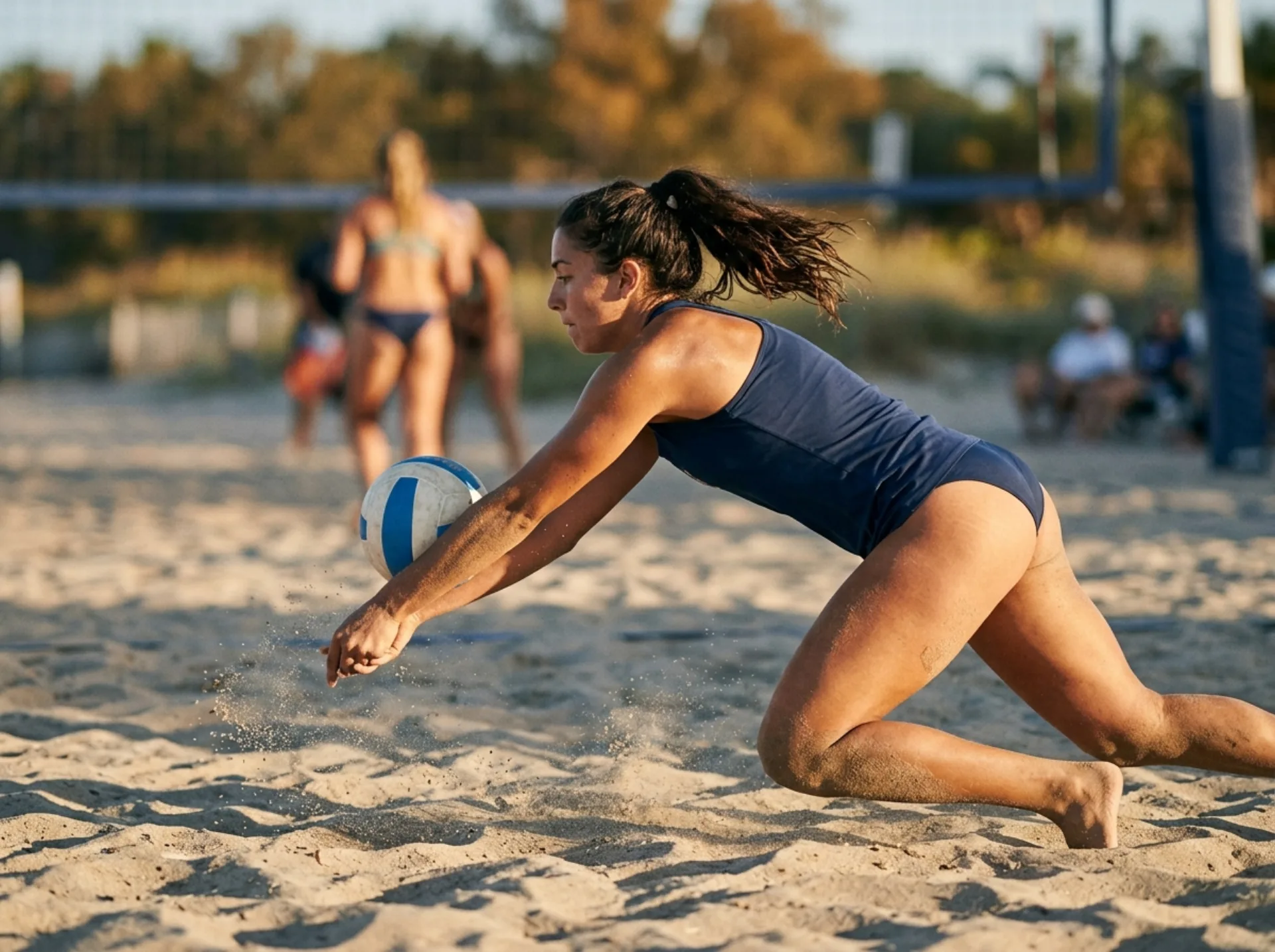
- The finger contact in setting: in 2v2 beach volleyball, the set on reception or transition is subject to very strict refereeing. The ball must not spin visibly and the contact must be clean and simultaneous. If you do not have impeccable technique, use the bump (bagher) to set the ball.
The most common mistake made by players in amateur tournaments
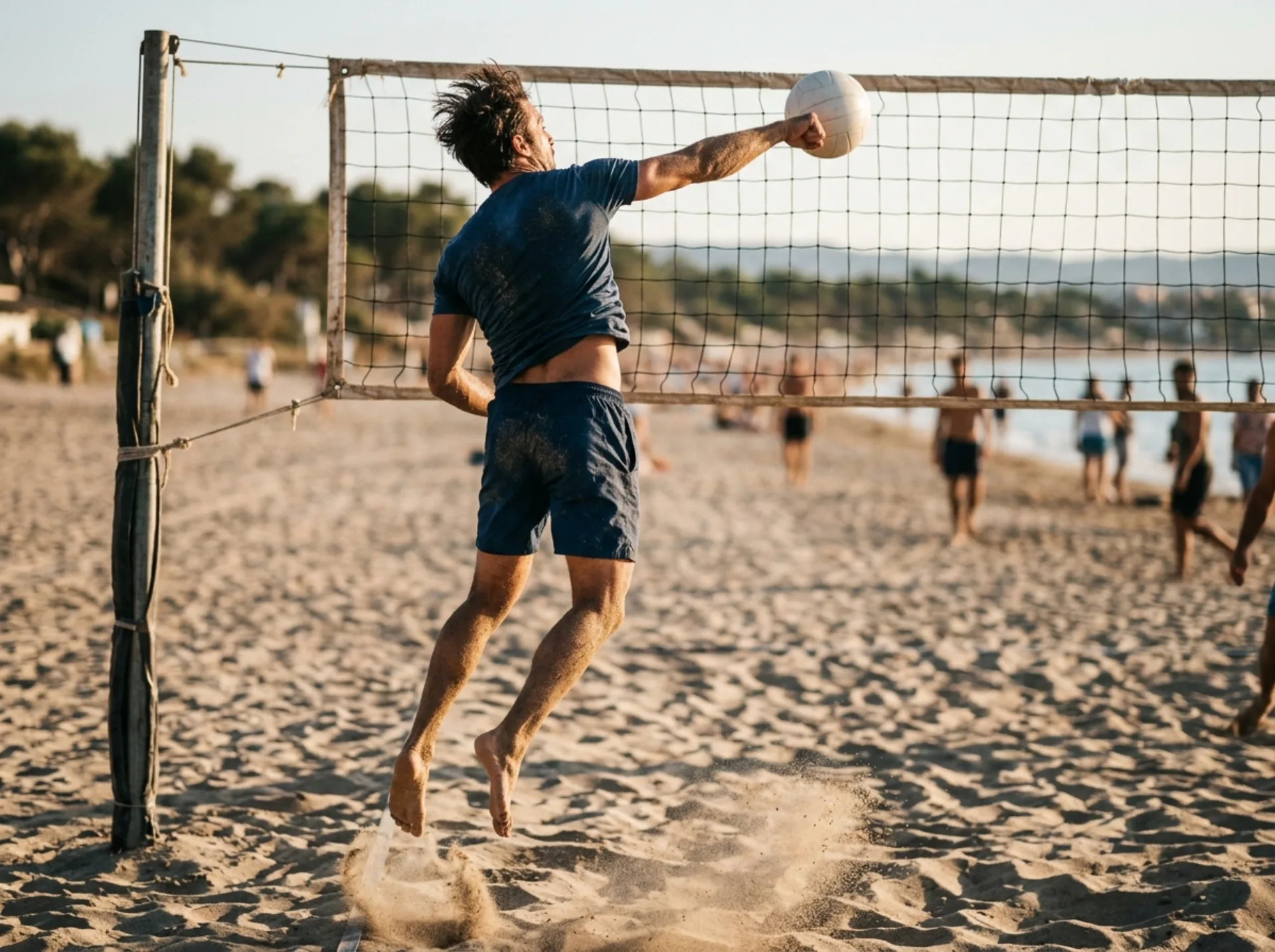
On the sand, the most widespread mistake among those used to the gym is attempting to place the ball into the opponent's court using a soft tip with the fingertips. In 2v2 beach volleyball, this touch is strictly forbidden and is immediately penalised as a fault. To go over the opponent's block or find an open angle, you must hit the ball cleanly, or use the knuckle shot (knuckles of closed fingers) or the shot with straight, joined fingers called the "cobra".
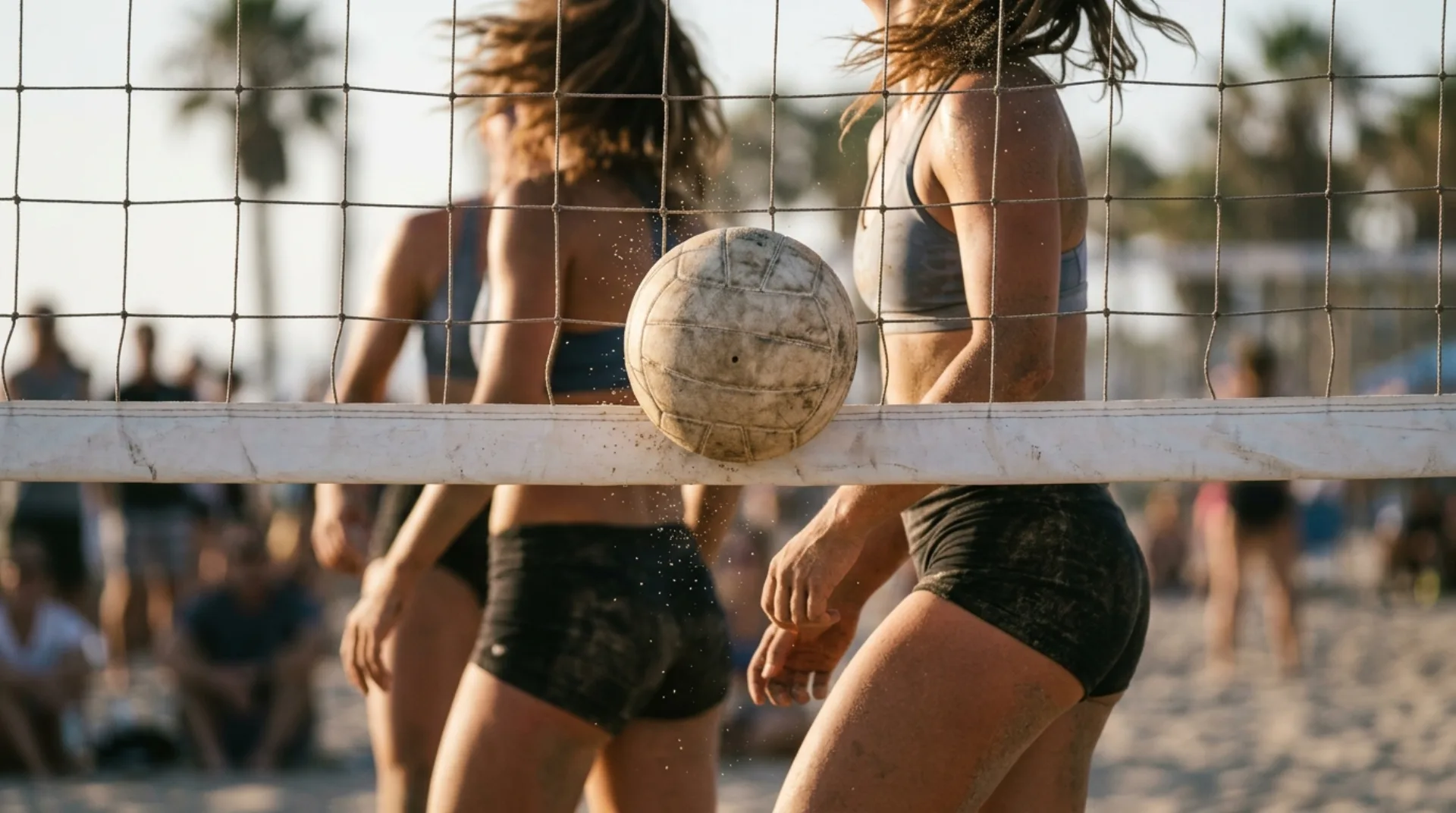
Another frequent mistake concerns net touches. In beach volleyball, there is no physical centre line on the sand, but penetrating under the net is a fault if it touches or interferes with the opponent's play. Touching the net with any part of the body during an attacking or blocking action is always a fault, so it is essential to control your body during the landing phase from a jump.
Organising yourself with your team or a group of friends for a summer tournament is simple if you establish these rules before stepping onto the court. For managing schedules and scores, an application dedicated to the volleyball community can facilitate communication and keep track of every challenge on the sand.