How to restart amateur volleyball in September
From the sand to the gym, September marks the return to the court for thousands of fans. Here is how to organise your amateur team and get off to the right start.
The amateur volleyball players' New Year begins in September
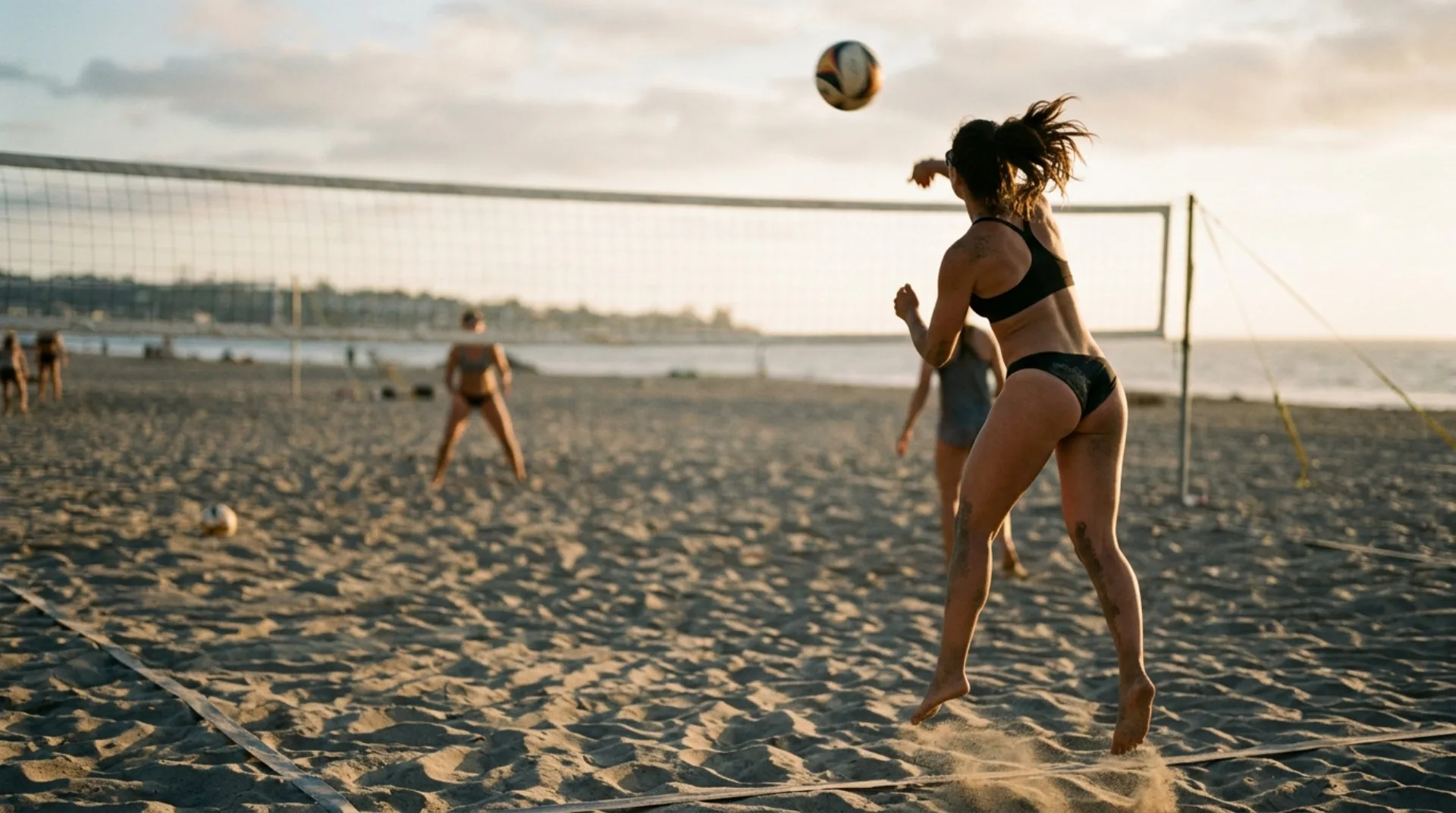
The end of August for those who love volleyball and beach volleyball is not a simple transition on the calendar, but a real new beginning. It is the moment when you wash the kneepads left in your bag since June, shake the remaining sand from your shoes and start sending messages in group chats to see who is up for the new season. Across Italy, sports associations are reopening registrations for amateur courses and tournaments. For example, in Asciano, in the province of Siena, the amateur activity for adults promoted by the SporteGioco association officially restarts on 1 September 2026, dividing training sessions between the primary school gym and the local sports hall with the sole aim of having fun and building team spirit.
Whether it is an indoor mixed tournament or the last summer challenges on the sand, organising the team requires a minimum of method to avoid the usual chaos of the first few weeks. Returning to the gym after the warm months is wonderful, but you need to do it sensibly to avoid risking an immediate stop due to some minor injury.
Inspiration from the great late-summer events
Watching those who play at the highest level is always an excellent stimulus to find the desire to train. Right now, the international calendar offers extraordinary spectacles from which to copy defensive attitudes or the management of placed shots. Tonight, 30 August 2026 at 21:00, the men's national team challenges Brazil at the PalaRescifina in Messina for the FIPAV Cup Men Elite, a perfect stage to observe how champions handle situations of maximum pressure.
On the sand, however, the Beach Pro Tour Futures finals conclude today in Modena, where pairs of the calibre of Valentina Gottardi with Reka Orsi Toth and Enrico Rossi with Marco Caminati took to the court as number one seeds. Observing their ability to cover the court as a pair is a fundamental lesson for anyone who loves beach volleyball and wants to improve their partnership chemistry before the outdoor season definitively gives way to indoor arenas.
Court measurements and space management
When returning to play seriously, it is essential to regain familiarity with the regulation spaces. Often during the summer we adapt to makeshift courts on the beach or in parks, but for official tournaments the rules are precise and help keep the game orderly and fair.
- The 2v2 beach volleyball court: the playing space measures exactly 16x8 metres. Matches are played as the best of three sets, where the first two sets go up to 21 points and any tie-break is played to 15 points, always with at least a two-point lead.
- The indoor volleyball court: the classic structure for 6-a-side play features an 18x9 metre rectangle. The net is set at a height of 2.43 metres for men's competitions and 2.24 metres for women's. In indoor tournaments, sets are played to 25 points (with a two-point lead) and the fifth deciding set is played to 15 points.
- Mixed and youth tournaments: as far as mixed championships, youth categories or specific promotional circuits are concerned, the net height and specific facility requirements vary depending on the organising body. Each specific value must be checked in the regulations of the individual event.
The typical amateur mistake and how to correct it immediately
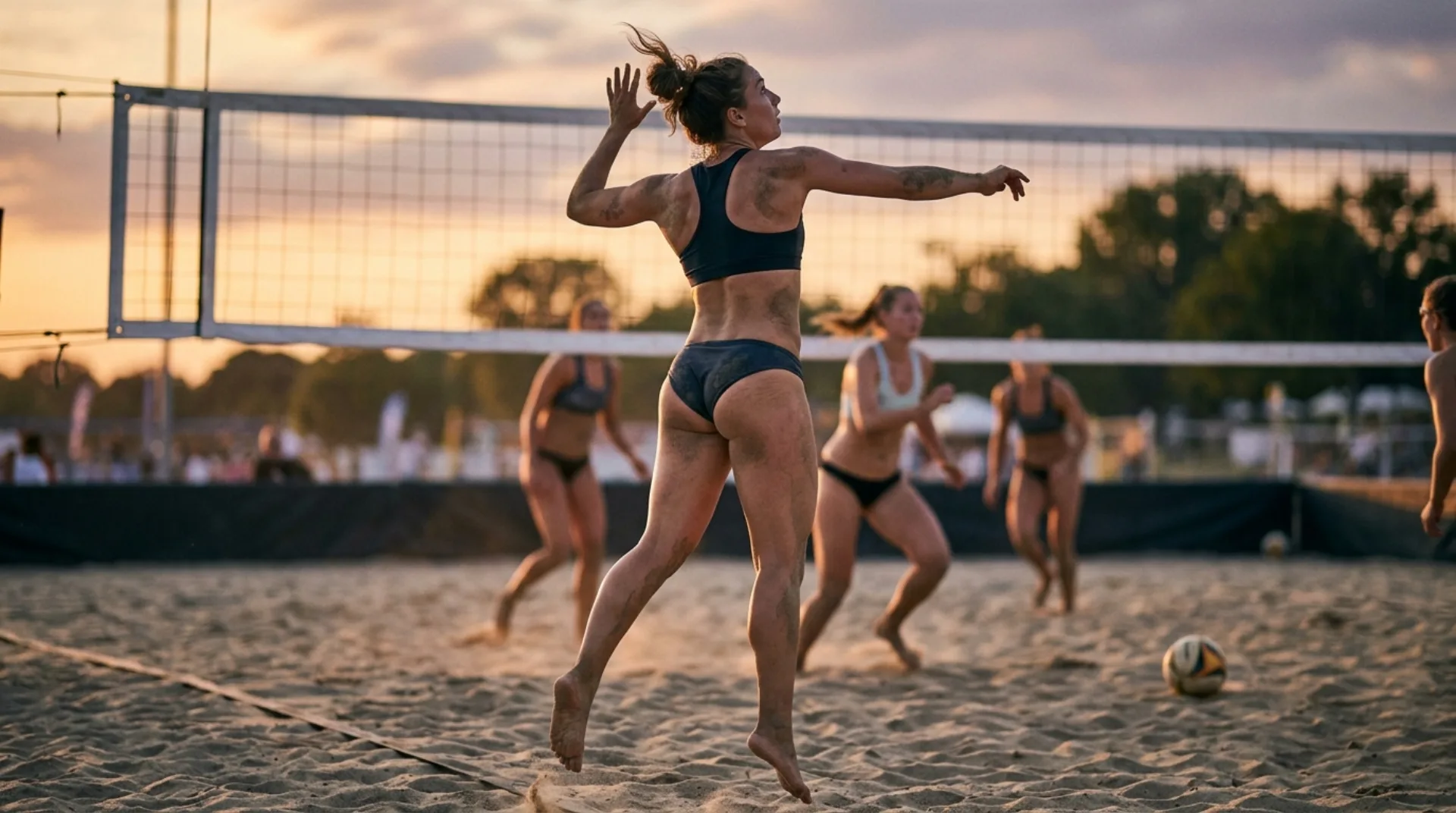
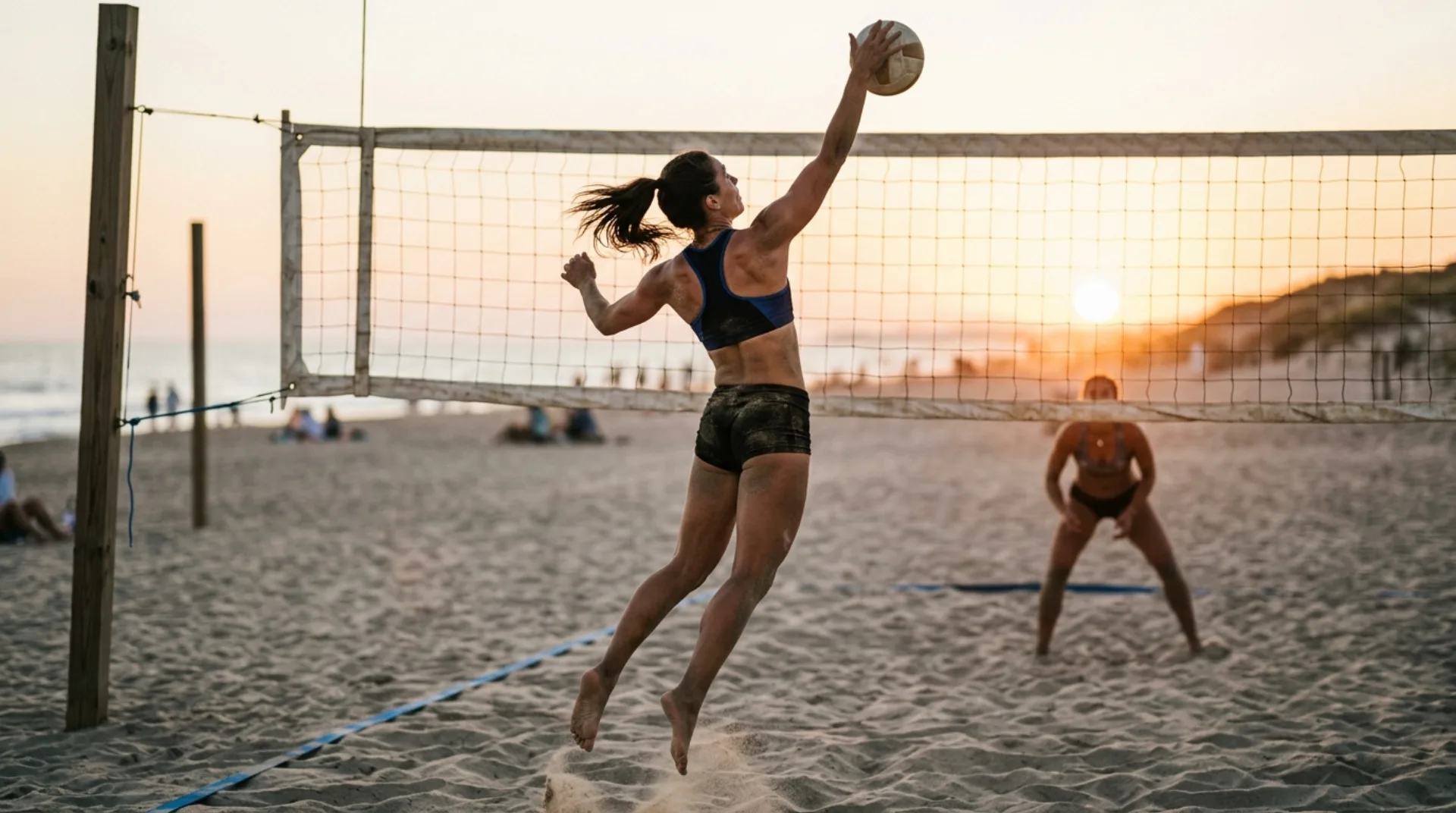
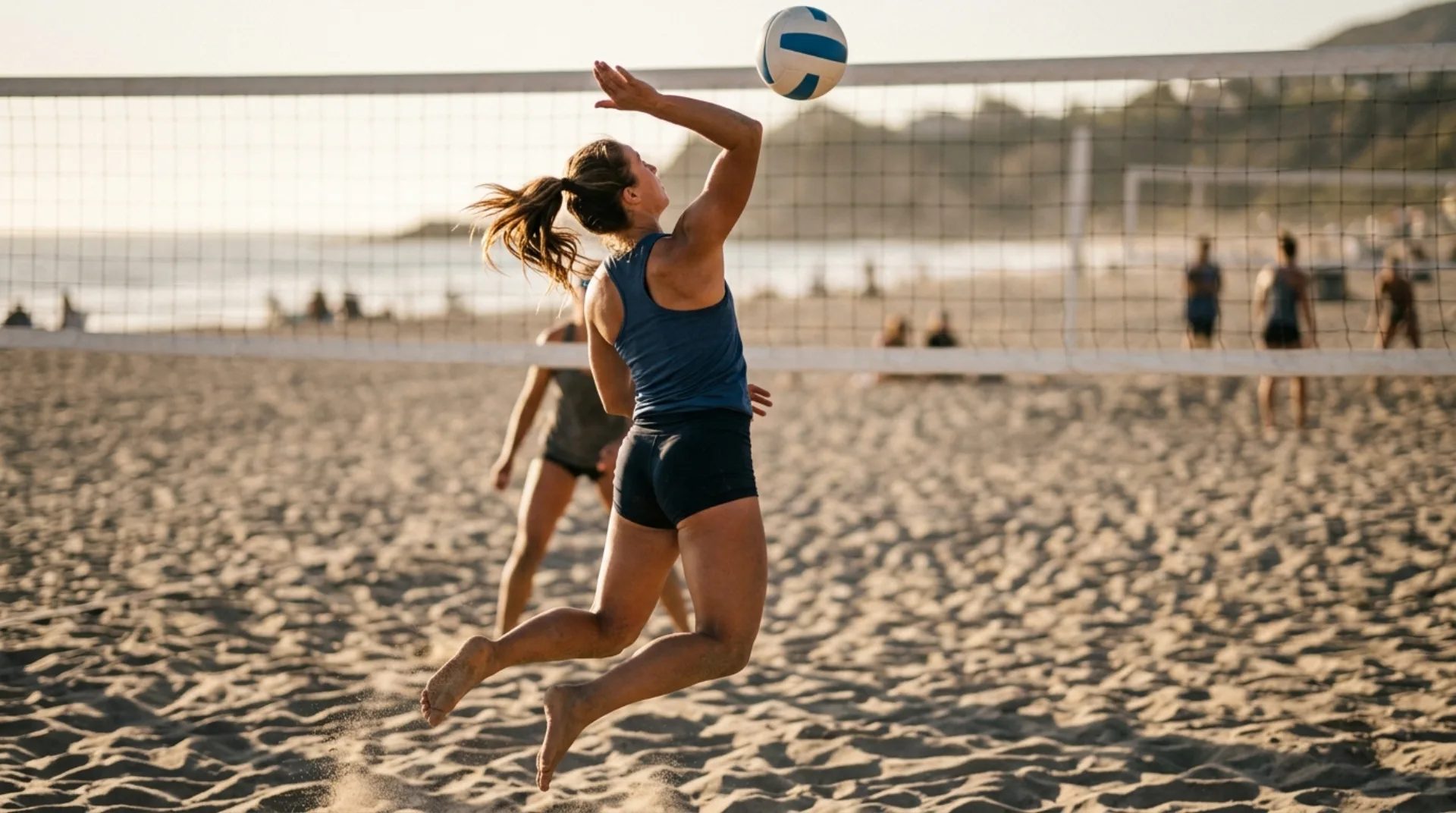
The most common flaw found in the first training sessions of September is the rush to win the point with power. After weeks of inactivity, players take to the court with a lot of built-up energy, and the result is that everyone tries to spike as hard as they can right from the warm-up. This behaviour not only increases the risk of back strains and shoulder trauma, but is also tactically ineffective because the ball often ends up in the net or well past the endlines.
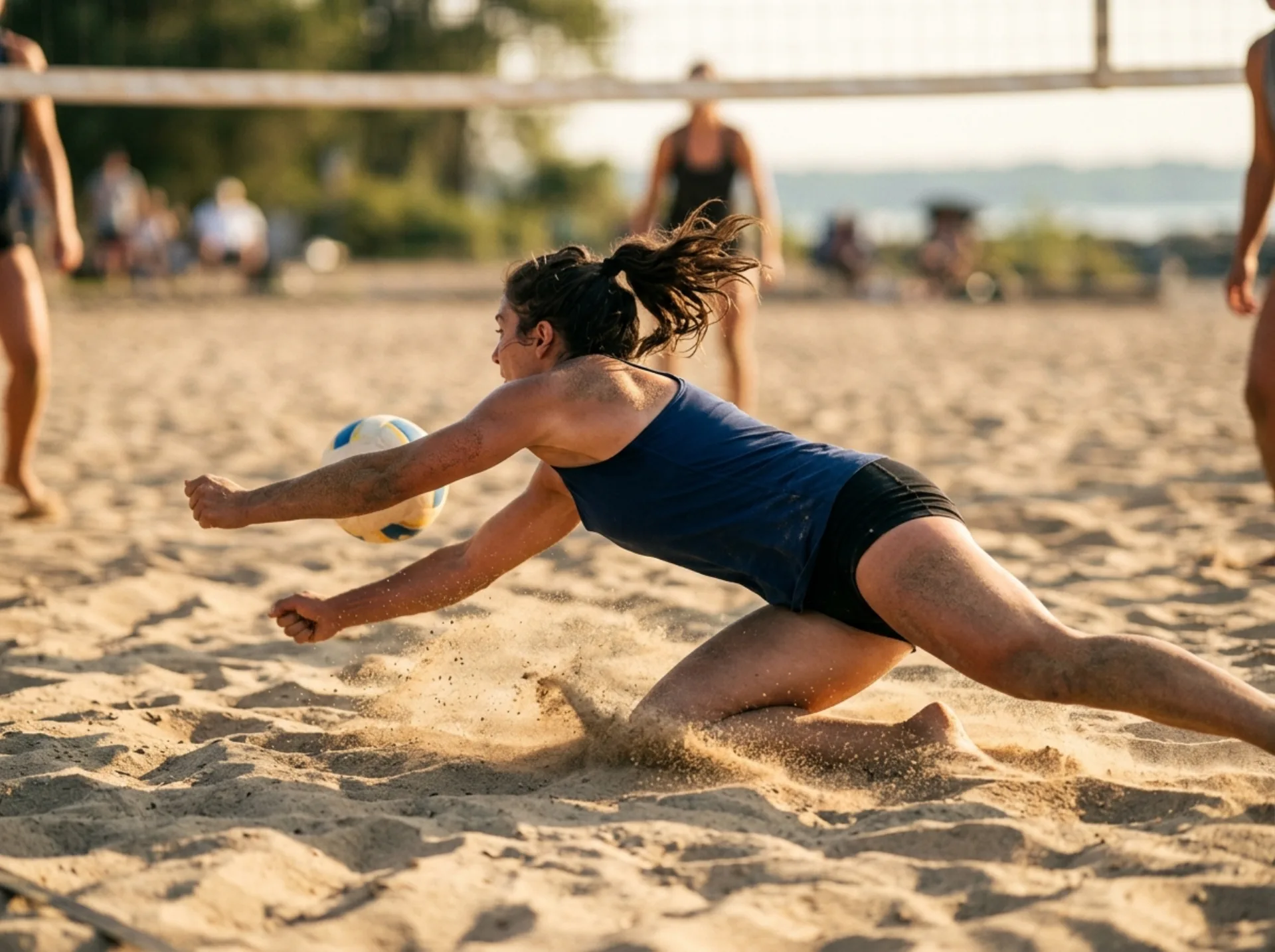
Another frequent mistake concerns the ready position during reception and defence. Many amateur players tend to stand still with straight legs, waiting for the ball to come directly into their hands. In this way, it is almost impossible to react in time to a powerful serve or a tip.
To get off to the right start and avoid these lapses, here are some practical tips to apply from your very first entry into the gym:
- The reception posture: keep your knees bent and your body weight shifted slightly forward, on the balls of your feet. Your arms must be free and ready to form the platform for the forearm pass, without being locked together before the opponent's serve.
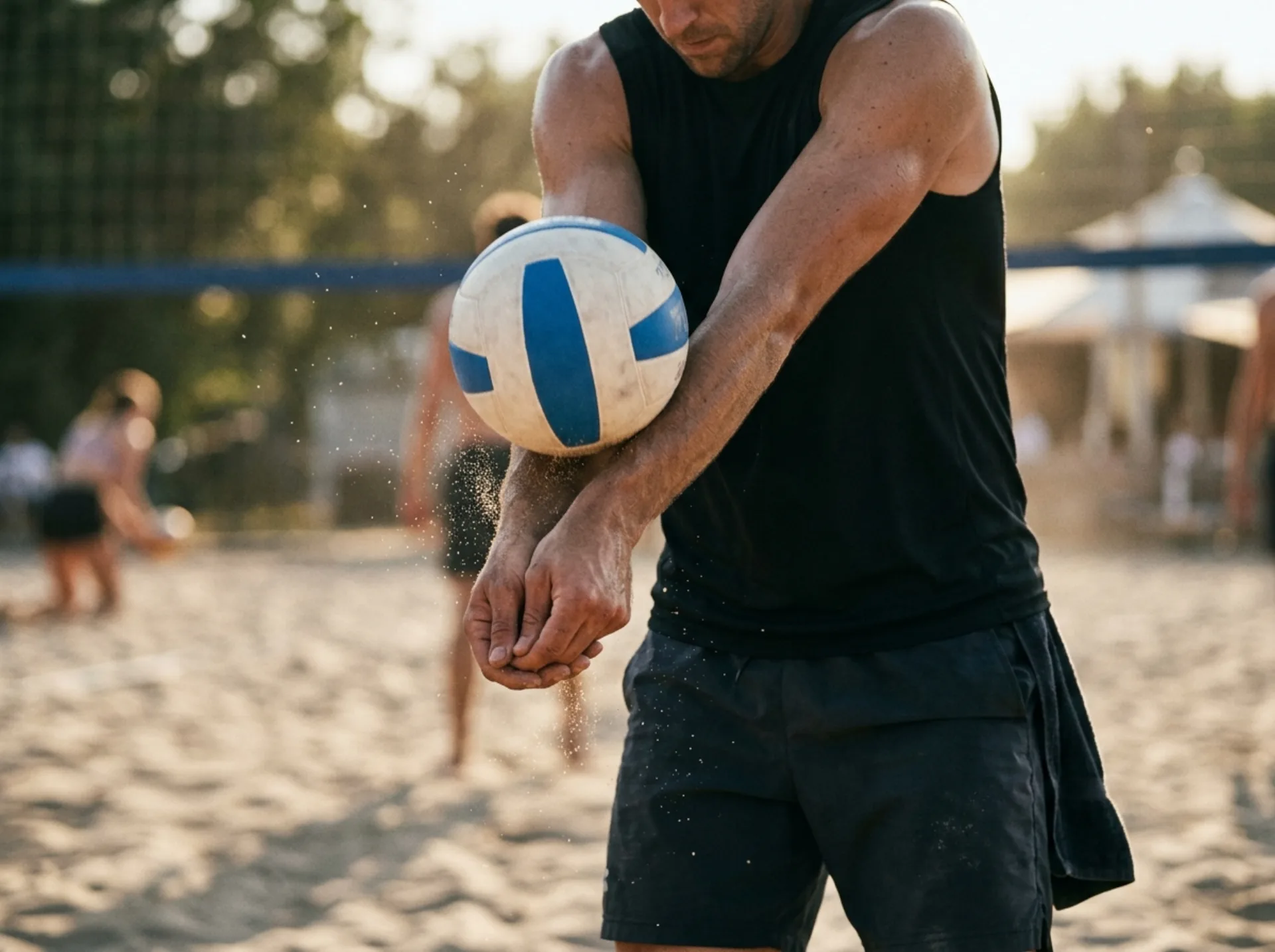
- Setting up the forearm pass: for optimal control, join your hands by overlapping your palms and keep your thumbs parallel and pointing downwards. Your elbows must be fully extended to create a flat and even surface on your forearms. The classic mistake to avoid is bending your elbows on impact or hitting the ball with your wrists.
- The leg drive: the trajectory and height of the forearm pass are determined by the movement of your legs, not by swinging your arms. Guide the ball by extending your knees towards the direction you want to send the set.
- Immediate communication: even before touching the ball, call for it out loud with a simple "mine" or "got it". This avoids dangerous collisions between teammates and ensures that the second touch is handled by the designated setter.
How to manage the first tournaments of the return
In the first few weeks of activity, the main objective must be the fluidity of the game and rebuilding the group. Instead of focusing on the power of the serve or the spectacular nature of the spike, the amateur teams that achieve the best results are those that focus on the precision of the second touch and defensive coverage.
Finding chemistry between old teammates and new additions takes time and patience. Playing mixed-rank friendly matches and rotating roles frequently during training sessions helps to better understand your teammates' movements and build an atmosphere of mutual trust. When there is chemistry, even the most competitive tournaments become an occasion for pure fun.
If you have a group of friends and want to organise your weekly matches, collect sign-ups or manage a small internal tournament to test your fitness ahead of autumn, you can use an application dedicated to the community to simplify every logistical step and focus only on having fun on the court.