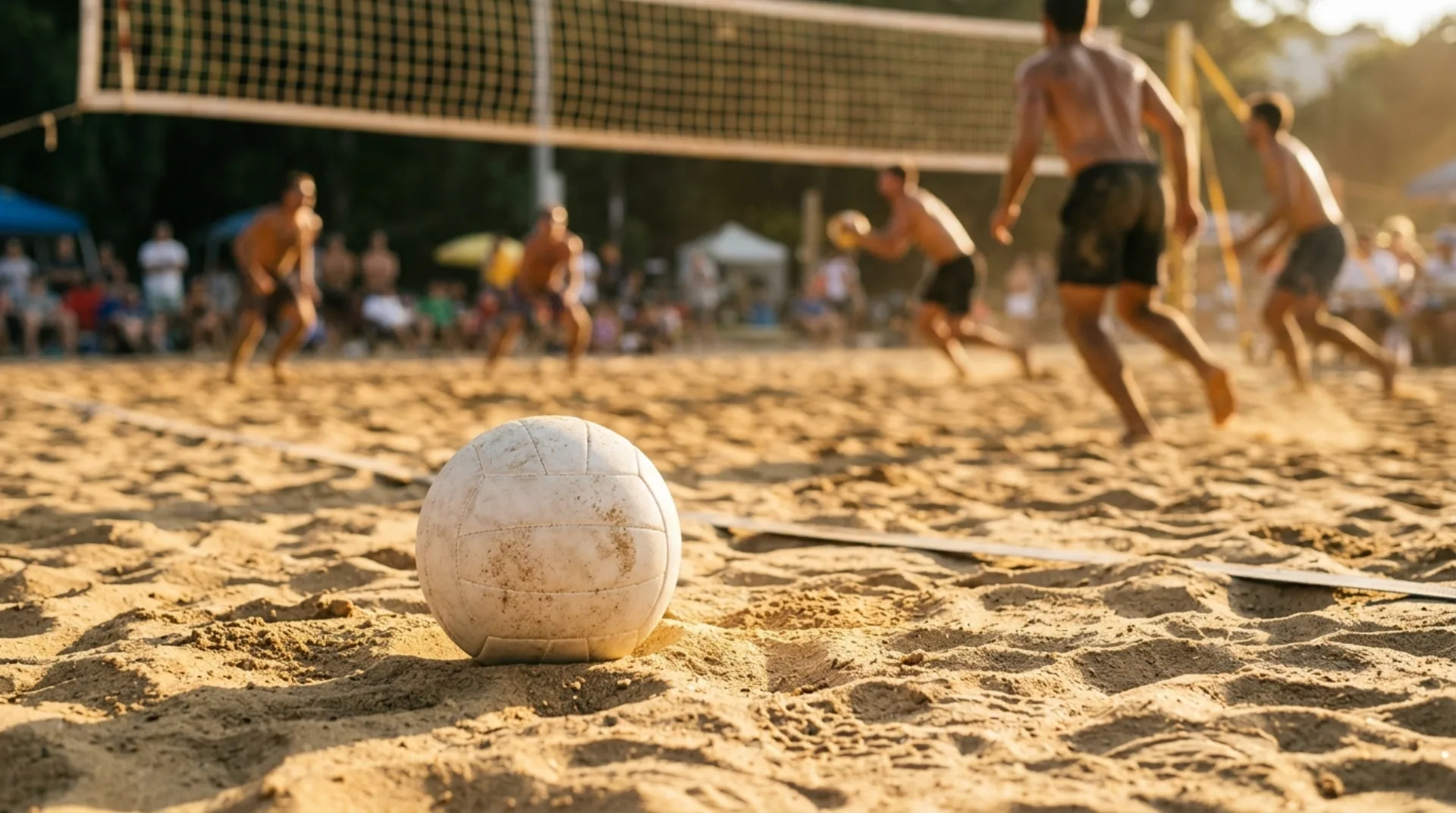
How to choose the right beach volleyball tournament to have fun on the sand
Taking part in a summer beach volleyball tournament is the best way to have fun, as long as you choose the right format for your level. Here is how to navigate categories and challenges on the sand.
Finding your own dimension on the sand without performance anxiety
Summer is the golden season to take to the court and test yourself in beach volleyball tournaments, but the most common risk for those playing for pure fun is ending up in the wrong category. Facing opponents who are too strong or, conversely, playing rhythm-less matches takes away the pleasure of the game. For this reason, modern amateur circuits are reorganising to offer balanced categories based on the actual technical level of the participants.
A concrete example of this trend is the Shotfive Summer League 2026, a summer amateur circuit structured across four well-defined playing levels. This format divides tournaments by colour: Azzurro-Starter for those who have just started to familiarise themselves with the sand, Verde-PlayWeekend for a dynamic and social experience, Giallo-Intermedio Light for pairs who play regularly, and Rosso-Multilevel for special events. Structures of this type show that inclusivity and balance are essential to guarantee fun for everyone, from novices to more experienced players.
From professionals to local amateur tournaments
While national champions compete at the highest levels – as happened on 2 August 2026 in Montesilvano, where Federica Frasca with Alice Gradini in the women's category and Marco Viscovich with Davide Borraccino in the men's category won the Coppa Italia di Beach Volley – amateurs are taking over beaches and grass courts all over Italy.
The range of summer tournaments is incredibly rich and covers various outdoor disciplines:
- Touring tournaments on sand: The Raiffeisen Beachcup 2026 continues to liven up locations across Alto Adige, attracting a large number of enthusiasts in both youth categories and mixed tournaments. For these events, net heights and specific age rules must be checked in the event regulations.
- Green Volley on grass: On 8 August 2026, the 12th edition of the Pineta Green Volley will take place in Giudicarie Esteriori, Trentino. This is a mixed 4x4 tournament on grass that has become part of a provincial circuit. In this case too, technical specifications and net height must be checked in the event regulations.
- Major international events: For those who love to watch the professionals up close to learn the tricks of the trade, the FIVB has confirmed the Italian stages of the Beach Pro Tour Futures 2026, which will stop in Modena from 27 to 30 August and in Corigliano Rossano from 17 to 20 September.
Typical mistakes of amateur players on the sand
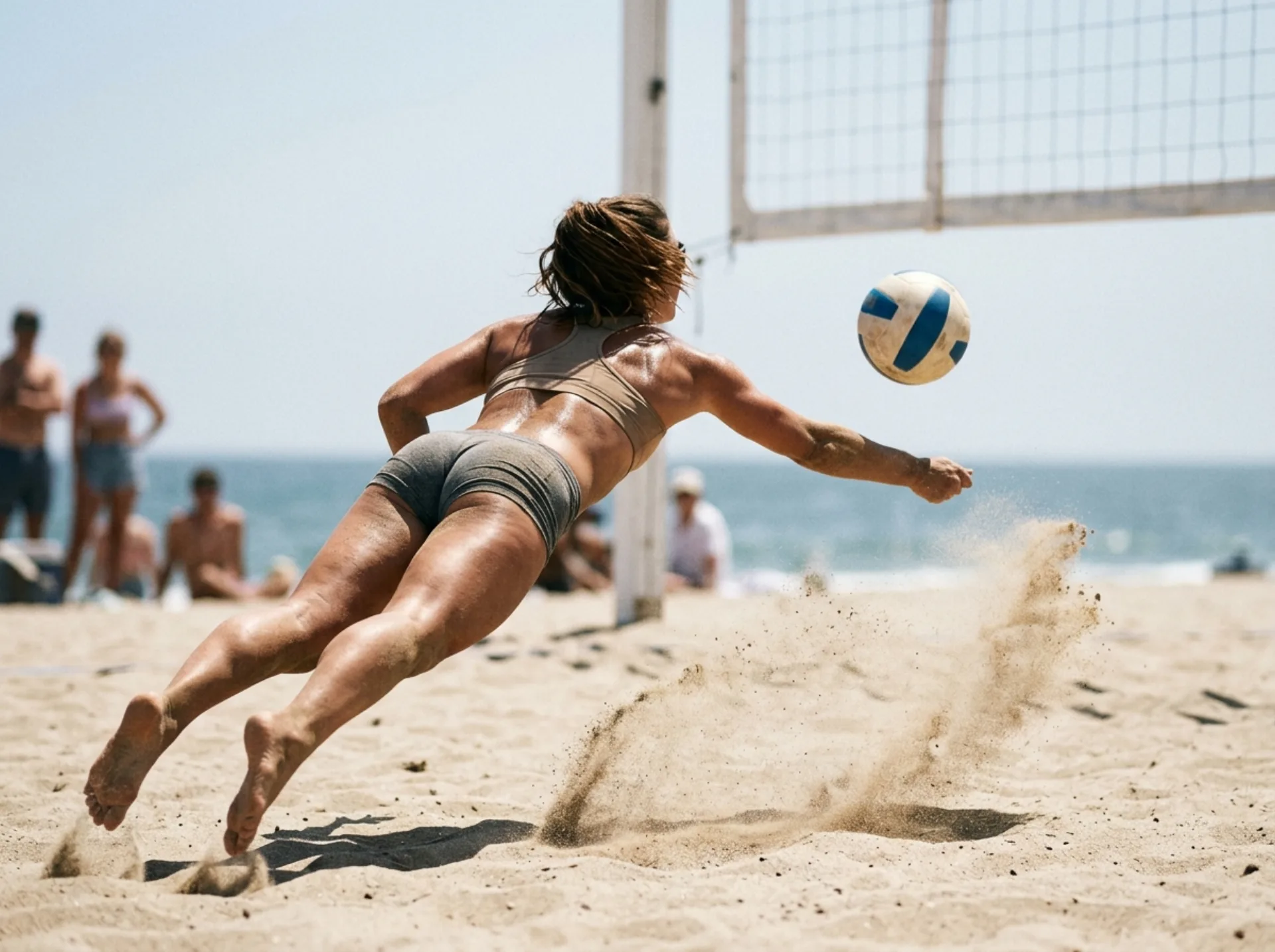
Transitioning from the indoor gym to the sand hides many pitfalls for those playing at an amateur level. The most common mistake made by those used to playing indoors is trying to replicate the same movements and trajectories on an unstable surface. In classic 6-a-side volleyball, the game is played on an 18x9 m court, with a net height of 2.43 m for men and 2.24 m for women. In 2v2 beach volleyball, the dimensions are reduced to a 16x8 m court, and the score is decided in sets to 21 points (with a potential tie-break to 15).
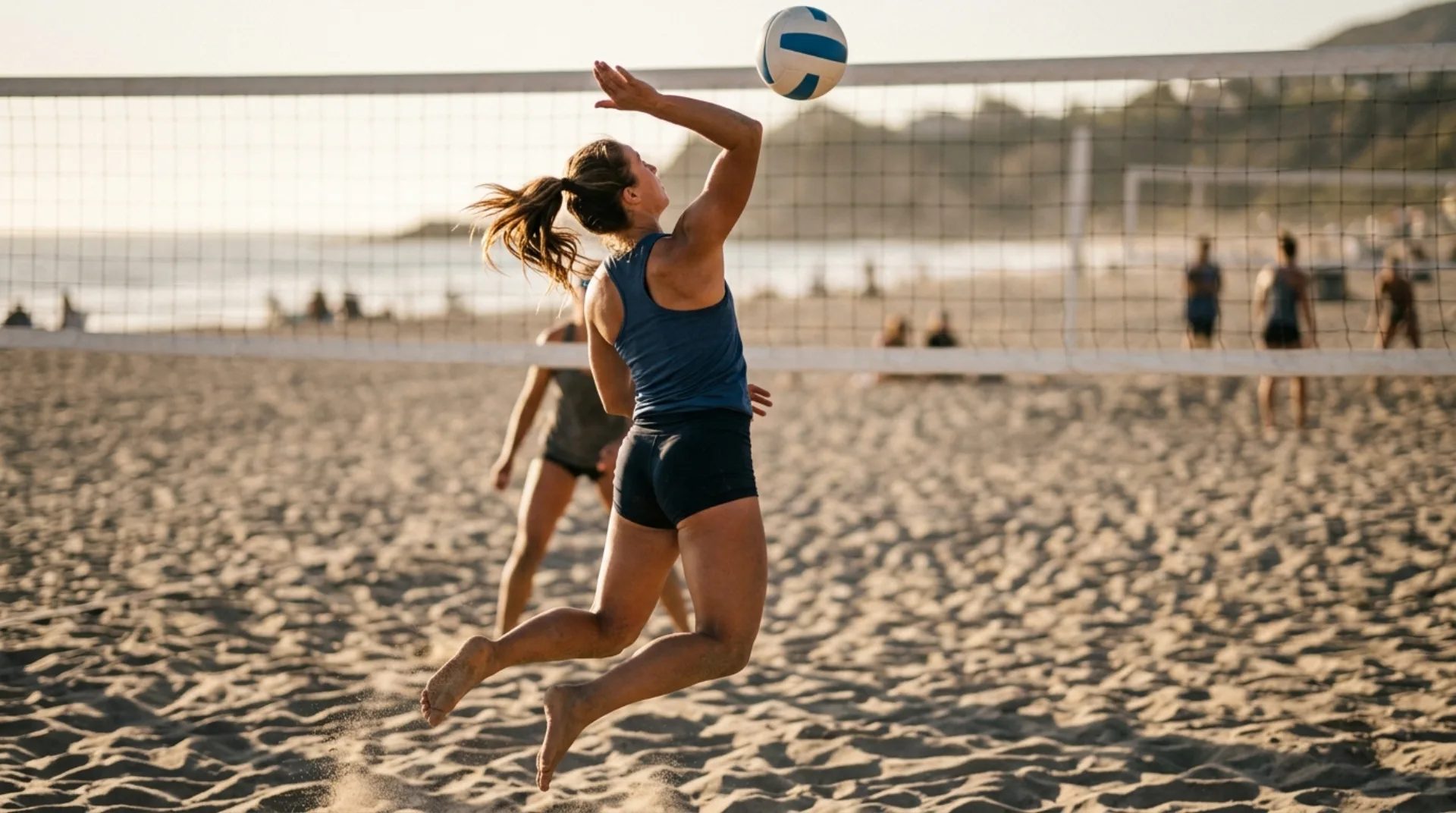
On the sand, moving as a pair requires a completely different coverage of space. Amateurs often make the mistake of remaining static in defence or committing to an area of the court without communicating with their partner. Another frequent mistake concerns the touch of the ball: in beach volleyball, setting is subject to very strict refereeing to avoid a catch. Attempting a clean overhead set without perfect technique under the summer sun often gifts free points to the opponents.
Practical guide to the technical move: defence and the control forearm pass
To survive on the sand and hold your own in amateur tournaments, it is essential to master the forearm pass for reception and defence. Here are some practical tips to avoid the most common mistakes:
- The starting position: Keep your centre of gravity low, bending your knees more than you would in the gym. On the sand, you cannot push off suddenly if your legs are straight.
- The platform: Bring your arms together to create a flat and even surface. The typical mistake consists of bending your elbows at the moment of impact, causing the ball to fly off in uncontrollable directions.
- The leg drive: Do not hit the ball by swinging your arms from bottom to top. The drive must come exclusively from the legs, which extend to guide the trajectory of the ball.
- Correcting the movement: If the ball tends to go too long or behind you, it means you hit the ball with your arms too close to your body. Extend your elbows well forward before impact to direct the ball towards your partner.
How to best prepare for a tournament day
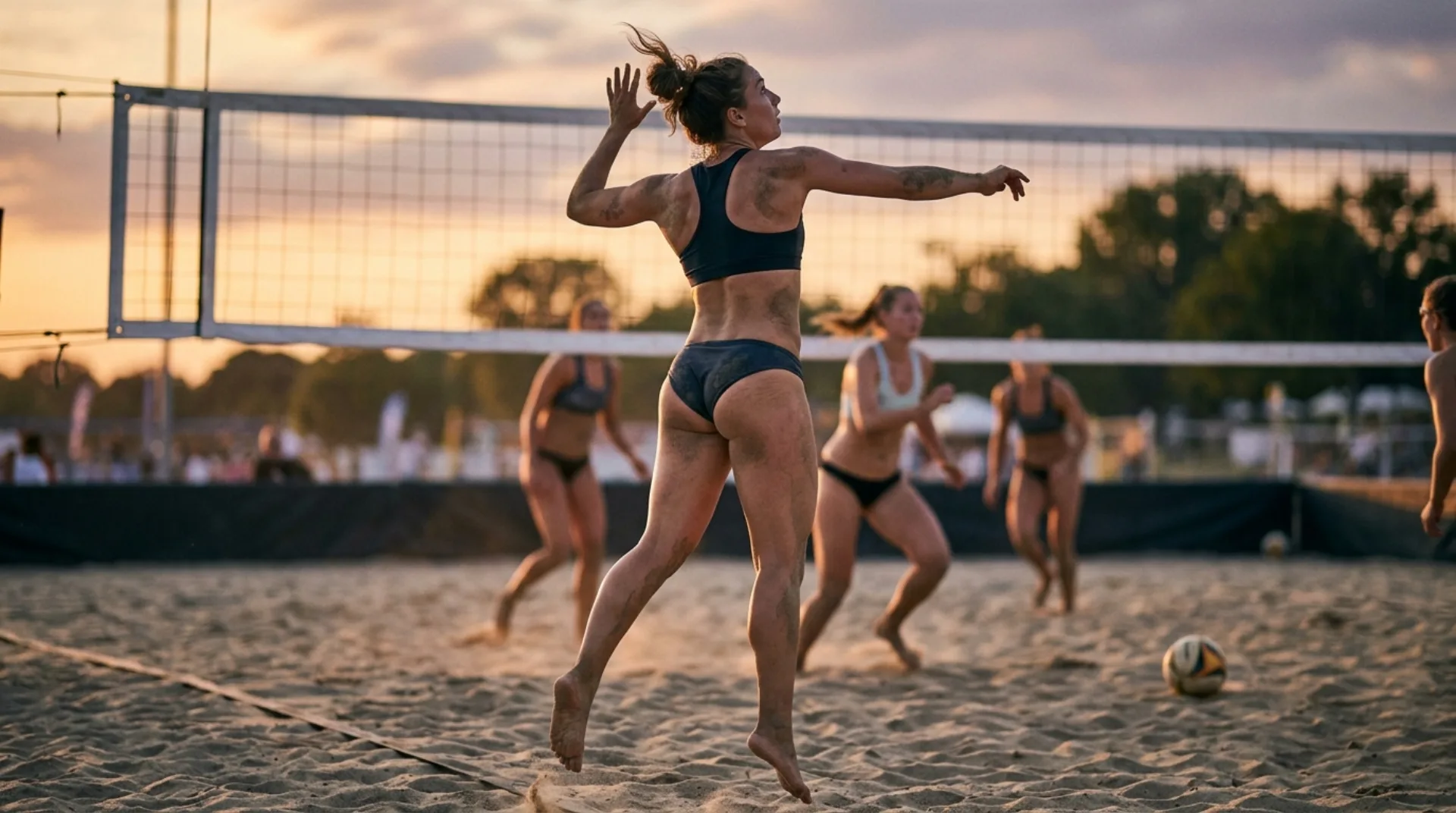
Playing in a summer amateur tournament means spending many hours under the sun, often playing several matches throughout the same day. To avoid drops in performance or injuries, it is important to ensure constant hydration and have small, light snacks between matches. Before each match, dedicate at least ten minutes to a dynamic warm-up on the sand to get your joints used to the stress of the unstable ground.
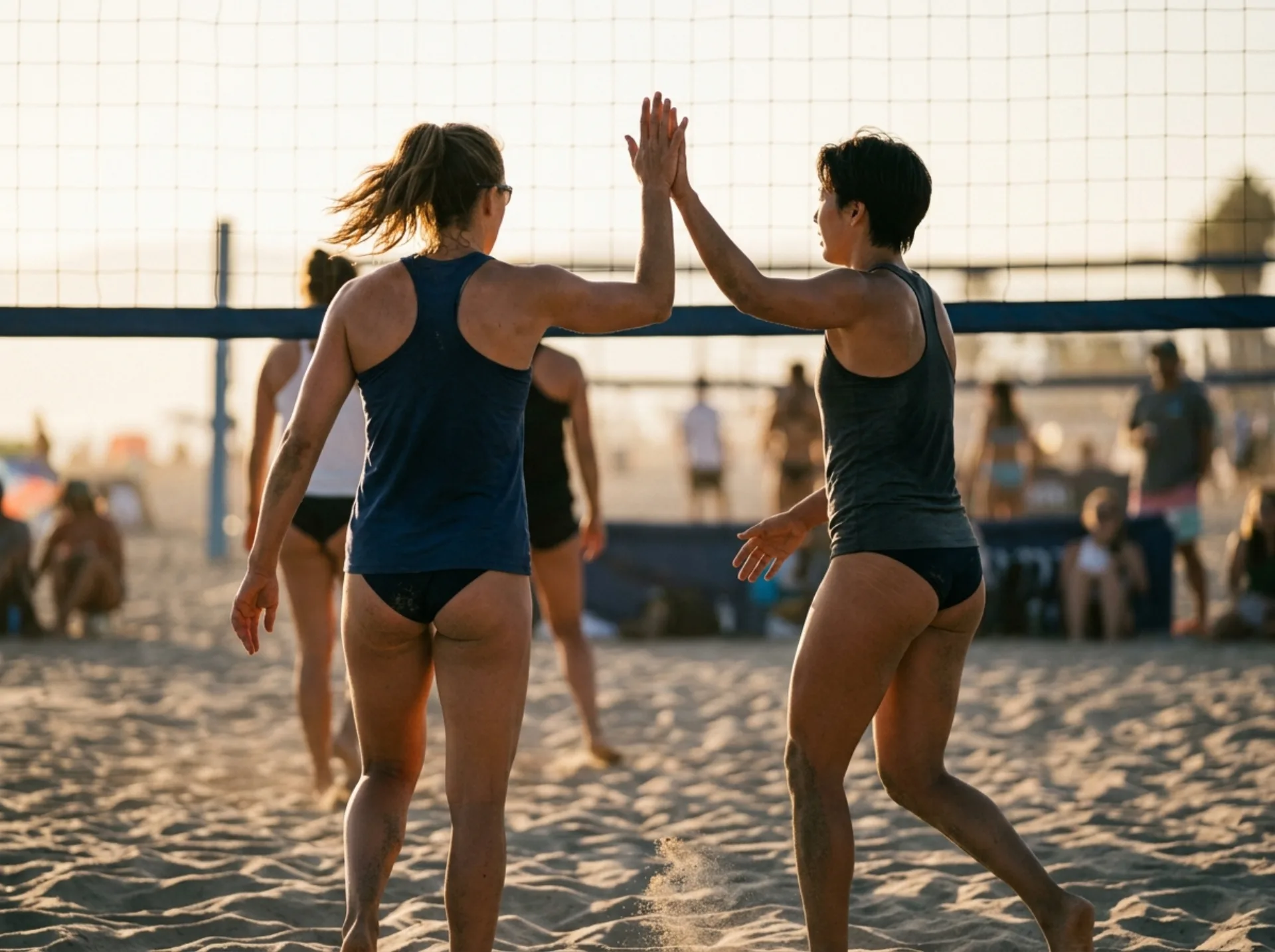
Organising a day of outdoor sport only requires a ball, a group of motivated friends, and the desire to challenge yourself. Whether it is an afternoon of training or a well-structured amateur tournament, the sand and grass offer the perfect opportunity to experience sport in the spirit of sharing and pure fun.