How to play green volleyball and tackle mixed 4x4 tournaments
Discover how to move on the grass court, avoid the most common mistakes in mixed 4x4 tournaments, and best organise your team for summer outdoor challenges.
Today, Saturday 8 August 2026, lawns across Italy and particularly in Trentino, with the twelfth edition of the famous Pineta Green Volley in Giudicarie Esteriori, are filling up with enthusiasts for mixed 4x4 challenges. Playing on grass is an exciting experience, but it requires immediate adaptation for those used to the gym or sand. Understanding straight away how footwork, ball trajectory, and space management with four players change is the key to having fun without injuries and bringing home the victory.
From the indoor court to grass: what changes for players
Grass offers a unique playing surface, combining the stability of hard ground with the softness of earth. Unlike sand, where every step sinks and requires constant leg strength, grass allows for quick movements and sudden sprints. However, morning or evening moisture can make the ground extremely slippery. For this reason, many players choose suitable footwear, but the specific requirements for permitted shoes (such as the use of football boots or running shoes) must always be checked in the event regulations to avoid penalties or hazards.
The body's impact when falling is also different. On grass, it is possible to dive, but the impact is less cushioned than on fine sand. It therefore becomes essential to look after your rolling or sliding technique to avoid annoying grazes or joint trauma. Court dimensions and net height in green volleyball tournaments can vary significantly compared to the classic 18x9 metre indoor volleyball court or the 16x8 metre beach volleyball court. To avoid surprises before the opening whistle, always check these technical details in the official regulations of the tournament you are participating in.
How to move in mixed 4x4: positioning and tactics
The mixed 4x4 formula is one of the most popular in summer outdoor tournaments. With four players on court, the space to cover is smaller than in traditional six-a-side volleyball, but larger than in pairs beach volleyball. This requires a flexible distribution of roles and constant communication between teammates.
Generally, the most effective setup involves a diamond or square coverage:
- Three-player reception: three players cover the backcourt, leaving the setter near the net free from primary reception duties.
- Handling the set: depending on the specific tournament regulations, the setting touch in reception or setting might be judged more or less strictly than indoors. Always check the contact rules in the event regulations.
- Mixed attack: the presence of men and women on court requires a strategy that values everyone's characteristics. Often, short trajectories or tips placed into empty spaces prove much more effective than pure power spikes.
The three most common mistakes to avoid on grass
Those transitioning from the gym or the beach to grass tournaments tend to repeat some typical mistakes that compromise the effectiveness of their play. Recognising them is the first step to correcting them immediately.
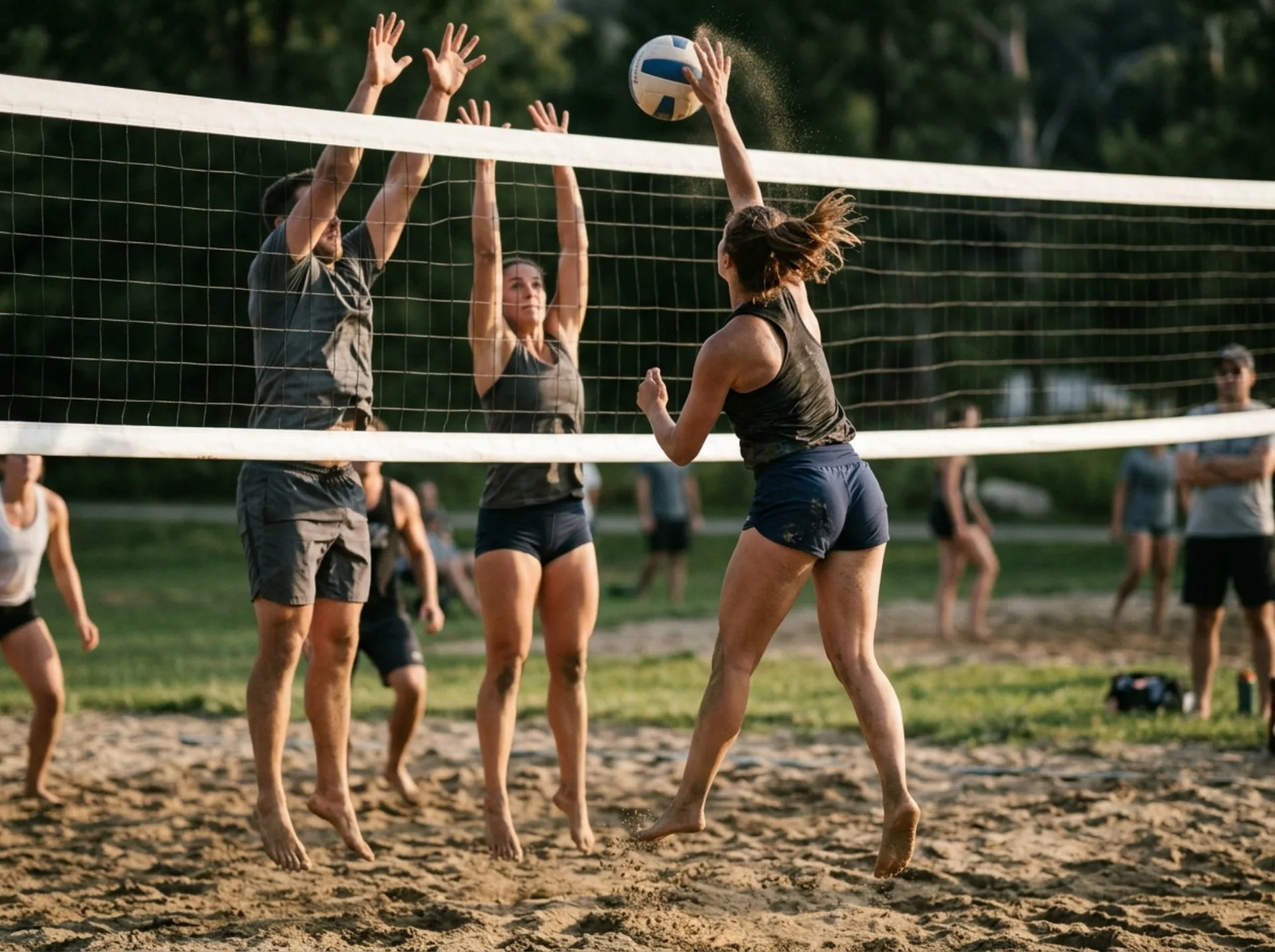
The first mistake is jumping without considering slipping. On grass, braking sharply to take off for a block or an attack can cause a loss of grip. Many amateurs slide forward, invading the opponent's court or touching the net. To correct this, try to take shorter approach steps and plant your heels firmly before loading the jump.
The second mistake concerns underestimating the wind. In outdoor tournaments, even a light breeze can deflect the ball's trajectory during the set or service phase. Playing a high ball far from the net becomes risky: prefer flatter, more controlled sets, which leave less time for the wind to move the ball.
The third mistake is the lack of communication regarding zone responsibilities. In 4x4, blind spots often occur, especially in the middle of the court. Without calling for the ball out loud, you risk a physical collision or, conversely, letting the ball drop to the ground without anyone intervening.
Practical tips for your next outdoor challenge
To best tackle a green volleyball tournament like the one played in Trentino, here is a list of practical aspects to keep in mind during preparation and matches:
- Specific warm-up for ankles: direction changes on grass put a lot of stress on ligaments. Dedicate at least ten minutes to mobility and stability before starting to touch the ball.
- Managing trajectories: prefer the forearm pass for build-up play when the ground is slippery or unstable. It offers a wider base of support and greater control than setting.
- Checking local rules: every amateur tournament has its peculiarities. Rules on positional faults, net serves, or substitutions vary from event to event. The value and application of these rules must be verified in the event regulations.
- Logistical organisation: always bring enough water, sunscreen, and a change of shoes and socks. Wet grass can quickly chill your feet during breaks between matches.
If you plan to organise a group of friends to participate in one of the many summer events, using a dedicated application can significantly simplify managing sign-ups, splitting expenses, and choosing the tournament best suited to your level, allowing you to focus solely on having fun and playing outdoors.