From summer sand tournaments to the new amateur indoor season
Discover how summer beach volleyball tournaments strengthen the community and how to prepare for the transition to the new indoor season while avoiding typical sand mistakes.
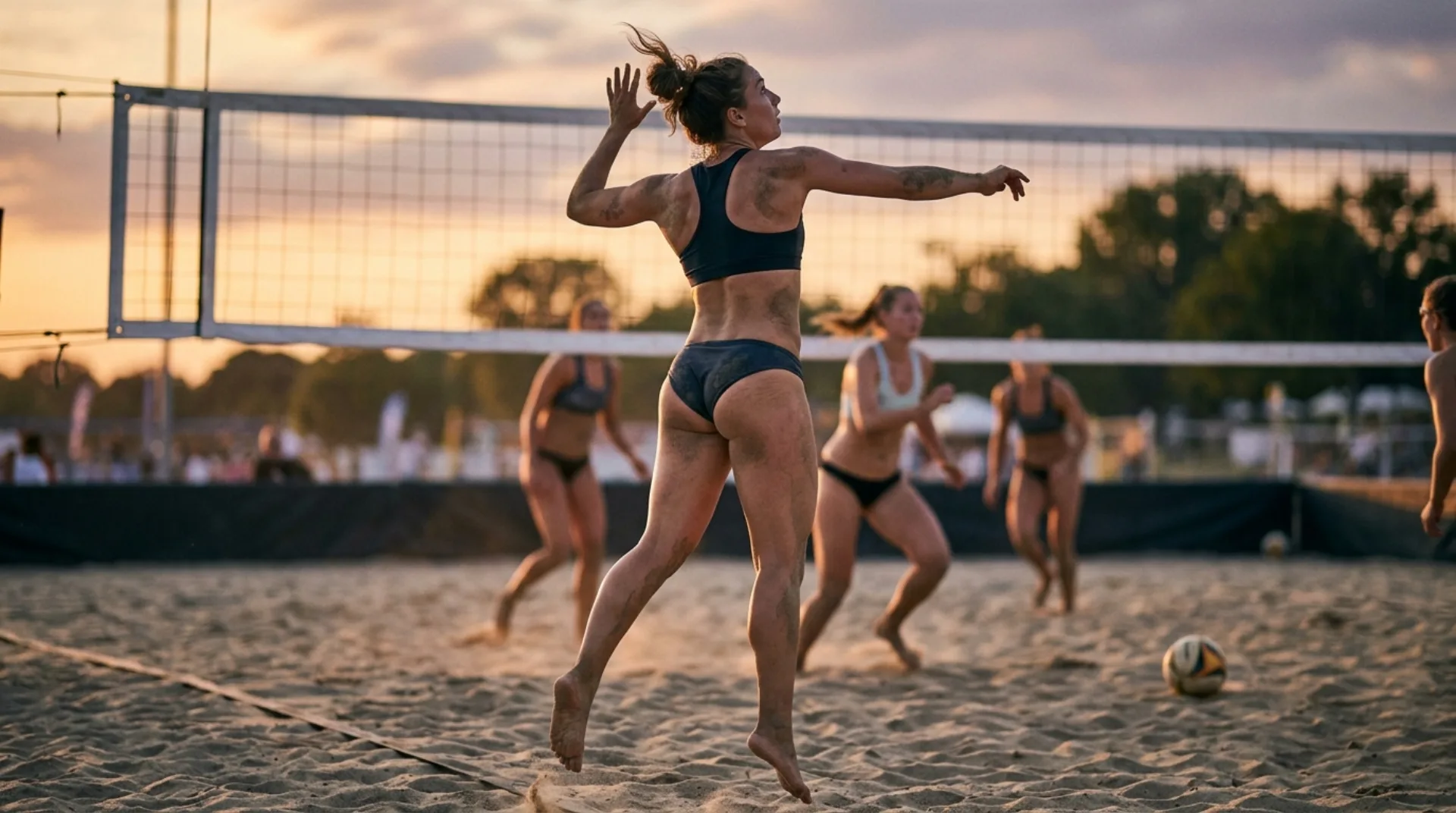
Summer is the season when volleyball lovers move to the sand to keep up their rhythm and continue having fun with friends. Playing outdoors in summer amateur tournaments is not only about staying fit, but it is also the best way to strengthen team chemistry and prepare for the indoor challenges of the coming autumn. Taking to the sand court requires small, immediate technical adjustments to avoid injuries and improve the effectiveness of team play.
From the sand of summer tournaments to the call of the new season
The warm months offer plenty of opportunities to compete in informal yet competitive settings. Take the famous Summerbeach 2026 festival, hosted at Lido San Giovanni in Alghero, which after the matches on 8 and 9 August 2026 is preparing for the weekend of 29 and 30 August 2026 for the last big amateur event on the sand. Some also chose to spend Ferragosto on the sand with the traditional "Grill Beach" tournament in Offanengo, which took place on 15 August 2026, combining sport and a barbecue. Even the amateur finals of the King & Queen of the Beach, played on 11 and 12 August 2026 at the Beach Arena IPLEX in Civitanova Marche, showed how strong the passion of non-professional players is.
All this activity on the sand is not an end in itself, but represents the ideal bridge to the indoor season. While you are having fun in the sun, local committees are already planning the resumption of the leagues. For example, the Comitato Territoriale FIPAV of Brescia officially opened team registrations for the 2026/2027 season leagues on 6 August 2026, ahead of the summer office closure scheduled from 1 to 24 August 2026. This means that close-knit groups formed or consolidated on the beach volleyball courts can already start planning their registration for the indoor or mixed leagues for the autumn.
The importance of rules and self-refereeing
In summer amateur tournaments, match management is very often left to self-refereeing or the help of players from resting teams. Knowing how to behave on court and knowing the basic rules is essential to avoid arguments and maintain the festive spirit that characterises these events. Respecting the whistle is a universal value at all levels of our sport. An example of this is the Roman referee Antonella Verrascina of FIPAV Roma, the sole Italian representative in Doha from 15 to 29 August 2026 for the FIVB world qualification course, busy refereeing matches at the Men's Under 17 World Championship.
Even if we do not have international referees in amateur tournaments, intellectual honesty in calling a touch off the block or a ball out makes the difference between a successful tournament and one ruined by controversy. In classic 2v2 beach volleyball, matches are played on a 16x8 metres court, sets are played to the best of 21 points, and any tie-break is played to 15 points. For all other game formats typical of summer tournaments, such as mixed leagues or youth tournaments, details regarding net heights and the balls to be used must always be checked in the specific regulations of the individual event.
The most common mistakes on sand and how to correct them
Playing on sand is very different from the wooden floor of the sports hall. Those used to indoor play often make posture and touch management mistakes that compromise the effectiveness of the game. Here are the technical details to work on to improve your performance immediately:
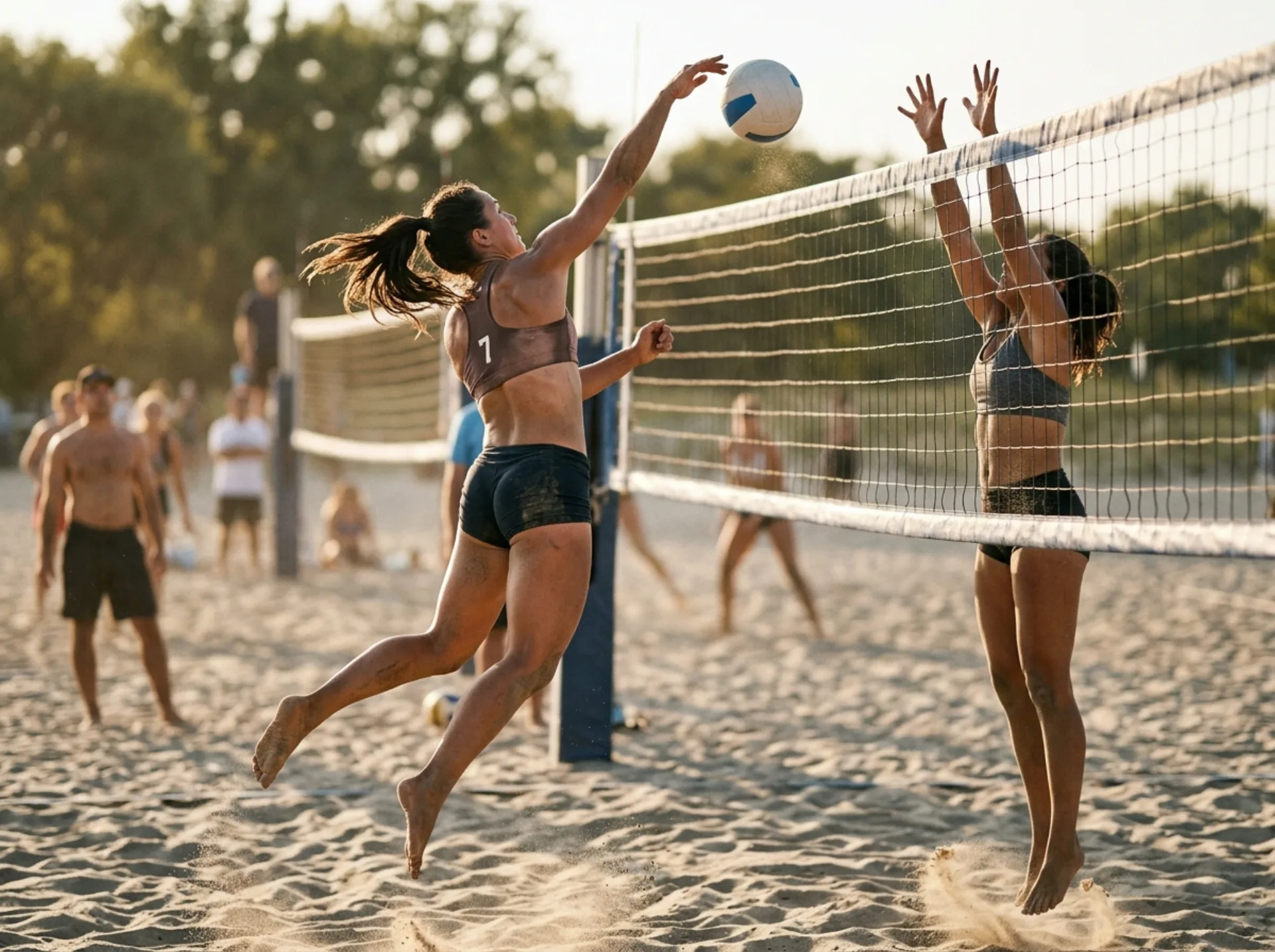
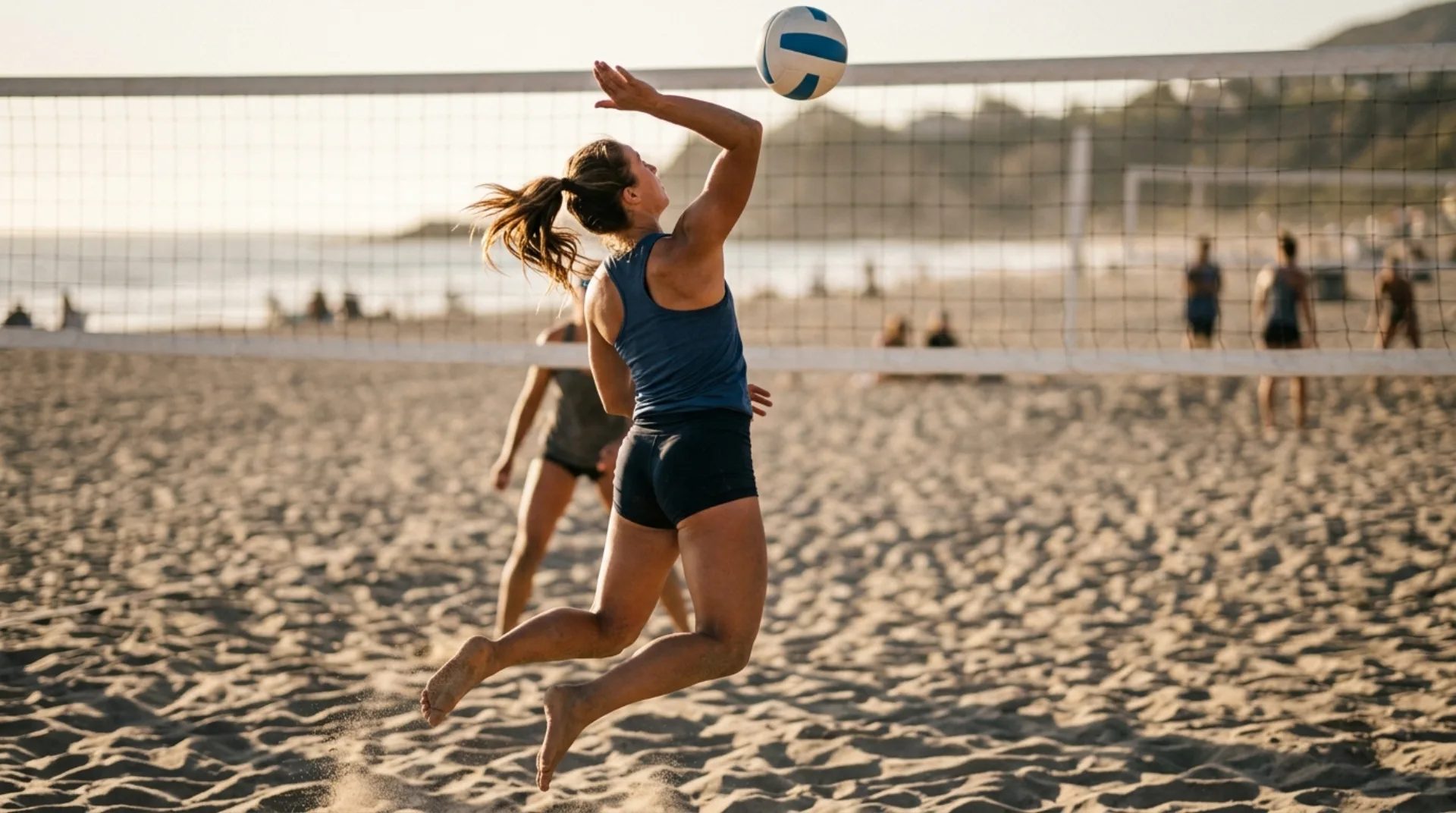
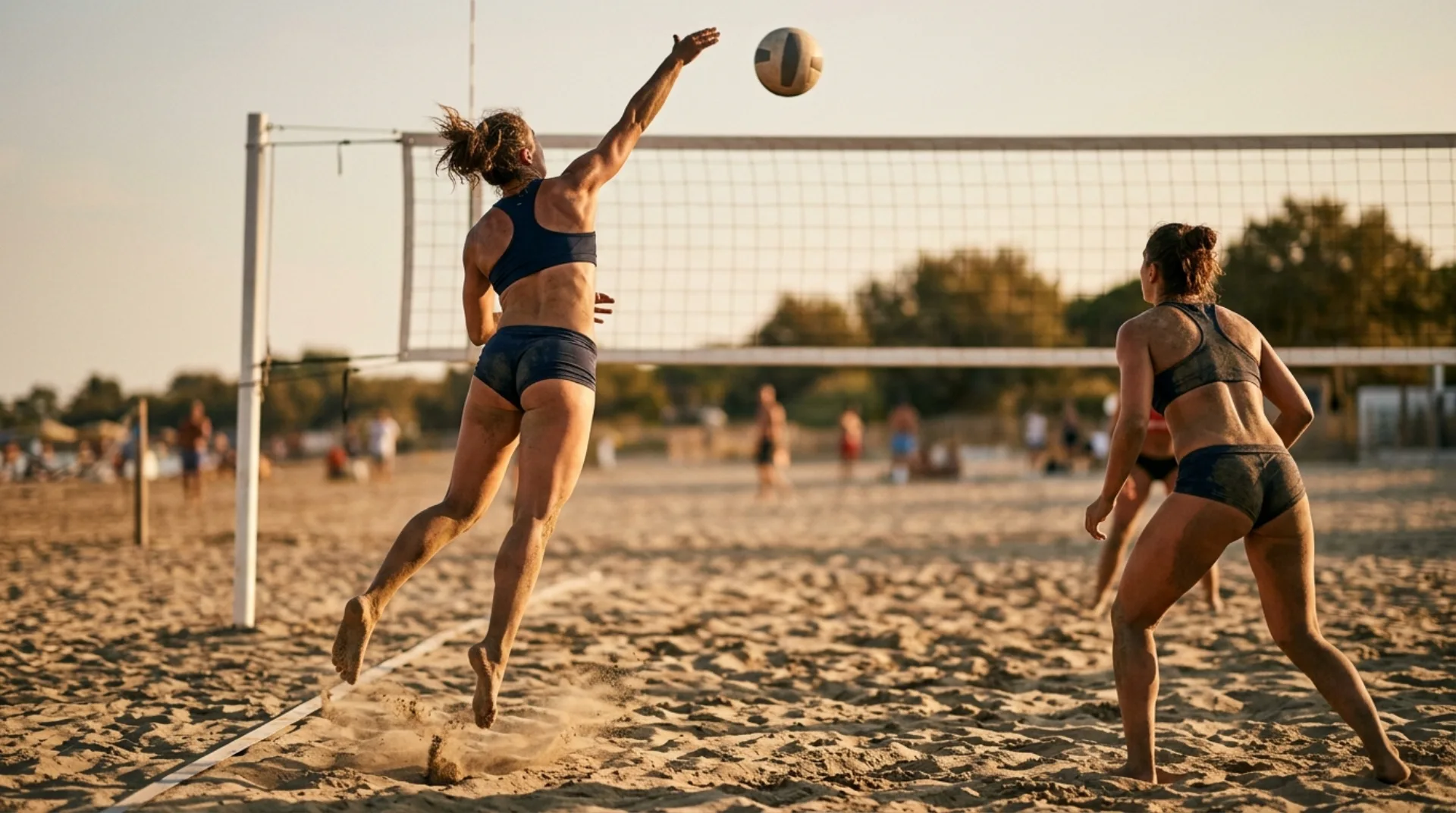
- The attacking run-up on sand: On sand, it is not possible to exploit the elastic drive of hard ground. The typical mistake consists of taking run-up steps that are too long and low, causing the feet to sink. To correct this flaw, shorten the last step of the run-up (closing step) and load your legs with force, pushing vertically and helping yourself with a vigorous upward swing of the arms.
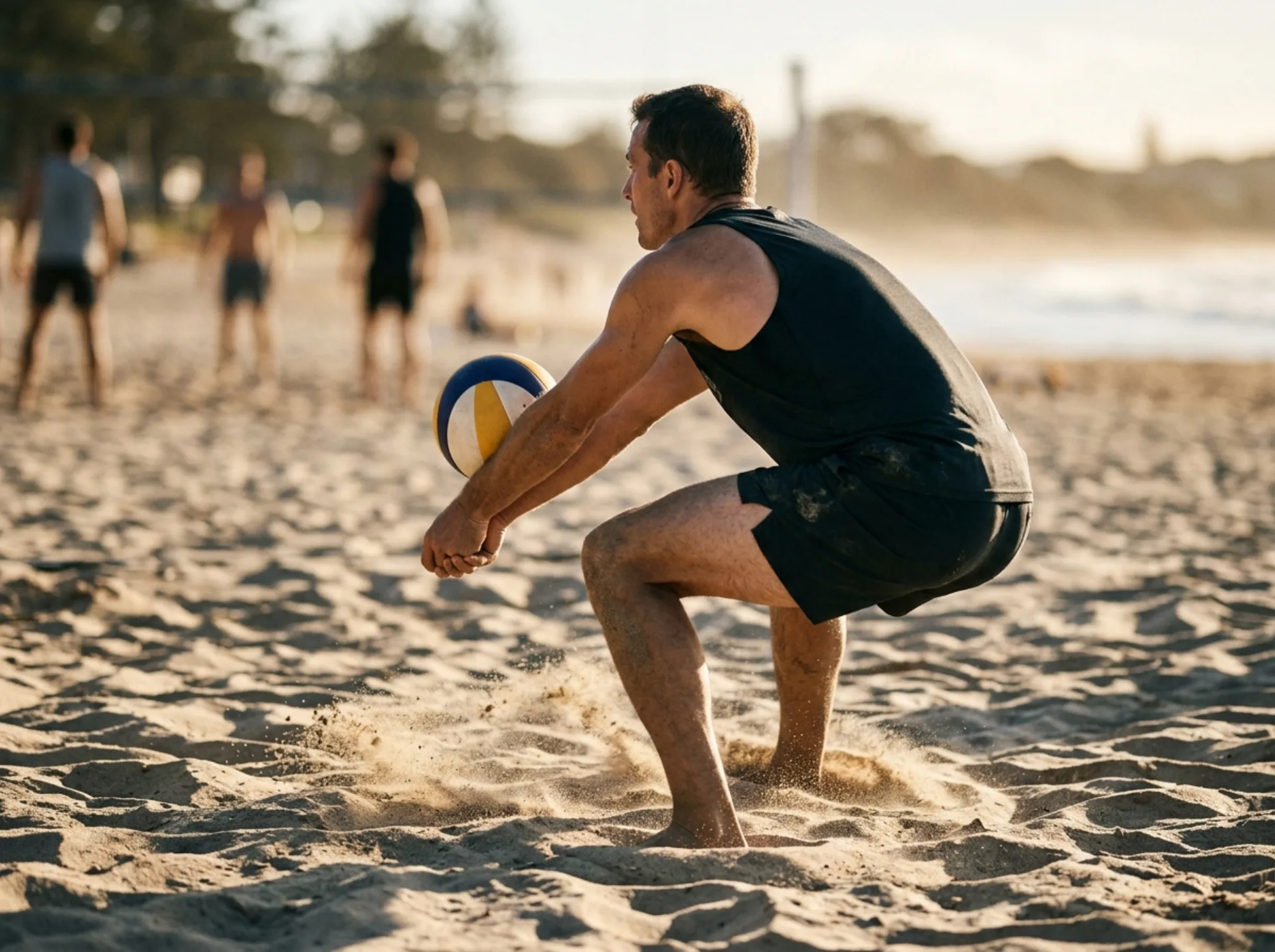
- The low dig defence: On sand, the ball slows down less than you might think, and the wind can deviate its trajectory at the last moment. The common mistake is waiting for the ball while keeping your legs straight. The correction consists of bending your knees to lower your centre of gravity and creating a wide rebounding platform with well-extended arms, guiding the ball without hitting it violently.
- The overhead set: In 2v2 beach volleyball tournaments, the two-handed overhead set is subject to very strict rules, and slightly prolonged or double contacts are penalised as a fault. The typical mistake of amateur players is attempting the classic overhead set even in precarious conditions. The correction consists of always preferring the use of the bump set, which reduces the risk of committing technical faults to zero.
How to get organised to keep up the rhythm
While you enjoy the last scraps of summer and take part in the late August amateur tournaments on the beach, it is the right time to start thinking about the next season. Keeping the group that shared the hard work under the sun together is simple if you move in advance, taking advantage of the open registrations in the various local committees. Organising the first training sessions or registering for a new amateur tournament becomes much easier if you use digital tools dedicated to team management. With an application like VolleyFriends, groups of friends can plan matches, track attendance, and coordinate away trips in just a few steps, leaving stress aside and thinking only about having fun on the court.